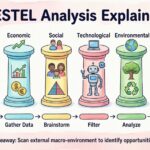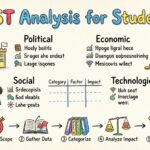


In the landscape of strategic management and business studies, analyzing the external environment is a fundamental skill. The PESTLE analysis serves as a robust framework for identifying and categorizing the macro-environmental factors that influence an organization. For students preparing for business exams, understanding this tool is not merely about memorizing an acronym; it is about grasping how external forces shape internal decision-making. This guide provides a deep dive into the mechanics of PESTLE analysis, offering structured insights to help you articulate clear, high-scoring answers in your assessments. 🎓
What is PESTLE Analysis? 🧩
PESTLE stands for Political, Economic, Social, Technological, Legal, and Environmental. It is a strategic tool used to scan the macro-environmental factors that might impact an organization. Unlike internal analysis tools like SWOT, which focus on strengths and weaknesses within the company, PESTLE looks outward. It helps strategists understand the opportunities and threats lurking outside the organization’s immediate control.
When tackling exam questions, you are often asked to apply this framework to a specific case study. Your ability to identify relevant factors and explain their implications distinguishes a passing grade from a high distinction. The framework is flexible, allowing you to prioritize factors based on the specific industry or scenario presented in the question.
The Six Pillars of PESTLE 🔍
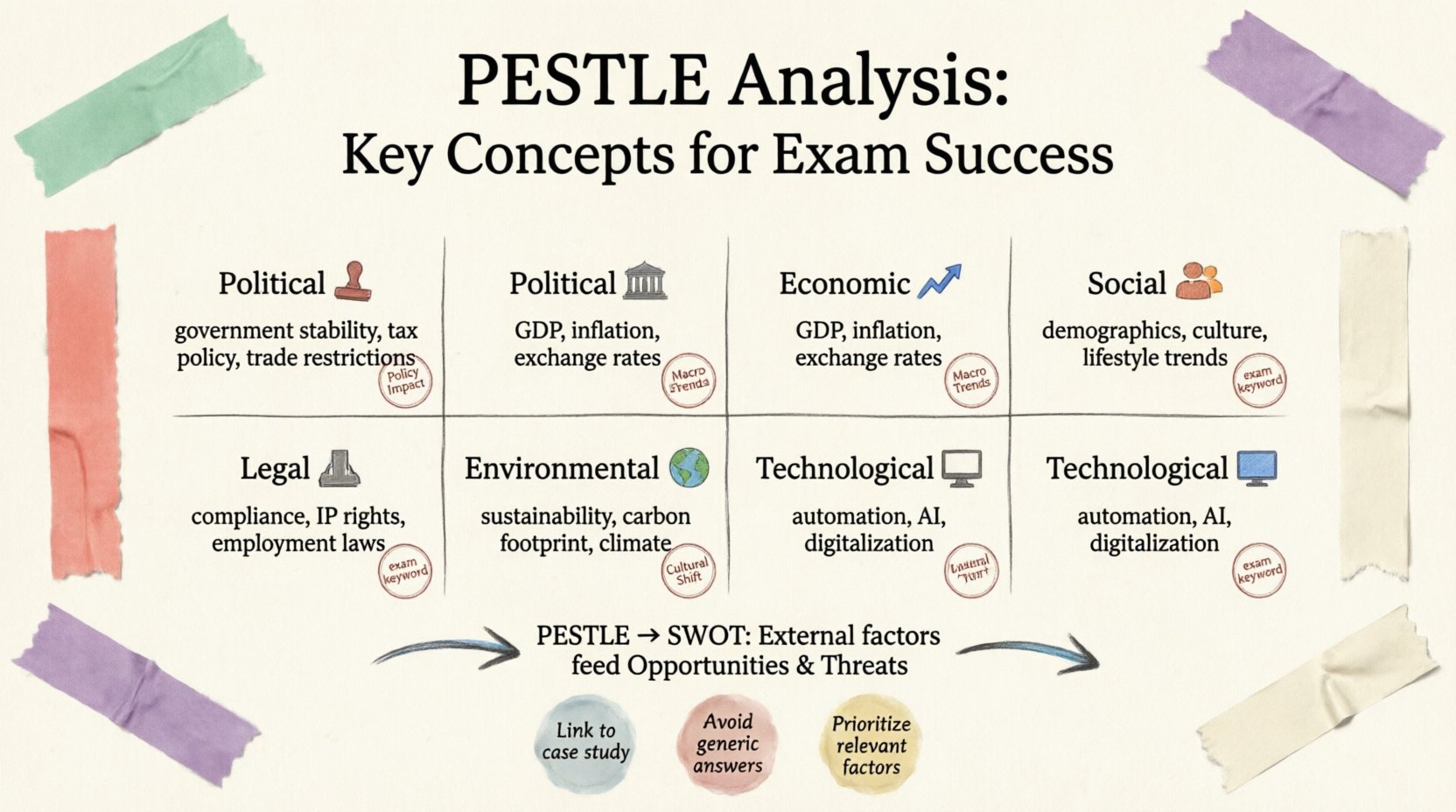
To ensure comprehensive coverage in your exam answers, you must understand each component of the acronym. Below is a structured breakdown of what each letter represents, including key questions to ask yourself during analysis.
| Factor | Key Focus Areas | Typical Exam Keywords |
|---|---|---|
| Political 🏛️ | Government stability, tax policy, trade restrictions, labor laws | Regulation, Tax, Stability, Subsidies |
| Economic 📈 | Growth rates, exchange rates, inflation, interest rates | Recession, Inflation, GDP, Purchasing Power |
| Social 👥 | Demographics, culture, lifestyle trends, population growth | Aging Population, Health Conscious, Education Levels |
| Technological 💻 | Automation, R&D activity, tech incentives, rate of technological change | Disruption, Innovation, Digitalization, AI |
| Legal ⚖️ | Employment laws, consumer protection, health and safety, discrimination | Compliance, Litigation, Contracts, IP Rights |
| Environmental 🌍 | Climate change, carbon footprint, waste disposal, sustainability | Green Energy, Carbon Tax, Recycling, Climate |
Deep Dive: Political Factors 🏛️
Political factors refer to how government intervention affects the economy and specific industries. In an exam context, this often involves analyzing the stability of the government or changes in fiscal policy.
- Government Stability: Is the current administration likely to remain in power? Political instability can deter investment.
- Taxation Policy: Changes in corporate tax rates directly impact net profit margins. High taxes might reduce funds available for reinvestment.
- Trade Restrictions: Tariffs and quotas can make importing raw materials expensive or exporting finished goods difficult.
- Subsidies: Government support for certain sectors (like renewable energy) can provide a competitive advantage to firms operating within those sectors.
When writing your answer, avoid simply listing these points. Instead, explain the impact. For example, if a case study mentions a new government introducing protectionist policies, explain how this forces a company to source locally, potentially increasing costs but reducing supply chain risk.
Deep Dive: Economic Factors 📈
Economic factors determine the purchasing power of potential customers and the cost of capital for the business. These are often the most volatile elements in a PESTLE analysis.
- Exchange Rates: For multinational companies, currency fluctuations can drastically alter the cost of overseas operations or the price of exports.
- Inflation: High inflation erodes consumer spending power. Businesses may need to raise prices, which could reduce demand.
- Interest Rates: Higher rates increase the cost of borrowing. This can stifle expansion plans or make debt servicing difficult for highly leveraged companies.
- Economic Growth (GDP): A booming economy usually leads to higher consumer confidence and spending. A recession leads to cost-cutting measures.
In exam scenarios, link economic factors to the specific product. If the product is a luxury good, a downturn in the economy will have a severe negative impact. If it is a necessity, the impact might be minimal.
Deep Dive: Social Factors 👥
Social factors relate to the human elements of the market. This includes demographics, cultural trends, and lifestyle changes. These are often slow-moving but significant.
- Demographics: An aging population creates demand for healthcare products, while a younger population might drive demand for tech gadgets.
- Attitudes and Values: Shifts in consumer values, such as a move towards ethical consumption, can force companies to change their branding or supply chain practices.
- Education Levels: A more educated workforce allows for more complex production processes but may command higher wages.
- Health Consciousness: Increasing awareness of health issues can shift demand away from sugary foods towards organic or low-calorie alternatives.
When analyzing social trends, consider the long-term trajectory. Social changes rarely happen overnight, but they create the foundation for long-term strategic planning.
Deep Dive: Technological Factors 💻
Technological factors involve innovation, automation, and the rate of technological change. This is often the fastest-changing component of the PESTLE framework.
- Automation: New technologies can reduce labor costs but may face resistance from unions or require significant capital investment.
- Research and Development: The pace of innovation in an industry dictates how quickly products become obsolete.
- Internet Access: The penetration of broadband or mobile internet affects how a company can distribute its products (e-commerce vs. physical retail).
- Data Security: As businesses rely more on digital systems, the risk of cyber threats increases, requiring investment in security protocols.
In an exam, highlight how technology can create a barrier to entry for competitors or how it can disrupt existing business models entirely. Mentioning specific technologies like AI or Blockchain can demonstrate depth of knowledge.
Deep Dive: Legal Factors ⚖️
Legal factors are distinct from political factors, though they often overlap. These refer to the laws and regulations that businesses must comply with.
- Employment Laws: Regulations regarding minimum wage, working hours, and termination processes affect labor costs and flexibility.
- Consumer Protection: Laws that protect consumers from faulty goods or misleading advertising ensure trust in the market.
- Health and Safety: Strict safety regulations are crucial in manufacturing and construction industries to prevent accidents.
- Intellectual Property: Patents, trademarks, and copyrights protect a company’s innovations and brand identity from theft.
Non-compliance with legal factors can result in fines, lawsuits, or reputational damage. In your exam answers, emphasize the cost of compliance versus the risk of non-compliance.
Deep Dive: Environmental Factors 🌍
Environmental factors focus on ecological and physical aspects of the environment. This category has gained significant prominence in recent years due to climate change concerns.
- Climate Change: Rising temperatures and extreme weather events can disrupt supply chains and damage infrastructure.
- Carbon Emissions: Companies are under pressure to reduce their carbon footprint. This may require investing in green energy or more efficient logistics.
- Waste Disposal: Regulations on how waste is handled can impact operational costs, especially for manufacturing firms.
- Resource Scarcity: The availability of raw materials (like water or rare earth metals) can constrain production capabilities.
Integrating sustainability into your analysis shows that you understand modern business priorities. Many examiners look for evidence that candidates recognize the importance of environmental responsibility.
Integrating PESTLE with SWOT 🔄
Exam questions often ask you to combine PESTLE with SWOT analysis. It is crucial to understand the relationship between these two tools. PESTLE provides the external data, while SWOT categorizes that data into Strengths, Weaknesses, Opportunities, and Threats.
Specifically, PESTLE factors feed into the Opportunities and Threats sections of the SWOT matrix. You do not list PESTLE factors inside the Strengths or Weaknesses sections, as those refer to internal capabilities.
- Example: If PESTLE identifies a new technology (Technological), this is an Opportunity if the company can adopt it, or a Threat if competitors adopt it first.
- Example: If PESTLE identifies a recession (Economic), this is a Threat to revenue, unless the company offers recession-proof products.
When structuring your exam answer, perform the PESTLE analysis first, then filter the findings into the SWOT matrix. This logical flow demonstrates clear strategic thinking.
Exam Technique: Structuring Your Answer 📝
To maximize marks, your written response must be structured logically. Here is a recommended approach for a 20-mark question involving PESTLE.
- Introduction: Briefly define PESTLE and state why it is relevant to the case study company.
- Analysis: Dedicate a paragraph to each of the six factors. Do not just list them; explain the specific context of the company.
- Implications: For each factor, state what it means for the business. Does it require a change in strategy? Does it increase risk?
- Conclusion: Summarize the most critical factors. Identify which two or three factors have the greatest impact on the decision-making process.
Time management is also critical. If you have 30 minutes for the question, spend no more than 5 minutes planning and 25 minutes writing. Allocate roughly 3 minutes per factor if you must cover all six.
Common Pitfalls to Avoid 🚫
Students often lose marks due to common mistakes. Be vigilant about the following errors.
- Generic Statements: Avoid writing “Interest rates are important.” Instead, write “Rising interest rates will increase the cost of loan servicing for this capital-intensive firm.”
- Internal Factors: Do not confuse PESTLE with SWOT. Do not mention employee morale or company culture under PESTLE; those are internal.
- Overloading: You do not need to mention every possible factor. Focus on the top 2 or 3 factors that are most relevant to the specific industry in the case study.
- Ignoring the Link: Always link the factor back to the company. An external factor is only useful if you explain how it affects the specific business scenario.
Applying PESTLE to Different Industries 🏭
The weight of each factor varies by industry. Demonstrating this nuance in your exam answers shows a higher level of understanding.
- Retail Industry: Social trends (shopping habits) and Economic factors (consumer spending) are usually the most critical.
- Manufacturing Industry: Environmental regulations and Legal factors (safety) often carry more weight.
- Technology Sector: Technological change is the dominant factor, followed by Legal factors regarding intellectual property.
- Financial Services: Political and Legal factors regarding regulation are paramount.
By tailoring your analysis to the specific sector, you avoid generic responses that could apply to any business. Examiners look for this specificity.
Final Considerations for Strategic Planning 🚀
While this guide focuses on exam success, the principles of PESTLE analysis are applicable in real-world business strategy. Organizations use this tool to anticipate change rather than merely react to it. By understanding the macro-environment, leaders can position their companies to navigate uncertainty with confidence.
Remember that PESTLE is not a one-time exercise. The environment is dynamic. Factors that are stable today may shift rapidly tomorrow. In your exams, acknowledging this dynamic nature adds depth to your strategic recommendations.
Mastering the application of PESTLE requires practice. Review case studies, identify the factors, and write out the implications. Over time, the process will become intuitive, allowing you to focus on the quality of your argument rather than the mechanics of the framework.
Good luck with your studies. Approach each question with a clear mind and a structured plan. Your preparation will pay off in the final result.