

Building a technology product is a complex endeavor. Securing capital to build it is a negotiation of trust, risk, and projected value. Often, the disconnect between technical execution and financial expectation creates friction. This friction can stall momentum. A robust strategy bridges this gap. It involves translating technical progress into financial milestones. The result is an investor-ready roadmap.
This guide explores how to structure development plans so they resonate with funding objectives. It focuses on clarity, transparency, and alignment. The goal is not to manipulate expectations, but to communicate reality with precision. Agile methodologies offer flexibility. Investors seek predictability. Reconciling these requires a deliberate approach to planning and reporting.
The Investor Perspective on Development Velocity 🧐
Investors operate on timelines. They have funds to deploy and returns to generate. Their primary concern is risk mitigation. When reviewing a development plan, they ask specific questions. Can this team deliver? Will this product reach the market? Is the burn rate sustainable?
Understanding these questions is the first step. Agile teams often focus on the next sprint. Investors look at the next quarter or fiscal year. This difference in horizon requires translation. You must articulate how short-term tasks contribute to long-term value.
- Time to Market: When will a usable product exist?
- Feature Completeness: What defines a viable product at each stage?
- Resource Allocation: How does the team size impact delivery speed?
- Risk Factors: What technical hurdles could delay progress?
Addressing these points directly builds confidence. It shows that the leadership understands the business implications of technical decisions. It moves the conversation from code to value.
Translating Agile Iterations into Milestone Expectations 🔄
Agile planning is iterative. It adapts to feedback. Funding planning is often linear. It assumes a trajectory. Bridging these two requires defining clear checkpoints. These checkpoints act as milestones for both teams and stakeholders.
Do not treat every sprint as a milestone. Sprints are internal delivery mechanisms. Milestones are external value deliveries. A milestone should represent a significant shift in capability or market readiness. For example, completing a user authentication system is a task. Releasing a public beta with authentication is a milestone.
This distinction helps manage expectations. Investors do not need to know about every bug fix. They need to know when the product becomes functional for users. They need to know when revenue-generating features are available. Aligning these concepts ensures everyone moves in the same direction.
Core Components of a Fundable Roadmap 📊
A roadmap that secures funding must be comprehensive. It cannot be a simple list of features. It must tell a story of progression. This story connects current capabilities to future value. It relies on data, not assumptions.
Key components include:
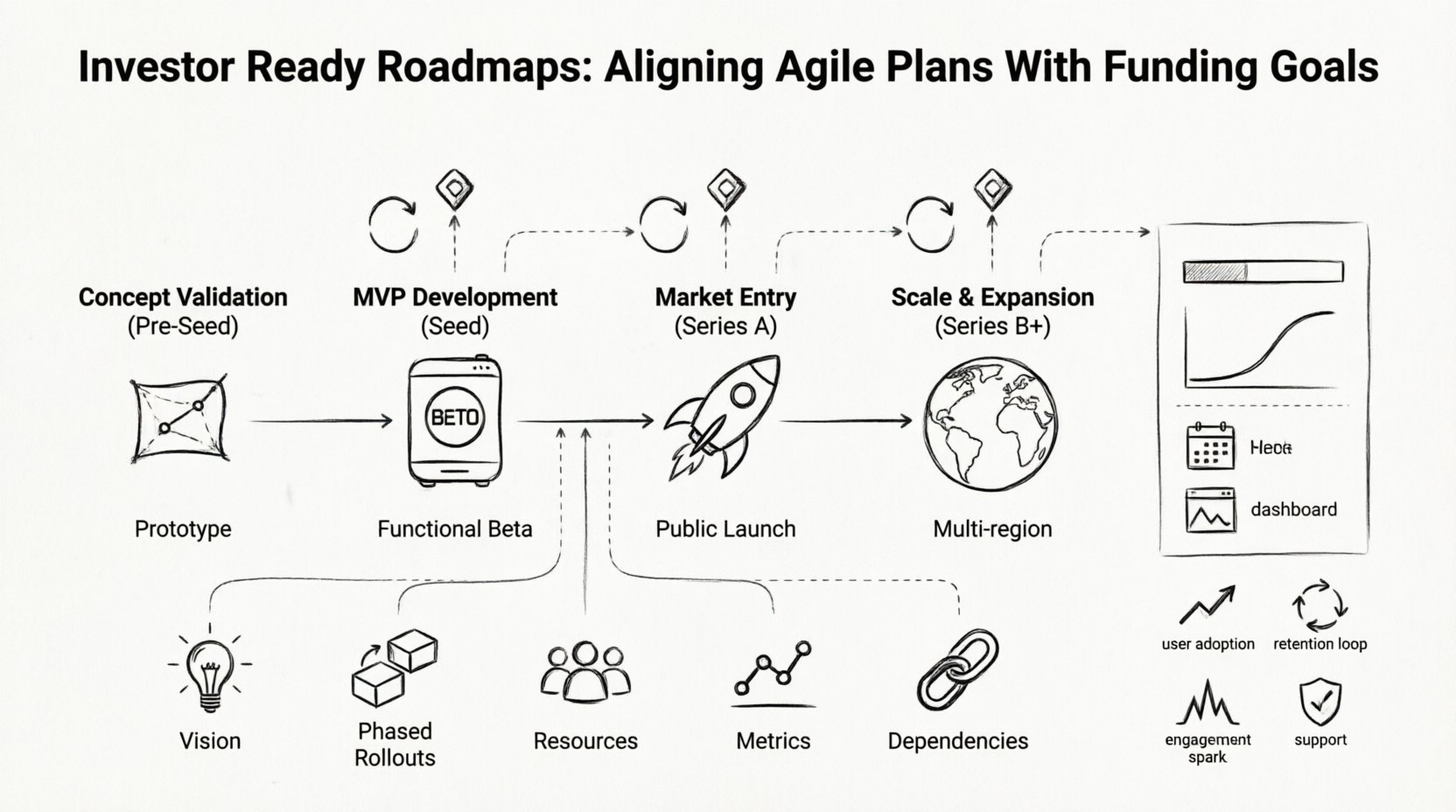
- Vision Statement: A clear definition of the end goal.
- Phased Rollouts: Breaking the vision into manageable stages.
- Resource Requirements: The people and budget needed for each phase.
- Success Metrics: How to measure progress at each stage.
- Dependencies: What must happen before the next step begins.
Each component serves a purpose. The vision sets the direction. The phases define the path. The resources define the cost. The metrics define success. The dependencies define the timeline. Omitting any of these creates holes in the narrative.
Mapping Sprints to Funding Tranches 💰
Funding often comes in tranches. Each tranche is released upon meeting specific criteria. These criteria are tied to milestones. Your internal sprint planning must align with these external triggers.
Consider the relationship between sprint velocity and capital deployment. If a tranche is released based on a beta launch, your sprints must prioritize features that enable that launch. Features that do not contribute to the beta should be deprioritized. This focus prevents waste.
It is also important to account for buffer time. Agile development involves unpredictability. Technical debt, integration issues, and scope changes happen. Planning for a buffer protects the timeline. It ensures that delays do not jeopardize the next funding round.
Milestone to Funding Alignment
| Development Phase | Typical Funding Stage | Key Deliverable | Investor Focus |
|---|---|---|---|
| Concept Validation | Pre-Seed | Prototype / Wireframes | Team Capability |
| MVP Development | Seed | Functional Beta | Product-Market Fit |
| Market Entry | Series A | Public Launch | Growth Potential |
| Scale & Expansion | Series B+ | Multi-region / Enterprise | Unit Economics |
This table provides a framework. It helps you see where your current work fits in the broader funding landscape. It allows you to anticipate what investors will look for at the next stage.
Mitigating Risk Through Transparent Reporting 🛡️
Transparency is a powerful tool for risk management. Hiding problems does not remove them. It only delays the inevitable. Investors prefer to be informed of risks early. This allows for course correction before damage occurs.
Establish a reporting cadence. Monthly updates are standard. These updates should cover:
- Progress Made: What was completed since the last report?
- Challenges Faced: What obstacles arose and how were they addressed?
- Financial Burn: Actual spend versus budgeted spend.
- Forward Look: What is planned for the next period?
Use data to support your claims. Velocity charts, burn-down charts, and defect rates provide objective evidence. They remove subjectivity from the conversation. This objectivity builds trust.
Communication Cadence for Stakeholders 📢
Frequency matters. Too much communication creates noise. Too little creates anxiety. Find a rhythm that suits the stakeholder group. Executives may prefer high-level summaries. Technical advisors may want detailed logs.
Segment your communication. Create a dashboard for high-level metrics. This dashboard should be accessible and up-to-date. It allows investors to check status without requesting a meeting. This autonomy reduces friction.
For deeper discussions, schedule regular calls. These calls should not be status reports. They should be strategic reviews. Use them to discuss market shifts, competitive moves, and long-term planning. Keep the tactical details for the written reports.
Adjusting Course Without Losing Trust 🧭
Pivots are common in early-stage ventures. Sometimes the market changes. Sometimes the technology proves too difficult. Sometimes a better opportunity arises. The ability to pivot is a strength, not a weakness.
However, pivots must be managed carefully. A sudden change without context looks like incompetence. A change explained with data looks like strategy. Always frame a pivot as an optimization based on new information.
Document the rationale. Why is this change necessary? What data supports it? What is the cost of staying the course? When you present a pivot, show the math. Show that the new direction offers a better return on investment. This approach maintains credibility.
Long-Term Vision vs. Short-Term Delivery 🎯
Focus on the next sprint can obscure the horizon. Focus only on the horizon can make the next sprint irrelevant. Balance is required. You must keep the long-term vision alive while executing short-term tasks.
Revisit the vision regularly. Ensure every sprint contributes to it. If a feature does not align with the vision, question it. This discipline prevents feature creep. Feature creep consumes budget and time without adding value.
Investors appreciate this discipline. It shows that the team is not chasing every shiny object. It shows a commitment to the core mission. This commitment is essential for sustained growth.
Measuring Success Beyond Code Output 📈
Code is a means, not an end. Shipping code is good. Shipping value is better. Investors invest in value, not lines of code. Therefore, your metrics should reflect value creation.
Consider these metrics:
- User Adoption Rate: Are people using the product?
- Retention: Do they come back?
- Engagement: How deeply do they interact?
- Conversion: Are they turning into customers?
- Support Load: Is the product stable enough for scale?
These metrics tell the story of the product’s health. They complement the technical metrics. Together, they provide a complete picture. This picture is what investors need to see to justify further investment.
Final Thoughts on Sustainable Growth 🌱
Aligning agile plans with funding goals is an ongoing process. It requires constant communication and adjustment. It requires a team that understands both technology and business.
Success comes from clarity. When everyone understands the plan, execution becomes smoother. When investors understand the plan, trust grows. When trust grows, the path to funding becomes less obstructed.
Focus on building a roadmap that is honest, data-driven, and value-oriented. This approach will serve your startup well. It will attract the right partners. It will sustain the momentum needed for long-term success. The journey is long, but a clear map makes it manageable.