

Creating a successful product in today’s fast-paced market requires a strategic approach that balances speed with quality. The intersection of Minimum Viable Product (MVP) methodology and Agile development offers a robust framework for navigating uncertainty. This guide provides a deep dive into constructing MVPs using Agile principles, focusing on iterative growth, validated learning, and efficient resource allocation. By understanding the synergy between these two concepts, teams can reduce risk and deliver value faster.
Understanding the Core Concepts 🧠
To build effectively, one must first understand the foundational definitions. An MVP is not a half-finished product. It is the smallest set of features that allows a team to collect the maximum amount of validated learning about customers with the least effort. It serves as a hypothesis test. Agile, on the other hand, is a mindset and set of practices that emphasizes flexibility, collaboration, and customer feedback. It prioritizes individuals and interactions over processes and tools.
When combined, Agile principles provide the rhythm for MVP development. Instead of a long, linear waterfall process, the work is broken into small cycles. This allows for constant adjustment. If a feature is not working as expected, the team can pivot quickly without having wasted months of development time. This reduces the cost of failure significantly.
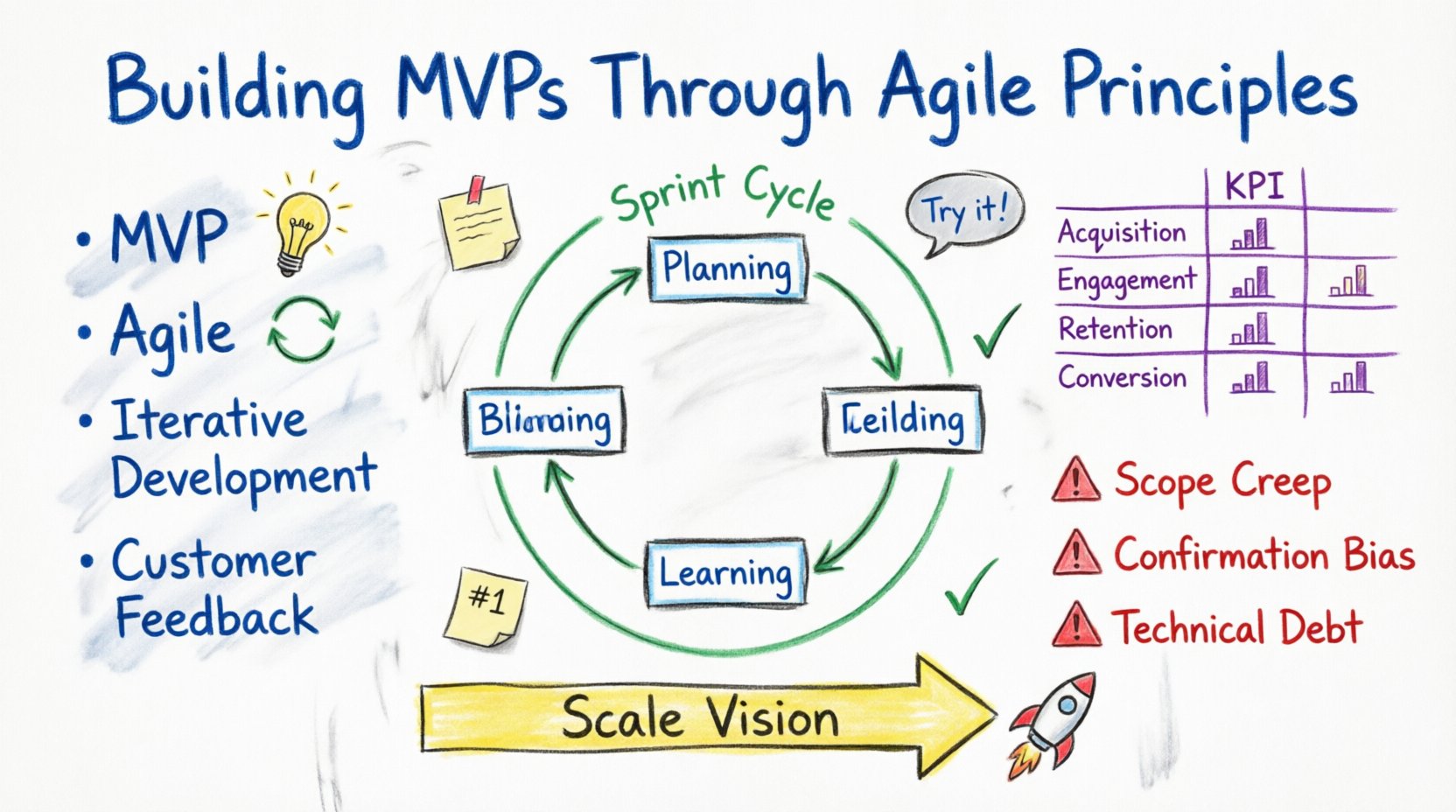
- Minimum Viable Product: A version of a product with just enough features to satisfy early customers.
- Agile Methodology: An iterative approach to project management and software development that helps teams deliver value to their customers faster.
- Iterative Development: The practice of building a product in small increments, refining it over time.
- Customer Feedback: Direct input from users that guides future development decisions.
Why Agile Fits MVP Development 🔄
The traditional approach to product development often involves extensive planning before a single line of code is written. While thorough planning is valuable, it assumes a level of certainty that rarely exists in the real world. Agile embraces uncertainty. It assumes that requirements will change and that the team needs the flexibility to adapt. This is crucial for MVPs because the primary goal is learning, not just shipping code.
Agile frameworks like Scrum or Kanban provide structure to this learning process. They ensure that the team is constantly reviewing progress and adjusting the backlog based on new information. This alignment is essential when resources are limited and the path forward is unclear.
The Strategic Alignment 🎯
Before writing any specifications, the team must align on the vision. What problem are we solving? Who is the target audience? Without this clarity, the MVP becomes a collection of random features rather than a coherent solution. The Agile principle of responding to change over following a plan does not mean ignoring the plan entirely. It means the plan is living and breathing.
During the initial planning phase, the team identifies the core value proposition. This is the single most important feature or set of features that delivers the primary benefit to the user. Everything else is secondary. By focusing on this core, the team avoids feature creep, which is a common pitfall that delays release and dilutes focus.
Preparation and Discovery 🔍
Discovery is the phase where hypotheses are formed. The team asks questions about user behavior, market needs, and technical feasibility. This is not a research phase that lasts forever; it is time-boxed. The goal is to gather enough information to make an informed decision on what to build next.
During this stage, the team might conduct interviews, create prototypes, or run small experiments. These activities are low-cost and high-reward. They help validate assumptions before significant development resources are committed. This aligns with the Agile value of customer collaboration over contract negotiation.
- User Interviews: Direct conversations to understand pain points.
- Competitor Analysis: Reviewing existing solutions to find gaps.
- Wireframing: Visualizing the flow without building the final product.
- Assumption Mapping: Listing what you know, what you don’t know, and what needs testing.
The Iterative Process 📅
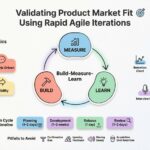
The heart of Agile MVP development is the iteration loop. This loop consists of planning, building, measuring, and learning. It repeats continuously. Each cycle, often called a sprint, lasts between one to four weeks. At the end of each cycle, a potentially shippable increment of the product is produced.
This incremental approach allows the team to release value to users early. Instead of waiting for a massive launch, users get access to the product in stages. This provides immediate feedback on usability and functionality. The team can then prioritize the backlog for the next iteration based on this feedback.
| Phase | Key Activities | Outcome |
|---|---|---|
| Planning | Backlog refinement, sprint goal setting | Clear objectives for the cycle |
| Building | Coding, design, testing | Functional features |
| Measuring | Analytics, user testing | Performance data |
| Learning | Retrospectives, backlog updates | Strategic adjustments |
Planning the Sprint Cycle 📝
Effective planning is the backbone of successful iterations. The team selects items from the product backlog that can be completed within the timebox. This selection is based on priority and capacity. It is vital to be realistic about what can be achieved. Overcommitting leads to burnout and technical debt.
During sprint planning, the team breaks down large user stories into smaller tasks. This granularity allows for better tracking and estimation. If a task is too large, it is difficult to assess risk. Small tasks provide clarity and allow for quicker completion. This supports the Agile principle of working software over comprehensive documentation.
Execution and Development ⚙️
During the execution phase, the focus is on collaboration and communication. Daily stand-up meetings help the team stay aligned. These meetings are short and focused on progress, blockers, and next steps. They prevent silos and ensure that everyone is working toward the same goal.
Code quality is maintained through practices like pair programming and continuous integration. These practices ensure that the product remains stable even as it evolves rapidly. Technical debt is managed by allocating time in each sprint for refactoring. Ignoring debt leads to a fragile product that becomes harder to change over time.
- Pair Programming: Two developers working on one codebase to improve quality.
- Continuous Integration: Merging code changes frequently to detect errors early.
- Definition of Done: A clear checklist of criteria that must be met before a feature is considered complete.
- Code Reviews: Peer reviews to maintain standards and share knowledge.
Testing and Feedback 🧪
Testing is not a separate phase at the end of development. It is integrated throughout the process. Automated tests are written alongside the code to ensure that new changes do not break existing functionality. Manual testing is also conducted to check user experience and usability.
Feedback from users is collected through the MVP itself. Analytics tools track how users interact with the product. Where do they click? Where do they drop off? This data provides objective evidence of how the product is performing. Qualitative feedback comes from user interviews and support channels. Both types of data are valuable for decision-making.
Metrics and Analysis 📊
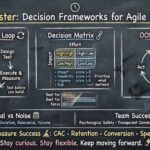
Measuring success is critical for determining if the MVP is achieving its goals. The team must define key performance indicators (KPIs) before starting. These metrics should relate directly to the hypotheses being tested. Vanity metrics, such as total downloads, are less useful than actionable metrics, such as daily active users or retention rates.
Analysis should be a team activity. Everyone should understand the data and what it means for the product. This democratizes decision-making and ensures that the team moves in the same direction based on evidence rather than opinion.
| Category | Example Metric | Why It Matters |
|---|---|---|
| Acquisition | Cost Per Acquisition | Efficiency of marketing efforts |
| Engagement | Session Duration | Quality of user experience |
| Retention | Day 7 Retention | Stickiness of the product |
| Conversion | Sign-Up Rate | Effectiveness of onboarding |
Common Pitfalls ⚠️
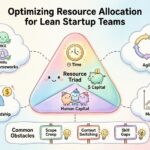
Even with a solid plan, teams can encounter obstacles. One common issue is scope creep. As the team builds, they often realize they need more features to make the product work. It is tempting to add them, but this undermines the MVP philosophy. The team must resist the urge to overbuild.
Another pitfall is ignoring negative feedback. It is easy to focus on what users like, but the features they dislike or find confusing are equally important. Negative feedback often points to fundamental issues that need to be addressed immediately. The team must be willing to pivot if the data suggests the current direction is not working.
- Scope Creep: Adding features beyond the MVP scope.
- Confirmation Bias: Only looking for data that supports existing beliefs.
- Ignoring Technical Debt: Sacrificing code quality for speed.
- Lack of Communication: Silos between development and product teams.
Team Culture and Dynamics 👥
The success of an Agile MVP depends heavily on the team culture. A culture of psychological safety allows members to admit mistakes and ask for help. This is essential for rapid learning. If team members fear blame, they will hide problems, which leads to larger issues later.
Collaboration is key. Product owners, developers, and designers must work together as a single unit. Decisions should be made collectively. This ensures that all perspectives are considered and that the final product is well-rounded. The team should celebrate small wins to maintain momentum and morale.
Scaling the Vision 🚀
Once the MVP has validated the core hypothesis, the team can begin to scale. This does not mean launching immediately to millions of users. It means expanding the feature set and improving performance. The same iterative process applies. New features are added in small increments and tested before wide release.
Scaling also involves optimizing the infrastructure to handle increased load. This requires planning and investment. The team must ensure that the technical foundation can support growth. Neglecting this can lead to outages and a poor user experience when demand increases.
Final Thoughts on Product Evolution 🌱
Building a Minimum Viable Product through Agile principles is a journey of continuous improvement. It requires discipline to stay focused on the core value while remaining flexible enough to adapt to change. By prioritizing learning and feedback, teams can navigate the complexities of product development with confidence.
The goal is not to build the perfect product on the first try. It is to build a product that evolves based on real-world usage. This approach minimizes risk and maximizes the potential for success. As the product grows, the principles of Agile remain relevant, ensuring that the team continues to deliver value efficiently.
By following these guidelines, organizations can create products that truly meet user needs. The combination of MVP focus and Agile execution creates a powerful engine for innovation. It transforms uncertainty into a structured path forward, allowing teams to build with purpose and precision.