

Integrating a new member into a team that operates under Agile principles requires more than just handing over credentials and access. It demands a structured approach that respects the existing cadence of work while introducing the individual to the culture of collaboration, iteration, and continuous improvement. This guide provides a comprehensive framework for bringing new talent into Agile environments without disrupting the flow of value delivery. We will explore the phases of integration, from pre-arrival preparation to the first sprint contribution, ensuring every new hire feels grounded and productive.
Why Agile Onboarding Differs from Traditional Models 🤔
Traditional onboarding often follows a linear path: training, then assignment, then execution. Agile onboarding is iterative. It mirrors the product development process itself. New hires are not just learning a job; they are learning a rhythm. They must understand how work is visualized, how feedback is gathered, and how decisions are made in real-time.
- Speed of Integration: In Agile, time-to-value is critical. The goal is to move a new hire from observer to contributor quickly.
- Cultural Immersion: Values like transparency, adaptability, and customer focus must be demonstrated, not just taught.
- Workflow Familiarity: Understanding the backlog, the sprint cycle, and the definition of done is essential for immediate participation.
Without a dedicated onboarding strategy, new team members can feel isolated or overwhelmed by the pace. They may hesitate to ask questions in daily stand-ups or feel unsure about where their tasks fit within the larger picture. A robust onboarding process mitigates these risks.
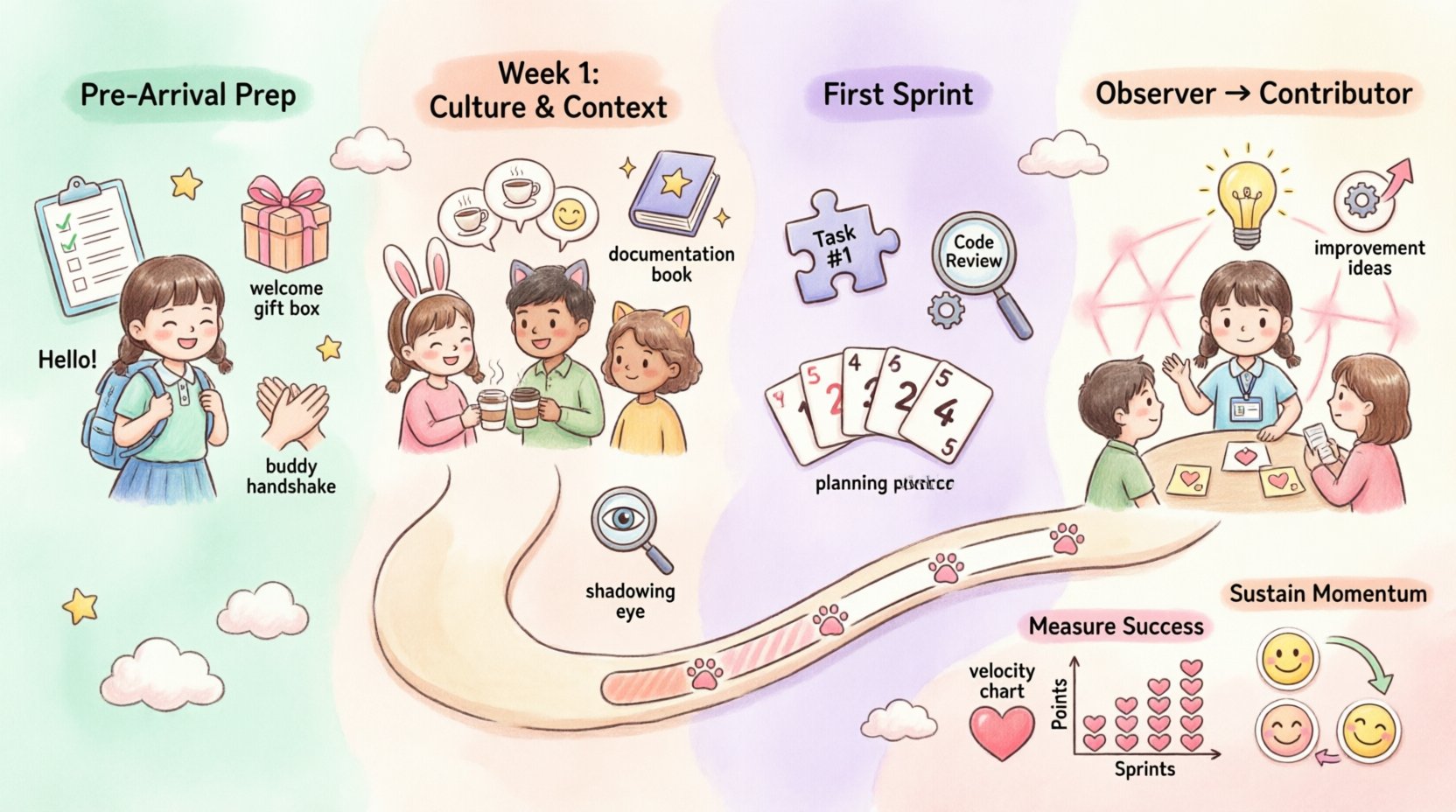
Phase 1: Pre-Arrival Preparation 📋
The onboarding journey begins before the new hire signs their contract. This phase sets the tone for their experience and ensures that the team is ready to receive them. Preparation involves logistics, cultural signaling, and resource allocation.
1.1. Logistics and Access
Ensure all necessary tools are provisioned before Day One. This includes access to communication channels, documentation repositories, and tracking systems. While specific software names are less important than the availability of these resources, the process must be seamless.
- Verify hardware setup and security credentials.
- Prepare accounts for collaboration platforms.
- Grant read-only access to historical project data for context.
1.2. The Welcome Package
Send a digital welcome packet that outlines the first week’s schedule. Include a reading list of key documentation. This reduces anxiety and allows the new hire to arrive with a baseline understanding.
- Organizational chart and team roles.
- Links to the team charter and working agreements.
- Links to the product roadmap and recent release notes.
1.3. Buddy System Assignment
Pair the new hire with a “buddy” who is not their manager. This person serves as the first point of contact for non-technical questions, cultural norms, and informal guidance. The buddy should be someone who embodies the team’s values and is willing to listen.
Phase 2: The First Week – Culture and Context 🏁
The first week is about connection and context. It is not about completing high-stakes tasks. It is about understanding the environment and building trust. Focus on introductions, shadowing, and low-risk learning.
2.1. Team Introductions
Facilitate structured introductions with cross-functional partners. This helps the new hire see how their role interacts with others. Schedule 15-minute coffee chats with key stakeholders.
- Product Owner: Understand the vision and priorities.
- Scrum Master: Understand the process and impediments.
- Peers: Understand the daily workflow and collaboration style.
2.2. Shadowing Rituals
Have the new hire sit in on ceremonies without the expectation of active speaking. This allows them to observe the flow of conversation and the energy of the meeting.
- Daily Stand-up: Observe how updates are shared and blockers are identified.
- Sprint Planning: Watch how work is estimated and committed.
- Review: See how work is demonstrated and feedback is handled.
- Retrospective: Observe how the team discusses improvement.
2.3. Documentation Review
Encourage the new hire to review the team’s working agreements. These documents define how the team handles code reviews, communication, and conflict resolution. Understanding these norms prevents future friction.
- Review the Definition of Done (DoD).
- Understand the coding standards and branch strategy.
- Learn the escalation paths for critical issues.
Phase 3: Navigating the First Sprint 🏃
By the second week, the new hire should begin to engage with the work. This phase focuses on low-risk tasks that allow them to practice the workflow without impacting critical delivery.
3.1. Selecting the Right Tasks
Assign tasks that are well-defined and have clear acceptance criteria. Avoid complex refactoring or high-risk architectural changes. The goal is to complete a cycle from start to finish.
- Documentation updates.
- Minor bug fixes.
- Infrastructure or setup tasks.
- Test case creation.
3.2. Participating in Planning
Encourage the new hire to participate in estimation sessions. They should ask questions if they do not understand the scope. This is a safe space to learn how the team evaluates effort.
- Ask about the complexity of the stories.
- Discuss dependencies with other team members.
- Commit to a reasonable amount of work based on capacity.
3.3. Code and Work Reviews
Ensure the new hire’s work goes through the standard review process. This reinforces the quality standards of the team. They should also participate in reviewing others’ work to understand the collective codebase.
- Submit pull requests early to get feedback.
- Attend review meetings to see how feedback is given.
- Understand the criteria for merging changes.
Phase 4: From Observer to Contributor 🤝
By the end of the first month, the new hire should be fully integrated into the workflow. They are no longer asking basic questions and are contributing to the team’s velocity. This phase focuses on ownership and deeper collaboration.
4.1. Leading a Ceremony
Invite the new hire to facilitate a meeting or lead a segment of a ceremony. This builds confidence and reinforces their understanding of the process.
- Facilitate the daily stand-up for a day.
- Lead the definition of done discussion in a retrospective.
- Present the progress of their tasks during the review.
4.2. Cross-Functional Collaboration
Expand their interactions beyond the immediate team. They should begin to engage with QA, Product, and Design to understand the broader ecosystem.
- Participate in backlog refinement sessions.
- Collaborate on feature design.
- Understand the customer feedback loop.
4.3. Continuous Improvement
Ask the new hire to suggest improvements to the process. Fresh eyes often spot inefficiencies that long-tenured team members overlook.
- Identify bottlenecks in the workflow.
- Suggest better documentation practices.
- Propose new tools or techniques to aid the team.
Common Friction Points and Solutions ⚠️
Even with a plan, challenges will arise. The following table outlines common issues new hires face and practical strategies to resolve them.
| Challenge | Root Cause | Recommended Solution |
|---|---|---|
| Feeling Overwhelmed | Too much information at once | Limit documentation access to specific topics per week. Use the buddy system for clarification. |
| Unclear Priorities | Confusion about the backlog | Review the sprint goal and product vision with the Product Owner early. |
| Imposter Syndrome | Comparison to senior team members | Highlight their unique strengths. Encourage them to ask questions without judgment. |
| Process Rigidity | Perception that Agile is a rigid set of rules | Explain the “why” behind the ceremonies. Show flexibility in how work is done. |
| Communication Gaps | Missing context in async updates | Encourage video calls for complex topics. Document decisions in the central repository. |
Measuring Integration Success 📊
How do you know if the onboarding process is working? Use a combination of qualitative feedback and quantitative metrics to assess the new hire’s progress.
5.1. Qualitative Indicators
- Confidence: Does the new hire feel comfortable speaking in meetings?
- Autonomy: Are they solving problems without constant guidance?
- Connection: Do they have a network of people they can turn to?
5.2. Quantitative Indicators
- Velocity: Has their output stabilized within expected ranges?
- Quality: Is the defect rate within the team’s average?
- Engagement: Are they participating in ceremonies consistently?
Sustaining the Momentum 🌱
Onboarding does not end after the first month. Continuous development is key to maintaining high performance. Schedule regular check-ins to discuss career growth, skill development, and long-term goals.
- 30-Day Check-in: Review initial goals and adjust expectations.
- 90-Day Review: Assess overall integration and long-term fit.
- 12-Month Review: Discuss career pathing and advanced responsibilities.
Encourage the team to continue learning together. Agile is about adapting to change, and that includes adapting the onboarding process itself based on feedback from new hires.
Conclusion 🏁
Onboarding new hires into Agile workflows is a critical investment in the team’s future. It requires intentionality, empathy, and a clear structure. By focusing on culture, context, and gradual integration, organizations can ensure that new talent thrives rather than struggles. Remember that the goal is not just to fill a seat, but to enhance the collective capability of the team.
When done correctly, the new hire becomes a catalyst for positive change. They bring fresh perspectives, challenge assumptions, and contribute to the continuous improvement cycle. This guide provides the foundation, but the team must adapt it to fit their unique context. Regular feedback loops and a commitment to transparency will ensure that the onboarding process remains effective and relevant.
Start today by reviewing your current process. Identify gaps in your preparation, your first week activities, and your sprint integration plan. Small improvements now will yield significant returns in retention and performance later.