ファイルではなくプロトタイプを共有する:共有可能なAIチャット履歴によるアーキテクチャの共同作業

複雑なプロジェクトでは、図を静的なファイル(PNG、PDF)として共有することは根本的に不十分である。それは最終成果物を提供するが、重要な文脈を欠いている:なぜその図がそのように作成されたのか、誰が変更を要求したのか、そして*どのような*代替案が検討されたのか。これにより、関係者が面倒なメールのやり取りを開始し、繰り返し質問をすることになり、重要な承認の遅延を引き起こし、誤解のリスクが高まる。効果的な共同作業には、最終画像だけでなく、設計の根拠と進化過程モデルの根拠と進化過程を共有することを必要とする。設計プロセス——つまり会話そのもの——は、成果物と同じくらい重要である。

Visual ParadigmのAIチャットボットは、設計会話全体を決定的な成果物として扱うことで、この問題を解決し、現代的で透明性があり非同期的な共同作業に最適である。

最終成果物だけでなく、進化過程を共有する

AIは、チームがモデルとどのように働きかけるかを根本的に再定義する2つの強力な共同作業機能を可能にする:

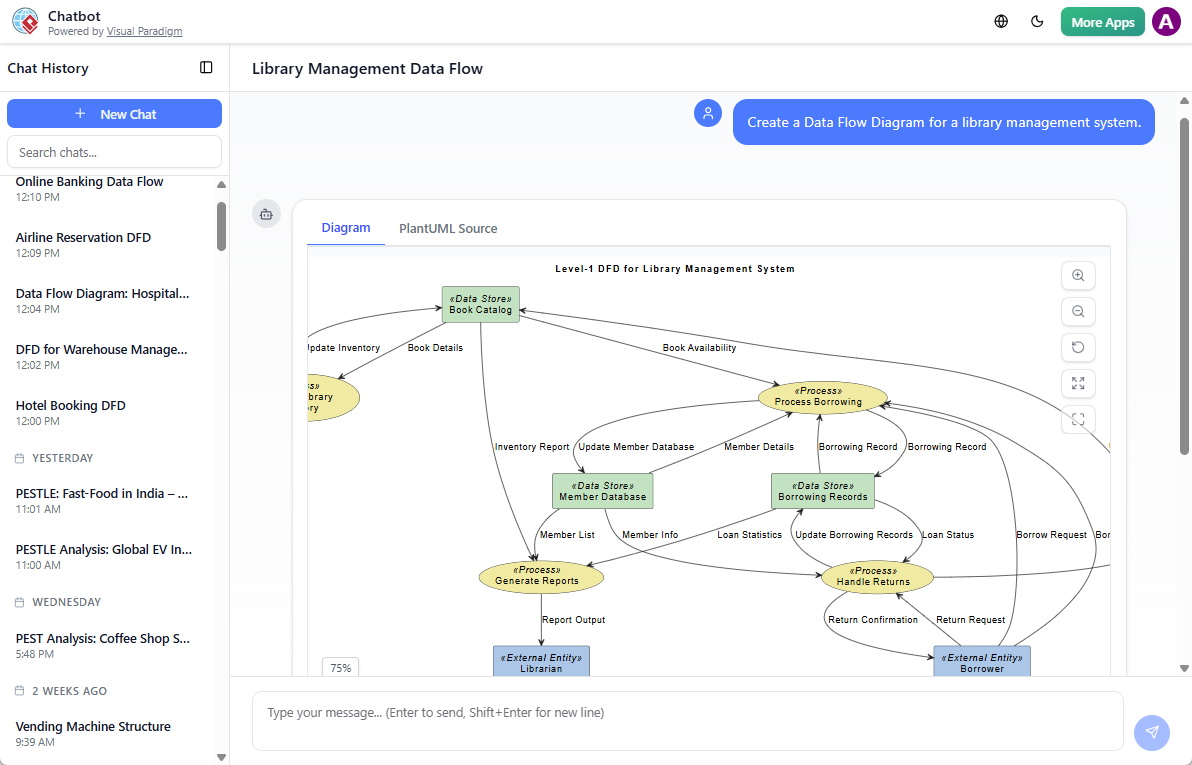
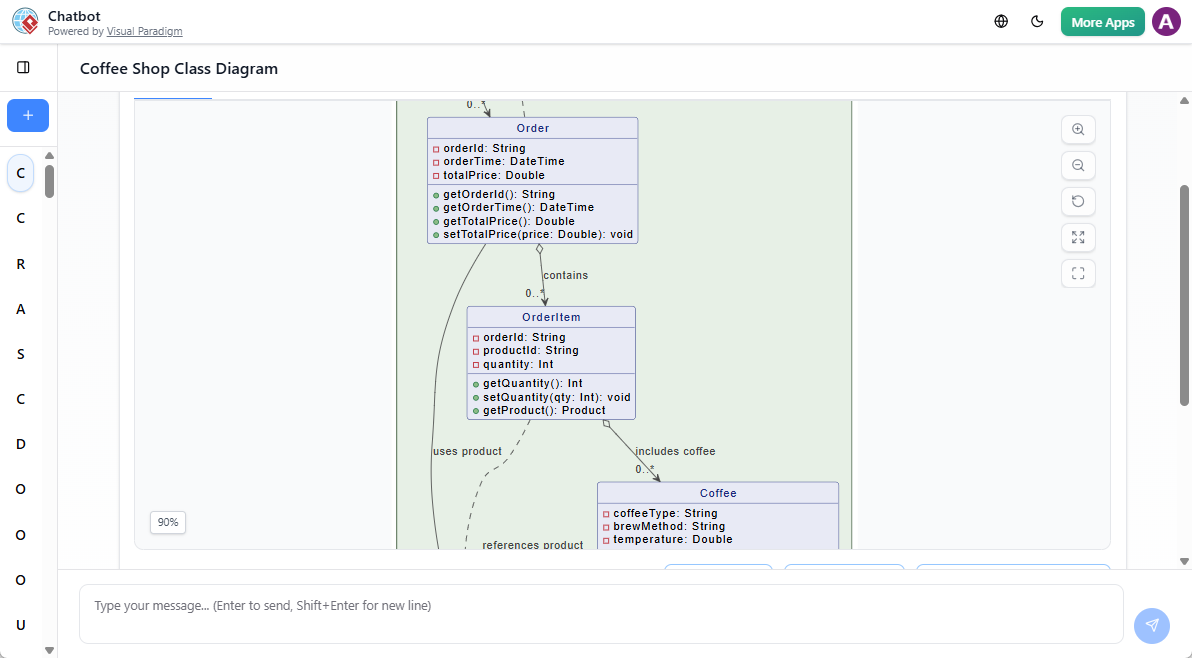
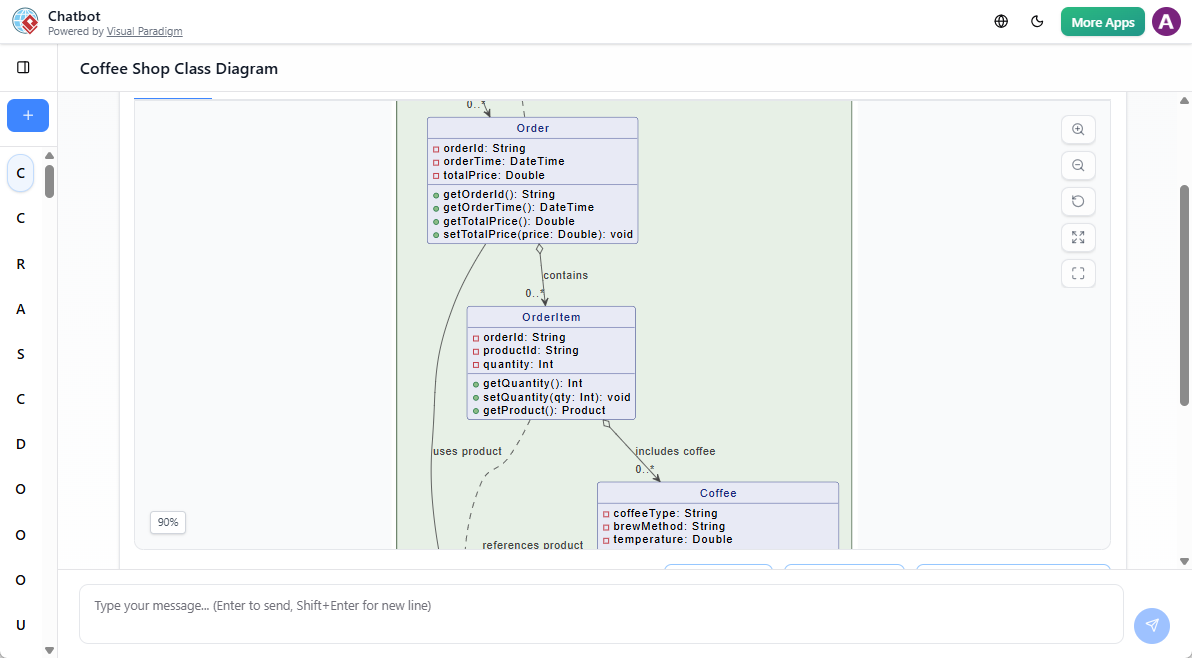
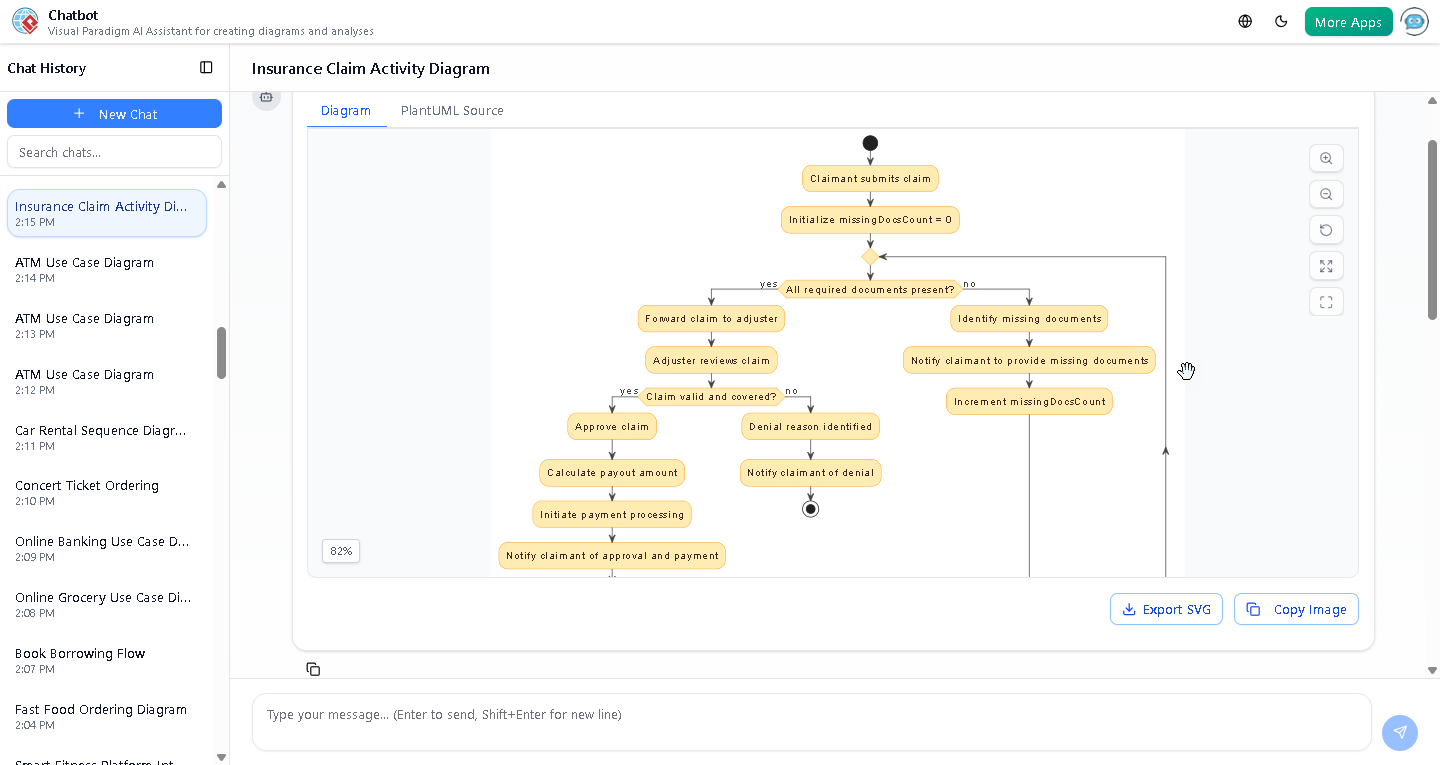
  1. 永続的なチャット履歴:すべてのやり取り——初期のプロンプト、生成された図(UML、C4、ArchiMate)、その後のすべての微調整操作(例:「コンテナを追加」、「システム名を変更」)、そしてすべてのAIの回答——が自動的に永続的な**チャット履歴**に保存される。この履歴が設計意思決定の最終的な真実の源となる。
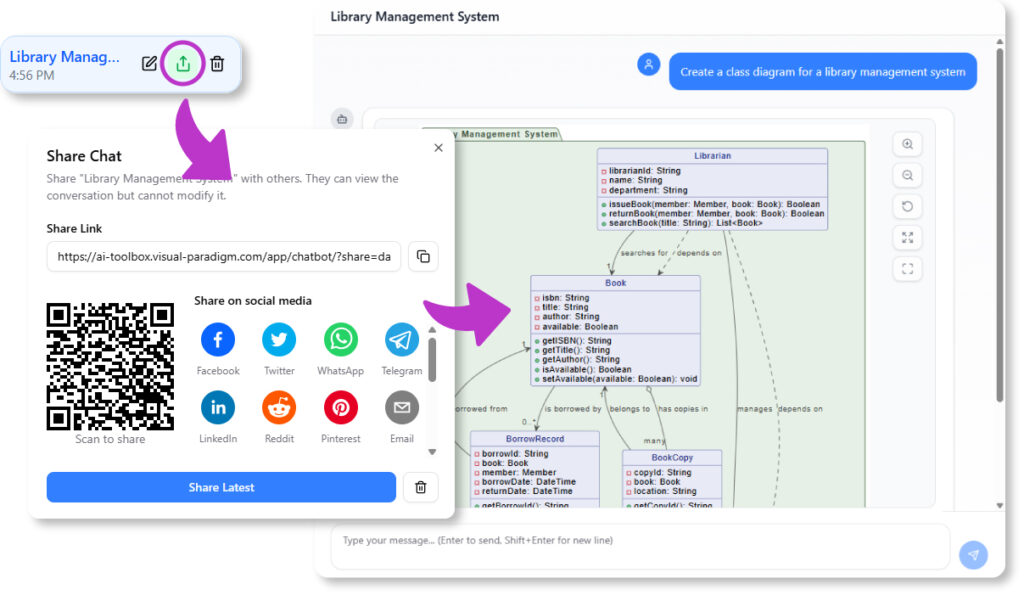
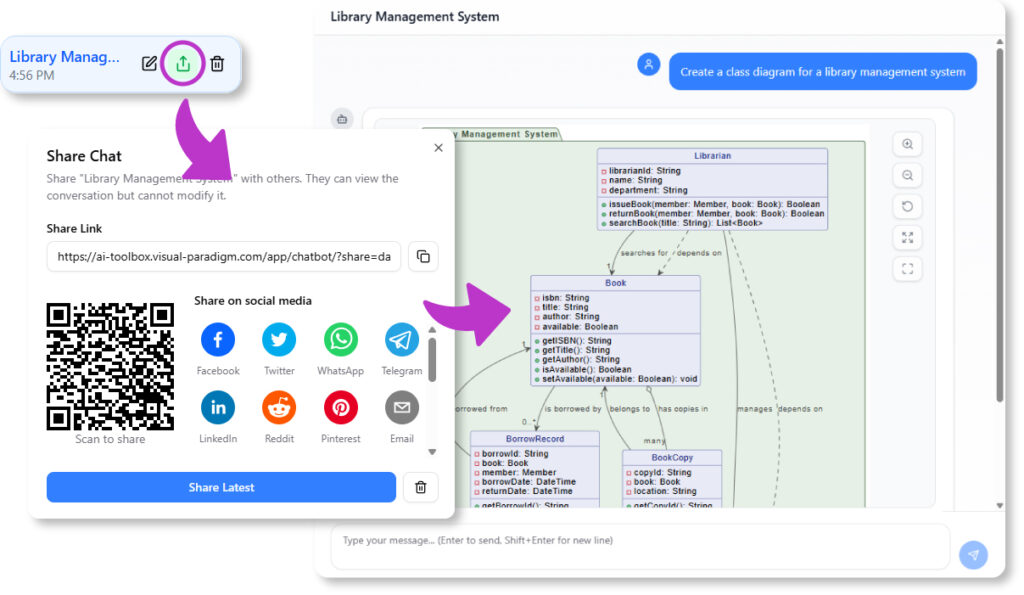
  2. 共有可能なURL:あなたは**URL経由でチャットセッションを他の人と共有できる**。関係者がリンクを開くと、すべてのトランスクリプトが表示される。高レベルの説明から最終的な詳細な**UMLクラス図** または **C4デプロイメント図**.

これにより、プロジェクトの完全で文脈のある監査トレースが作成され、やり取りの回数が大幅に削減され、すべての関係者がアーキテクチャの*なぜ*を理解できるようになる。

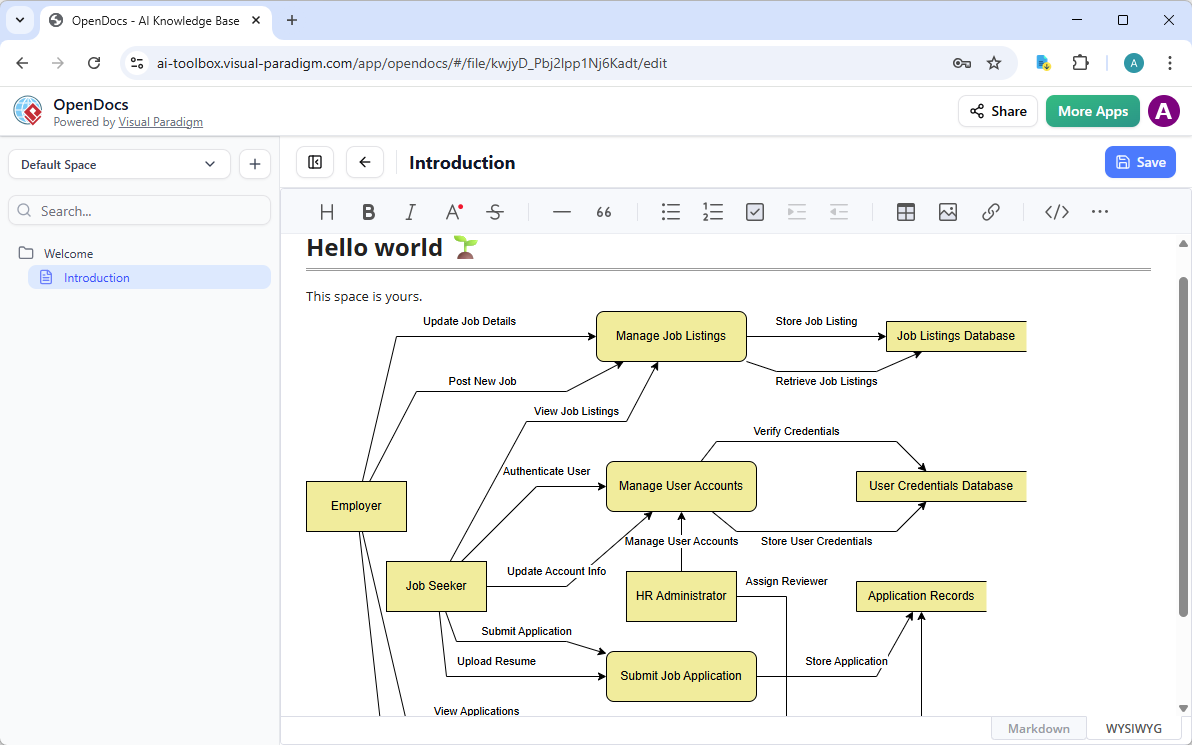
We can share our chat history with others to better understand the workflow

強化されたレビューと責任の明確化

この動的な共有機能は、透明性が重要ないくつかの重要なチーム活動において、非常に価値がある:

  • 関係者によるレビュー: 静的プレゼンテーションではなく、チャット履歴を送信してください。ステークホルダーはモデルの進化を確認でき、AIが提示する**次の質問の提案**を即座に確認でき、デザインの深い意味合いを検討するよう導かれます。外観の評価にとどまらず、その理由を理解できるようになります。
  • オンボーディングとトレーニング: 新しいチームメンバーは、主要なモデルのチャット履歴を確認することで、プロジェクトのアーキテクチャやその形成に寄与した意思決定を迅速に理解できます。履歴は動的な知識ベースとして機能し、複雑な概念を文脈の中で説明します。
  • コンサルティングとクライアント作業:コンサルタントは共有可能なリンクを、すべてのモデリング作業の透明な記録として利用でき、クライアントに設計プロセス、意思決定の根拠、モデルのコンプライアンスチェックに関する明確で疑いのない記録を提供できます。
  • 監査可能性:設計変更の原因となった正確なプロンプトを追跡できる能力は、規制遵守や事故後の技術的レビューにおいて不可欠な記録を提供します。

図面を超えた協働

AIは、プロジェクトのコミュニケーションのすべての側面を、協働チャットセッション内でカバーします。

  • 統合された文書化:共有する前に、AIに**物語形式のレポート**を生成してモデルを要約してもらうことができます。このレポートと生成プロンプトは共有履歴に保存されるため、視覚的と文章的文書化の完璧な統合が実現します。
  • 標準準拠:AIは主要な標準に精通して訓練されているため、共有されるモデルは明確なコンプライアンス規則に準拠しており、分散チームが継続的な手動検証なしに効果的に協働できるようになります。
  • モデリングの継続性:会話が共有された後でも、元のユーザーは**モデルをVisual Paradigmにインポート**して、プロフェッショナルなバージョン管理とリポジトリ管理が可能になり、初期の協働会話から最終実装まで設計の連続性を維持できます。

古くなったPDFや静的な画像の送信をやめましょう。設計プロセスの生き生きとした協働型のブループリントを共有し始めましょう。アーキテクチャレビューの未来は、対話的で透明なものになります。

今日から透明なアーキテクチャ協働を実現しましょう:chat.visual-paradigm.com.

Visual Paradigm:2026年の包括的なAI駆動型ビジュアルモデリングプラットフォーム

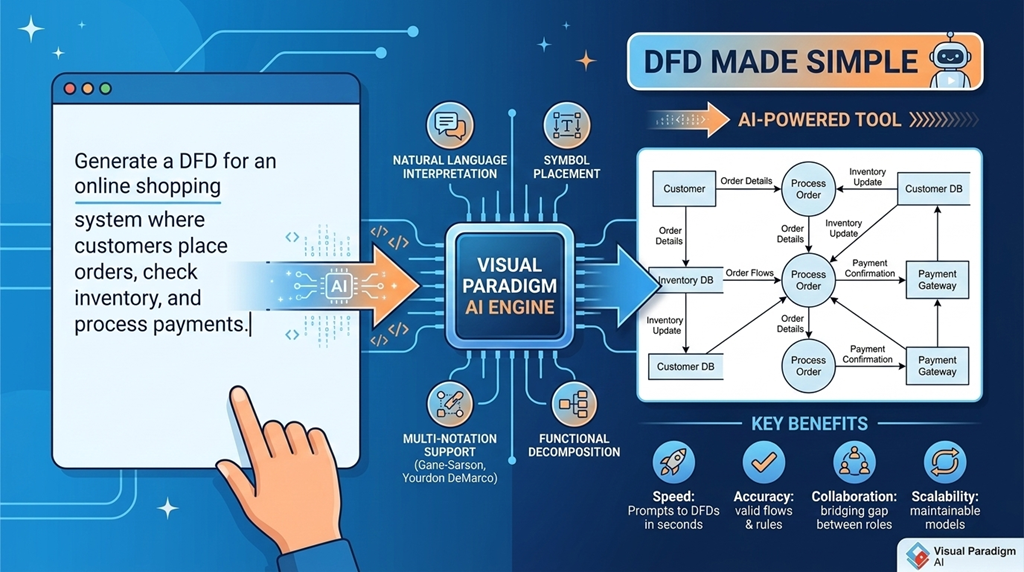
ビジュアルモデリングはソフトウェア開発、システム工学、エンタープライズアーキテクチャ、ビジネスプロセス設計において中心的な役割を果たし続けています。2026年には、AI駆動型のビジュアルモデリングプラットフォームが専門家が構造化された図をより効率的に作成できるようにします。これは、記述や要件、議論を正確で読みやすいビジュアルに変換し、分析や協働、意思決定を支援します。Visual Paradigmは、高度な生成型AI機能を統合しており、その中には会話型AIチャットボットおよびインスタント図生成機能——を強力なビジュアルモデリング環境に統合しています。この組み合わせにより、ユーザーは図の表記、レイアウト、検証、プレゼンテーションのすべてを完全に制御しながら、高品質な図を迅速に作成できます。

AIがビジュアルモデリングワークフローをどのように強化するか

プラットフォームのAI機能は、図の品質を損なうことなく、ビジュアル作成をより速く、直感的に行うことに注力しています:

  • ユーザーは自然言語で希望する図を記述します(「メール認証と承認ステップを含むユーザー登録プロセスを示すアクティビティ図を作成」)
  • AIが完全で標準準拠のビジュアルモデルを生成します
  • 後続の修正により、明確さと構造が向上します(「異なる役割にスイムレーンを使用」、「拒否経路に判断ノードを追加」、「判断要素に一貫した色分けを適用」)
  • ユーザーはモデルに直接質問できます(「このシーケンス図の重要な経路を強調」、「読みやすさのための視覚的改善を提案」)

この反復的なアプローチは、チームがビジュアルモデルを自然に開発・改善する方法をサポートします。広い概要から始めて、段階的に詳細と完成度を高めていきます。

広範なビジュアルモデリング表記法のサポート

Visual ParadigmのAI図生成機能は、広く使われているモデリング標準にわたって正確なビジュアルを生成します:

表記法 一般的なAI生成図の種類 視覚的用途と利点
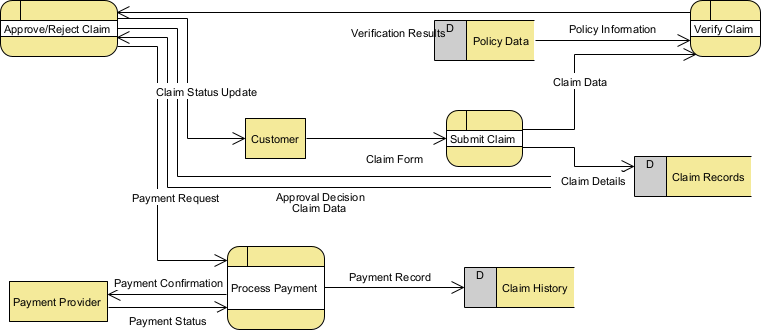
UML クラス図、シーケンス図、アクティビティ図、ユースケース図、コンポーネント図、デプロイメント図、状態機械図 構造、動作、相互作用の明確な表現
SysML ブロック定義(BDD)、内部ブロック(IBD)、要件、パラメトリック 構造化されたシステム構成とトレーサビリティの視覚的表現
ArchiMate 動機、ビジネス、アプリケーション、技術、実装および移行の視点 階層的なエンタープライズアーキテクチャの概要
C4モデル システムコンテキスト、コンテナ、コンポーネント、コードビュー 階層的で読みやすいソフトウェアアーキテクチャの文書化
BPMN 2.0 プロセス、コラボレーション、会話 正確なワークフローと役割ベースのプロセス可視化
ERD 論理的および物理的ER図(チェン/クロウズフット) クリーンなデータベーススキーマと関係性の可視化

AIは公式の表記規則を尊重しており、生成された図はすぐにプロフェッショナルな文脈で使用可能になります——社内レビューから外部納品まで

AI生成から洗練された視覚モデルへ

Visual Paradigmは完全な視覚モデリングプロセスをサポートしています:

  • 迅速なAIアシストスタートブラウザ上で — ブレインストーミングやワークショップ、初稿作成に最適
  • スムーズなデスクトップへの移行 — AI生成されたモデルを完全なVisual Paradigmデスクトップアプリケーションで開き、詳細な視覚的最適化を行う
  • プロフェッショナルな視覚ツール:
    • 複数のレイアウトアルゴリズム(階層的、直交的、有機的)
    • カスタムテーマ、カラーパレット、アイコンセット
    • レイヤー管理、視覚フィルター、選択的非表示
    • 注釈、ハイパーリンク、強調表示、埋め込み画像
  • 検証とシミュレーション — 視覚的ルールチェック、BPMNパスシミュレーション、SysML制約評価
  • エクスポートオプション — 高解像度PNG/SVG、インタラクティブPDF、Visio互換ファイル、埋め込み可能なHTML

このワークフローにより、迅速に生成された視覚的表現がツールの切り替えなしに、明確でプレゼンテーション用に整備された図へと進化します。

視覚的明確性を支援する追加のAI機能

いくつかの専用AIツールが、視覚モデリングの成果をさらに向上させます:

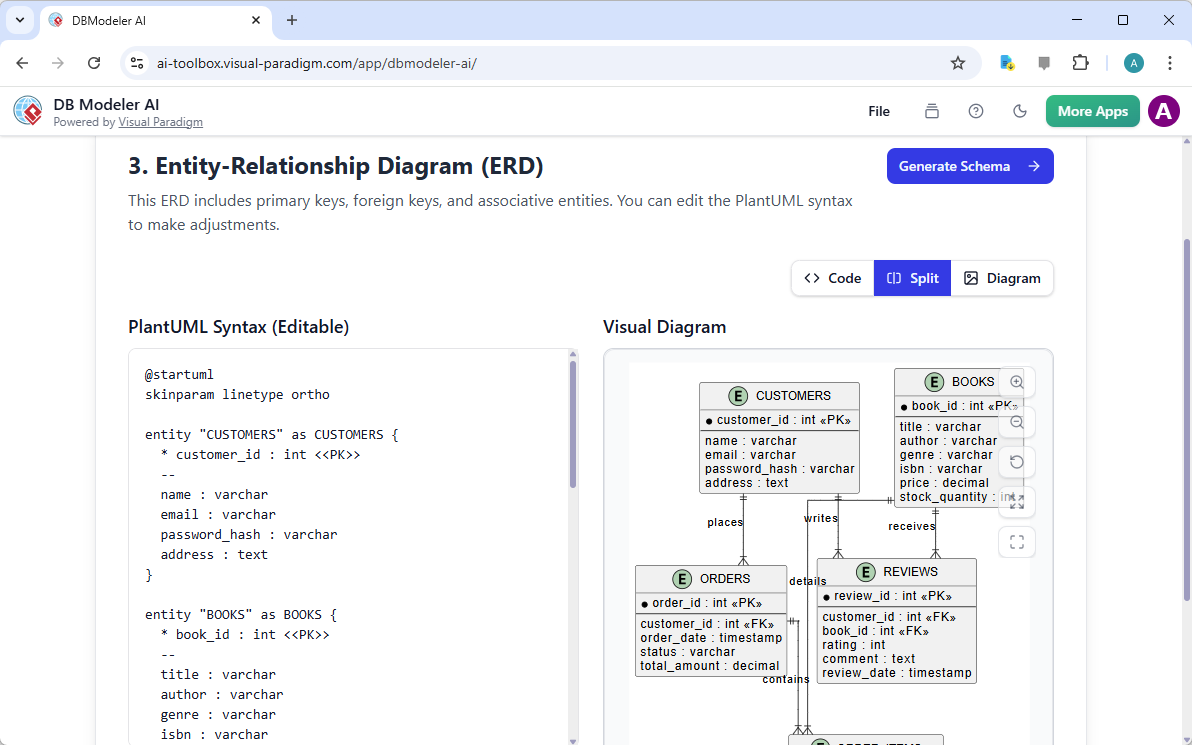
  • DBModeler AI — 明確なキーインジケータ、関係線、基数表記を備えた整理されたER図を生成
  • テキスト → 視覚的抽出 — 要件テキストからコンセプトを特定し、構造化されたクラス図またはER図に配置
  • 戦略的ビジュアルジェネレーター — バランスの取れたビジネスモデルキャンバス、SWOTマトリクス、OKRツリー、その他のフレームワークを、強い視覚的階層構造で作成

結論

Visual Paradigmは、スピードと品質の両方を重視する信頼性の高いAI駆動のビジュアルモデリングプラットフォームです。会話型AI生成、正確な記法サポート、高度なビジュアル編集ツール、シームレスなワークフローの連続性を統合しており、日常業務で明確で正確な図表に依存する専門家に最適です。

無料のオンライントライアルで、AIチャットボットとビジュアルモデリング機能に即座にアクセスできます。特定の用途に合わせてその機能を簡単に検証できます。

訪問:www.visual-paradigm.com

関連リンク

Visual Paradigm AI パッケージ図生成ツール:テキストからUMLパッケージへ

あなたは新しいコンテンツ管理システムの設計を進め、レイヤー、モジュール、依存関係——プレゼンテーション、ビジネスルール、永続化、セキュリティ——に目を向けていますが、上位構造はまだ不明瞭です。初稿のためにパッケージやサブパッケージ、依存関係の矢印を手動で作成するのは過剰に感じられます。Visual ParadigmのAIが登場します。パッケージ図生成ツール:システムを平易な言葉で説明するだけで、数秒でクリーンで標準準拠のUMLパッケージ図が得られます。心の中のモデルから視覚的なブループリントへと迅速に移行できる道です。

なぜこのAIがソフトウェアアーキテクチャを変えるのか

  • 自然言語 → 即座に完全なUMLパッケージ図
  • パッケージ、サブパッケージ、依存関係、ステレオタイプを自動認識
  • レイヤード構造、モジュール構造、マイクロサービス型構造を対応可能
  • 完全に編集可能なネイティブモデル — 精緻化、ノートの追加、パッケージの統合が可能
  • デスクトップの正確さ+ブラウザ内チャットボットによる迅速な反復

1. デスクトップ:プロンプト → 構造化されたアーキテクチャ

Visual Paradigm デスクトップで:

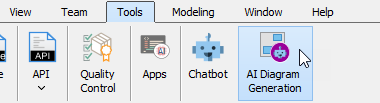
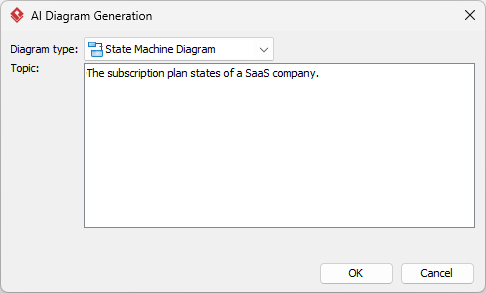
ツール → AI図生成 → 「パッケージ図」を選択 → システムを説明:

「次のコンテンツ管理システムのUMLパッケージ図を生成してほしい:プレゼンテーションレイヤー(Web UI、モバイルアプリ)、ビジネスロジックレイヤー(コンテンツサービス、ユーザー管理、ワークフローインジン)、データアクセスレイヤー(リポジトリ、監査ログ)を含み、各レイヤー間の依存関係を示してほしい。」

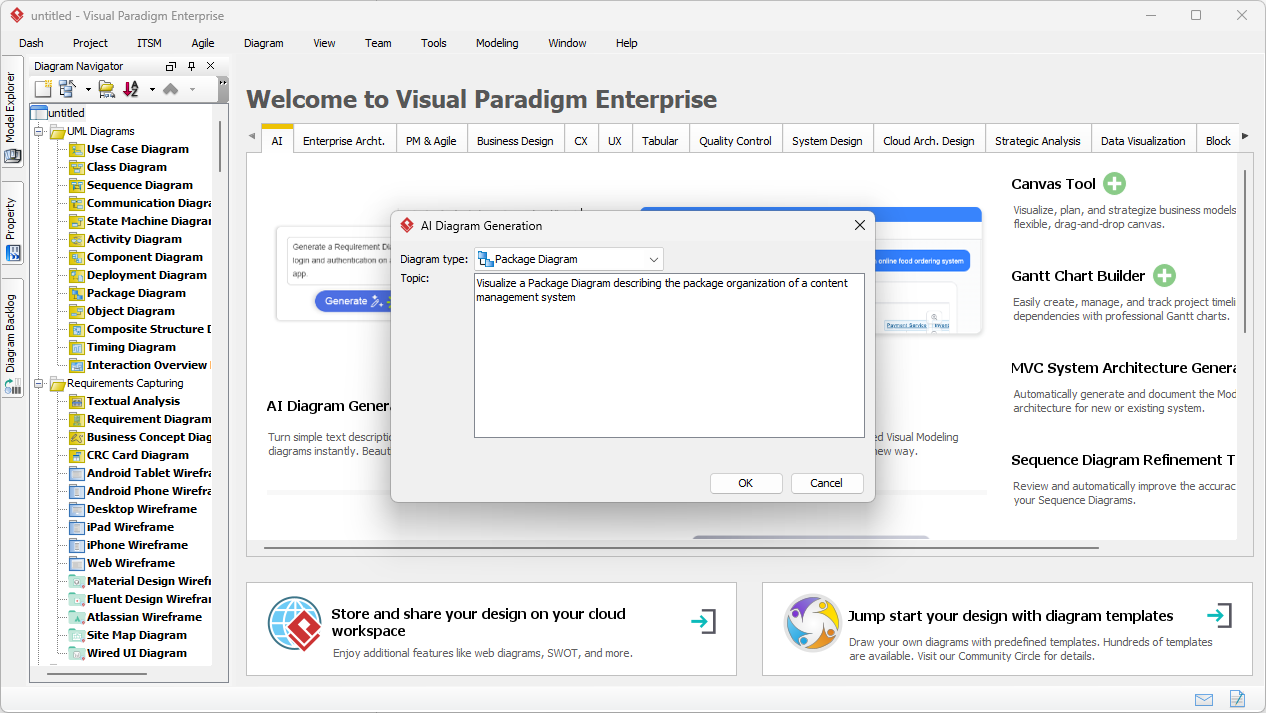
入力ダイアログはシンプルで焦点を絞ったままです:

Visual Paradigm Desktop AI Package Diagram generation prompt interface

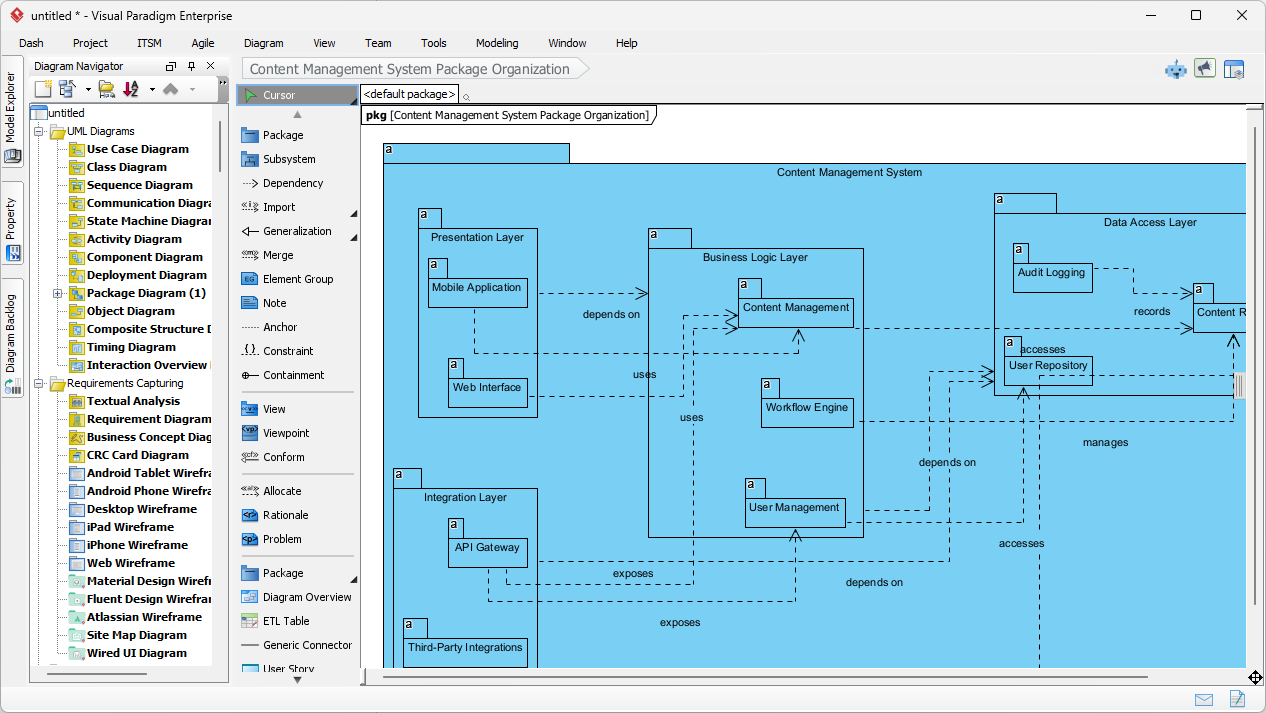
AIが構築する内容:

  • トップレベルのパッケージ:プレゼンテーションレイヤー、ビジネスロジックレイヤー、データアクセスレイヤー
  • サブパッケージ:Web UI、モバイルアプリ、コンテンツサービス、リポジトリ
  • 明確な依存関係の矢印(破線)でレイヤー間の流れを示す

生成されたコンテンツ管理システムのパッケージ図 — 論理的でレイヤード構造、レビュー準備完了:

AI-generated UML Package Diagram for Content Management System

すぐに編集可能:セキュリティパッケージの追加、依存関係の調整、またはクラス図との統合が可能。

2. チャットボット:現場で会話形式のアーキテクチャ設計

素早いスケッチやリモートでのブレインストーミングの際は、Visual Paradigm AIチャットボット:

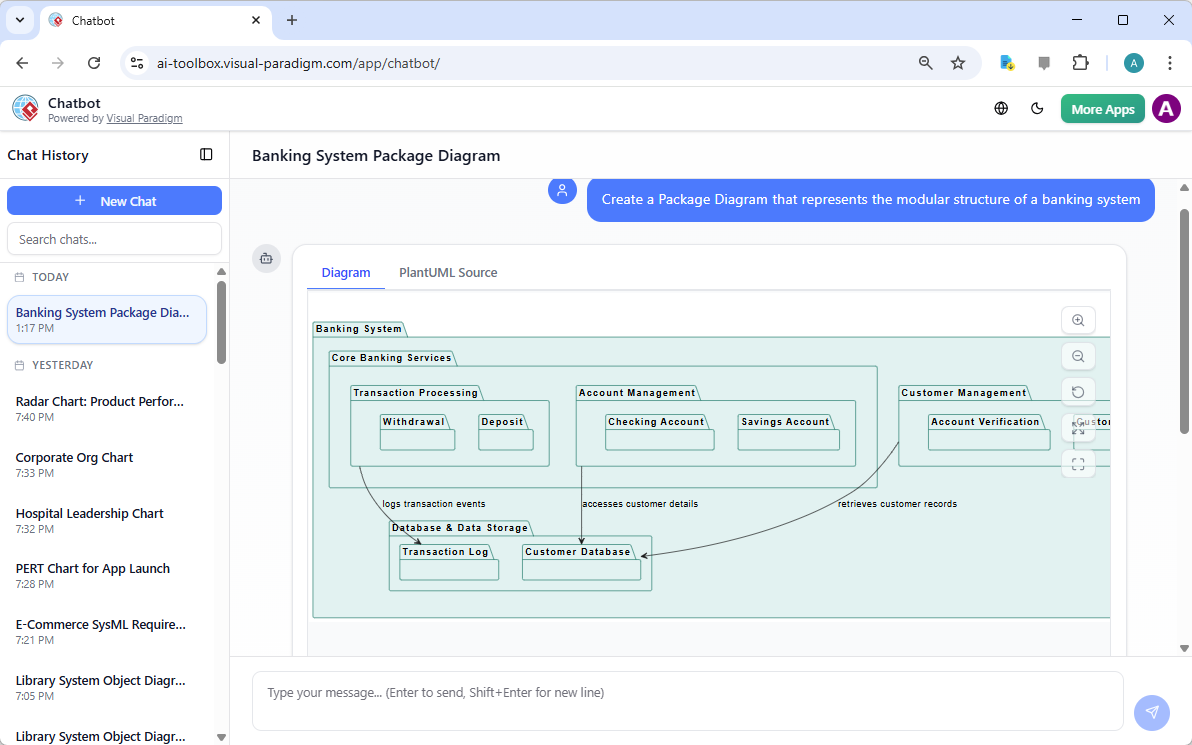
「銀行システムのUMLパッケージ図を作成:コアバンキングサービス、アカウント管理、顧客管理、取引処理、コンプライアンスおよび監査。」

チャットボットはリアルタイムで生成します——パッケージ、サブパッケージ、依存関係が即座に表示されます。銀行システムの例としての出力:

AI-generated UML Package Diagram for Banking System via Chatbot

会話の中で修正:「取引処理への依存関係を持つ決済ゲートウェイパッケージを追加。」即座に更新されます。初期設計会議やUMLの教育に最適です。

2026年にパッケージ図とAIが重要な理由

良いアーキテクチャは明確な境界から始まります。パッケージ図は、1行のコードを書く前からモジュール性、レイヤー、依存関係を示します。手動での作成は遅く、AIによってその障壁が取り除かれます。

特に効果を発揮するユースケース:

  • レイヤード型エンタープライズアプリ
  • マイクロサービスの境界
  • モジュール設計の教育
  • 迅速なリファクタリング計画

議論中に範囲を変更する必要がある?再生成する。新しいモジュールが必要?追加する。そのスピードがアーキテクチャの柔軟性とチーム間のコミュニケーションの明確さを保ちます。

システム構造を可視化する準備はできていますか?

Visual ParadigmのAIパッケージ図ジェネレーター曖昧なアイデアを、CMS、銀行、EC、あるいは任意のモジュール型システム向けのプロフェッショナルなUMLパッケージへ迅速に変換します。

箱と矢印との戦いをやめ、今日からよりスマートに設計を始めましょう。

関連リンク

これらの記事では、人工知能UMLパッケージ図システム要素の論理的グループ化を自動化するために活用され、開発者が自然言語のプロンプトから即座にアーキテクチャ構造を生成し、ソフトウェア依存関係およびシステムのスケーラビリティ.

  1. AI図生成ツールがVisual Paradigmでパッケージ図をサポートするようになりました:この記事では、AIを活用したパッケージ図の生成機能の新機能リリースについて説明しており、ソフトウェアアーキテクチャの可視化を向上させます。
  2. Visual Paradigm AIで即座にUMLパッケージ図を生成:このガイドでは、AI駆動のツールを活用して、最小限の手動作業でプロフェッショナルなUMLパッケージ図を作成する方法に焦点を当てています。
  3. インタラクティブなUMLパッケージ図生成ツール:このリソースでは、会話型AIインターフェースを通じて、リアルタイムでパッケージ図の作成と編集が可能なインタラクティブなツールへのアクセスを提供しています。
  4. UMLパッケージ図:AIを活用したコードベースの構造化の決定版ガイド:この包括的なガイドでは、AIがコードベースの構造化、複雑な依存関係の管理、アーキテクチャの整合性の維持にどのように役立つかを説明しています。
  5. テキストプロンプトからUMLパッケージ図を生成する:この記事では、高度なAIモデリング機能を活用して、原始的なアイデアやテキストプロンプトを詳細なUMLパッケージ図に変換する方法を探ります。
  6. Visual Paradigmを用いたUMLパッケージ図チュートリアル:このチュートリアルでは、パッケージ図を活用してソフトウェアコンポーネントを構造化し、その関係性を効果的に可視化するためのステップバイステップのアプローチを提供します。
  7. パッケージ図ソフトウェアの機能 – Visual Paradigm Online:この概要では、バージョン管理やリアルタイム編集を含む、共同でパッケージ図を管理できるオンラインツールについて紹介しています。
  8. UMLにおけるパッケージ図とは何か? – Visual Paradigmガイド:この基盤的なリソースでは、論理的なグループ化を通じて複雑なソフトウェアシステムを整理するパッケージ図の役割を紹介しています。
  9. UMLパッケージ図を用いたソフトウェアアーキテクチャのモデリング:この記事では、システムアーキテクチャのモジュール構造を整理し、伝えるためにパッケージ図を使用する際のベストプラクティスについて議論しています。
  10. パッケージ図の例とテンプレート – Visual Paradigmギャラリー:このギャラリーでは、実際の事例やテンプレートのコレクションを提供し、モジュール型ソフトウェア設計のインスピレーションとスピードアップを支援します。

Visual Paradigm AI Package Diagram Generator: Text to UML Packages

You’re architecting a new content management system, staring at layers, modules, and dependencies — presentation, business rules, persistence, security — but the high-level structure stays fuzzy. Manually creating packages, subpackages, and dependency arrows feels like overkill for a first draft. Enter Visual Paradigm’s AI Package Diagram Generator: describe your system in plain words, and get a clean, standards-compliant UML package diagram in seconds. It’s the fast lane from mental model to visual blueprint.

Why This AI Changes Software Architecture

  • Natural language → full UML package diagram instantly
  • Auto-identifies packages, subpackages, dependencies, and stereotypes
  • Handles layered, modular, and microservices-style structures
  • Fully editable native model — refine, add notes, merge packages
  • Desktop precision + browser chatbot for rapid iteration

1. Desktop: Prompt → Structured Architecture

In Visual Paradigm Desktop:

Tools → AI Diagram Generation → select “Package Diagram” → describe your system:

“Generate a UML Package Diagram for a content management system with Presentation Layer (Web UI, Mobile App), Business Logic Layer (Content Service, User Management, Workflow Engine), Data Access Layer (Repository, Audit Logging), and show dependencies between layers.”

The input dialog keeps it simple and focused:

Visual Paradigm Desktop AI Package Diagram generation prompt interface

AI builds:

  • Top-level packages: Presentation Layer, Business Logic Layer, Data Access Layer
  • Subpackages: Web UI, Mobile App, Content Service, Repository
  • Clear dependency arrows (dashed) showing flow between layers

Resulting content management system package diagram — logical, layered, and ready for review:

AI-generated UML Package Diagram for Content Management System

Immediately edit: add security package, adjust dependencies, or integrate with class diagrams.

2. Chatbot: Conversational Architecture on the Go

For quick sketches or remote brainstorming, open the Visual Paradigm AI Chatbot:

“Create UML Package Diagram for a banking system: Core Banking Services, Account Management, Customer Management, Transaction Processing, Compliance & Auditing.”

The chatbot generates it live — packages, subpackages, and dependencies appear instantly. Example output for a banking system:

AI-generated UML Package Diagram for Banking System via Chatbot

Refine in conversation: “Add Payment Gateway package with dependency to Transaction Processing.” Instant update. Perfect for early design sessions or teaching UML.

Why Package Diagrams + AI Matter in 2026

Good architecture starts with clear boundaries. Package diagrams show modularity, layers, and dependencies before a single line of code is written. Manual creation slows you down; AI removes the friction.

Use cases that shine:

  • Layered enterprise apps
  • Microservices boundaries
  • Teaching modular design
  • Quick refactoring planning

Change scope mid-discussion? Regenerate. New module needed? Add it. That speed keeps architecture agile and team communication sharp.

Ready to Visualize Your System Structure?

Visual Paradigm’s AI Package Diagram Generator turns vague ideas into professional UML packages fast — whether for CMS, banking, e-commerce, or any modular system.

  • Download Visual Paradigm Desktop → Full modeling power: Get Desktop Now
  • Try AI Chatbot Online → Instant architecture sketches: Start Chatting

Stop wrestling with boxes and arrows. Start designing smarter — today.

Related Links

These articles explain how artificial intelligence is applied to UML package diagrams to automate the logical grouping of system elements, enabling developers to instantly generate architectural structures from natural language prompts to better manage software dependencies and system scalability.

  1. AI Diagram Generator Now Supports Package Diagrams in Visual Paradigm: This article details the release of new features that allow for the AI-powered generation of package diagrams to improve software architecture visualization.
  2. Generate UML Package Diagrams Instantly with Visual Paradigm AI: This guide focuses on utilizing AI-driven tools to create professional UML package diagrams with minimal manual effort.
  3. Interactive UML Package Diagram Generator: This resource provides access to an interactive tool for creating and editing package diagrams in real time through a conversational AI interface.
  4. UML Package Diagram: A Definitive Guide to Structuring Your Codebase with AI: This comprehensive guide explains how AI assists in structuring codebases, managing complex dependencies, and maintaining architectural integrity.
  5. Generating UML Package Diagrams from Text Prompts: This article explores how to transform raw ideas and textual prompts into detailed UML package diagrams using advanced AI modeling features.
  6. UML Package Diagram Tutorial Using Visual Paradigm: This tutorial provides a step-by-step approach to using package diagrams to structure software components and visualize their relationships effectively.
  7. Features of Package Diagram Software – Visual Paradigm Online: This overview highlights the online tools available for collaborative package diagram management, including version control and real-time editing.
  8. What is a Package Diagram in UML? – Visual Paradigm Guide: This foundational resource introduces the role of package diagrams in organizing complex software systems through logical grouping.
  9. Modeling Software Architecture with UML Package Diagrams: This article discusses best practices for using package diagrams to organize and communicate the modular structure of a system’s architecture.
  10. Package Diagram Examples & Templates – Visual Paradigm Gallery: This gallery offers a collection of real-world templates and examples to inspire and accelerate modular software design.

Visual Paradigm: A Comprehensive AI-Powered Visual Modeling Platform in 2026

Visual modeling continues to play a central role in software development, systems engineering, enterprise architecture, and business process design. In 2026, AI-powered visual modeling platforms enable professionals to create structured diagrams more efficiently — transforming descriptions, requirements, or discussions into accurate, readable visuals that support analysis, collaboration, and decision-making. Visual Paradigm integrates advanced generative AI features — including a conversational AI Chatbot and instant diagram generator — into a robust visual modeling environment. This combination allows users to produce high-quality diagrams rapidly while retaining full control over notation, layout, validation, and presentation.

How AI Enhances Visual Modeling Workflows

The platform’s AI capabilities focus on making visual creation faster and more intuitive without compromising diagram quality:

  • Users describe the desired diagram in natural language (“Create an activity diagram showing the user onboarding process with email verification and approval steps”)
  • The AI generates a complete, standards-compliant visual model
  • Follow-up refinements improve clarity and structure (“Use swimlanes for different roles”, “Add decision nodes for rejection paths”, “Apply a consistent color scheme for decision elements”)
  • Users can query the model directly (“Highlight the critical path in this sequence diagram”, “Suggest visual improvements for readability”)

This iterative approach supports the natural way teams develop and refine visual models — starting broad and progressively adding detail and polish.

Wide Range of Supported Visual Modeling Notations

Visual Paradigm’s AI diagram generator produces precise visuals across widely used modeling standards:

Notation Common AI-Generated Diagram Types Visual Purpose & Benefit
UML Class, Sequence, Activity, Use Case, Component, Deployment, State Machine Clear representation of structure, behavior, and interactions
SysML Block Definition (BDD), Internal Block (IBD), Requirement, Parametric Structured system composition and traceability visuals
ArchiMate Motivation, Business, Application, Technology, Implementation & Migration viewpoints Layered enterprise architecture overviews
C4 Model System Context, Containers, Components, Code views Hierarchical, readable software architecture documentation
BPMN 2.0 Processes, Collaborations, Conversations Precise workflow and role-based process visuals
ERD Logical & Physical ER Diagrams (Chen / Crow’s Foot) Clean database schema and relationship visuals

The AI respects official notation rules, ensuring generated diagrams are immediately usable in professional contexts — from internal reviews to external deliverables.

From AI Generation to Polished Visual Models

Visual Paradigm supports the complete visual modeling process:

  • Quick AI-assisted start in the browser — ideal for brainstorming, workshops, or initial drafts
  • Seamless handoff to desktop — open AI-generated models in the full Visual Paradigm Desktop application for detailed visual refinement
  • Professional visual tools:
    • Multiple layout algorithms (hierarchical, orthogonal, organic)
    • Custom themes, color palettes, and icon sets
    • Layer management, visual filters, and selective hiding
    • Annotations, hyperlinks, callouts, and embedded images
  • Validation & simulation — visual rule checking, BPMN path simulation, SysML constraint evaluation
  • Export options — high-resolution PNG/SVG, interactive PDF, Visio-compatible files, embeddable HTML

This workflow ensures that fast AI-generated visuals can evolve into clear, presentation-ready diagrams without switching tools.

Additional AI Features That Support Visual Clarity

Several specialized AI tools further improve visual modeling outcomes:

  • DBModeler AI — produces well-organized ER diagrams with clear key indicators, relationship lines, and cardinality notation
  • Text → Visual Extraction — identifies concepts from requirements text and places them into structured class or ER visuals
  • Strategic Visual Generators — creates balanced Business Model Canvas, SWOT matrices, OKR trees, and other frameworks with strong visual hierarchy

Conclusion

Visual Paradigm serves as a reliable AI-powered visual modeling platform that prioritizes both speed and quality. Its combination of conversational AI generation, accurate notation support, advanced visual editing tools, and seamless workflow continuity makes it well-suited for professionals who rely on clear, precise diagrams in their daily work.

A free online trial provides instant access to the AI Chatbot and visual modeling features — an easy way to explore its capabilities for your specific use cases.

Visit: www.visual-paradigm.com

Related Links

Share the Blueprint, Not the File: Collaborating on Architecture with Shareable AI Chat History

In complex projects, sharing a diagram as a static file (PNG, PDF) is fundamentally insufficient. It provides the final result but omits the crucial context: why the diagram was created that way, who requested the changes, and *what* alternatives were considered. This forces stakeholders to initiate tedious email chains and ask repetitive questions, delaying crucial sign-offs and increasing the risk of misinterpretation.Effective collaboration requires sharing the rationale and evolution of the model, not just the final image. The design process—the conversation itself—is as important as the artifact.

Visual Paradigm’s AI Chatbot solves this by treating the entire design conversation as the definitive artifact, making it perfectly suited for modern, transparent, and asynchronous collaboration.

Share the Evolution, Not Just the Endpoint

The AI enables two powerful collaboration features that redefine how teams work with models:

  1. Persistent Chat History: Every interaction—the initial prompt, the generated diagram (UML, C4, ArchiMate), every subsequent touch-up operation (e.g., “add container,” “rename system”), and every AI answer—is automatically saved in a persistent **chat history**. This history is the ultimate source of truth for design decisions.
  2. Shareable URL: You can **share a chat session with others via a URL**. When a stakeholder opens the link, they see the entire transcript. They can review the design evolution from the high-level description to the final, detailed **UML Class Diagram** or **C4 Deployment Diagram**.

This creates a complete, contextual audit trail for the project, drastically reducing back-and-forth communication and ensuring all stakeholders understand the *why* behind the architecture.

Share the Blueprint, Not the File: Collaborating on Architecture with Shareable AI Chat History

Enhanced Review and Accountability

This dynamic sharing capability is invaluable for several key team activities where transparency is critical:

  • Stakeholder Review: Instead of a static presentation, send the chat history. Stakeholders can review the evolution of the model and immediately see the AI’s **suggested follow-up questions**, guiding them to consider the deeper implications of the design rather than just commenting on aesthetics.
  • Onboarding and Training: New team members can review the chat history for key models to quickly grasp the project’s architecture and the decisions that shaped it. The history acts as a living knowledge base, explaining complex concepts in context.
  • Consulting and Client Work: Consultants can use the shareable link as a transparent record of all modeling work, providing clients with an undeniable, clear record of the design process, decision rationale, and model compliance checks.
  • Auditability: The ability to track the exact prompt that led to a design change provides an indispensable record for regulatory compliance or post-incident technical review.

Collaboration Beyond the Diagram

The AI ensures all aspects of project communication are covered within the collaborative chat session.

  • Integrated Documentation: Before sharing, you can ask the AI to **generate a narrative report** summarizing the model. This report and the generating prompt are also stored in the shareable history, providing a perfect blend of visual and textual documentation.
  • Standards Adherence: Because the AI is expertly trained on major standards, the shared models adhere to clear compliance rules, making it easier for distributed teams to collaborate effectively without constant manual validation.
  • Modeling Continuity: Even after a conversation is shared, the original user can **import the model into Visual Paradigm** for professional version control and repository management, maintaining the design continuity from initial collaborative conversation to final implementation.

Stop sending outdated PDFs and static images. Start sharing the living, collaborative blueprint of your design process. The future of architectural review is conversational and transparent.

Facilitate transparent architectural collaboration today at chat.visual-paradigm.com.