Tworzenie jasnego i precyzyjnego sformułowania problemu w projektowaniu oprogramowania

Use Visual Paradigm’s AI-powered tool to craft clear, structured problem statements for software projects with templates and real-time feedback.

Zmagasz się z wyrażeniem podstawowego wyzwania, które ma rozwiązać Twój projekt oprogramowania? Generator opisu problemu od Visual Paradigmto najpotężniejszy narzędzie oparte na AI, które przekształca początkowy chaos Twojego projektu w jasną, skupioną i przekonującą narrację. To innowacyjne rozwiązanie pozwala menedżerom projektów, analitykom biznesowym i właścicielom produktów zdefiniować „dlaczego” ich pracy z niezwykłą szybkością i precyzją. Korzystając z biblioteki strukturalnych szablonów i natychmiastowej analizy AI, to narzędzie gwarantuje, że Twoje sformułowanie problemu nie tylko jest napisane, ale również zoptymalizowane pod kątem maksymalnego wpływu od samego początku. To tajny atut do uruchamiania projektów z precyzyjnym skupieniem i tworzenia podstaw do sukcesu.

Kluczowe wnioski:

  • Użyj podejścia opartego na szablonach, aby upewnić się, że Twoje sformułowanie problemu jest kompleksowe i dobrze zorganizowane.

  • Wypełnij konkretne zmienne, aby dostosować opis do unikalnego projektu.

  • Otrzymaj natychmiastową analizę AI, aby dopasować Twoje sformułowanie problemu pod kątem przejrzystości i skuteczności.

  • Rozpocznij każdy projekt z solidnym i precyzyjnie sformułowaniem podstawowego problemu.

Krok 1: Wybierz szablon – podstawa silnego sformułowania problemu

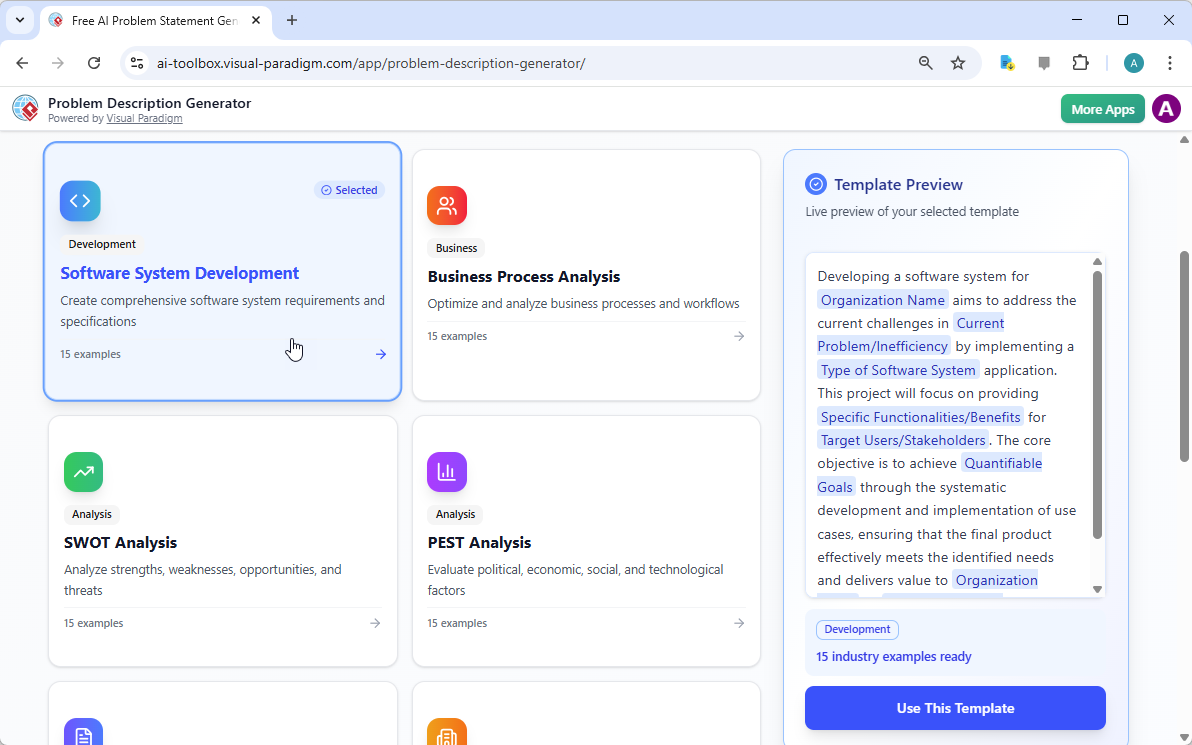
Każdy świetny projekt zaczyna się od solidnej podstawy, a dla sformułowania problemu tą podstawą jest odpowiedni szablon. Pierwszym krokiem w korzystaniu z generatora opisu problemu opartego na AI jest wybór szablonu, który idealnie pasuje do charakteru Twojego projektu. Jak pokazano na
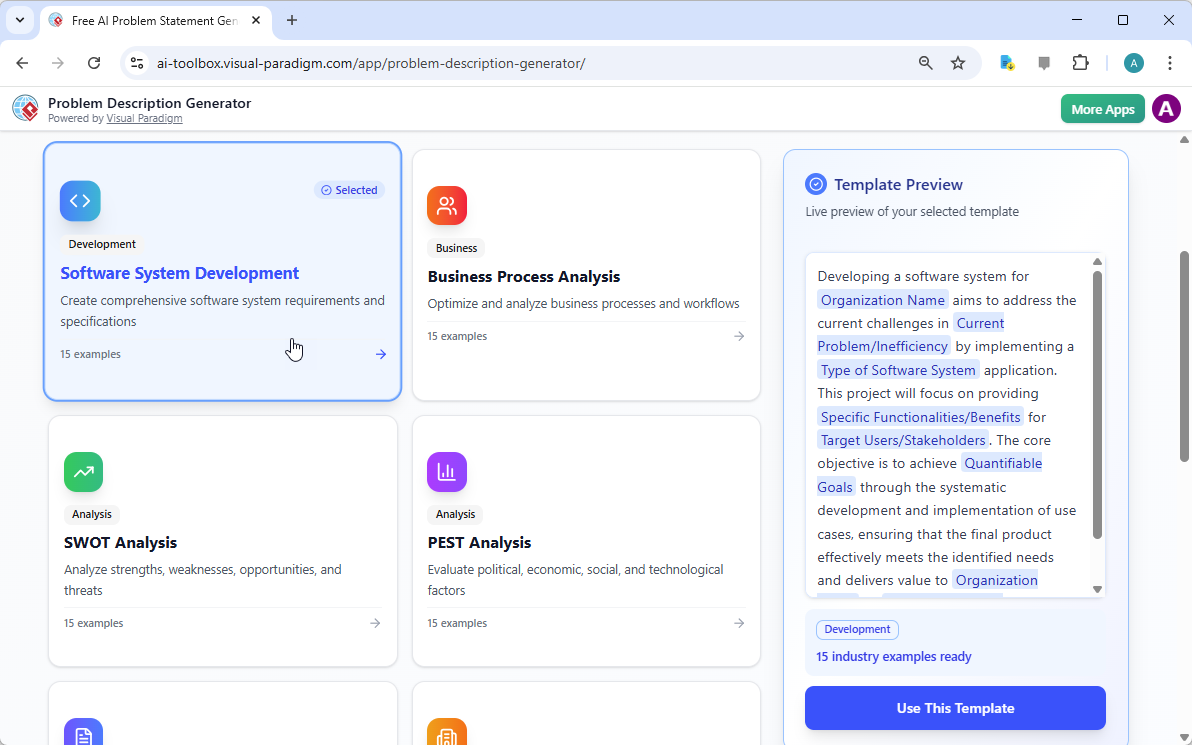
This is a screenshot of Visual Paradigm's AI Powered Problem Description Generator. It shows the first step, which involves c

, interfejs prezentuje czysty i intuicyjny pulpity z różnorodnymi szablonami dla różnych potrzeb biznesowych. Niezależnie od tego, czy rozwiązuje się inicjatywę w zakresie rozwoju oprogramowania, optymalizację procesu biznesowego, czy przeprowadza analizę strategiczną, taką jak analiza SWOT lub PEST, możesz znaleźć odpowiedni szablon. Szablon „Rozwój systemu oprogramowania” na przykład został specjalnie stworzony, aby pomóc Ci stworzyć kompleksowe wymagania i specyfikacje systemu oprogramowania. Wybierając odpowiedni szablon, od razu tworzysz profesjonalną strukturę, która prowadzi Cię do omówienia wszystkich kluczowych aspektów problemu, zapewniając, że żaden istotny szczegół nie zostanie pominięty. Ten krok jest kluczowy, ponieważ ustala ton i strukturę całego opisu problemu, co czyni kolejne kroki znacznie bardziej efektywnymi i skutecznymi.

Krok 2: Wypełnij zmienne – dostosuj swoją narrację

Po wybraniu szablonu magia dzieje się w sekcji „Edytuj parametry”.
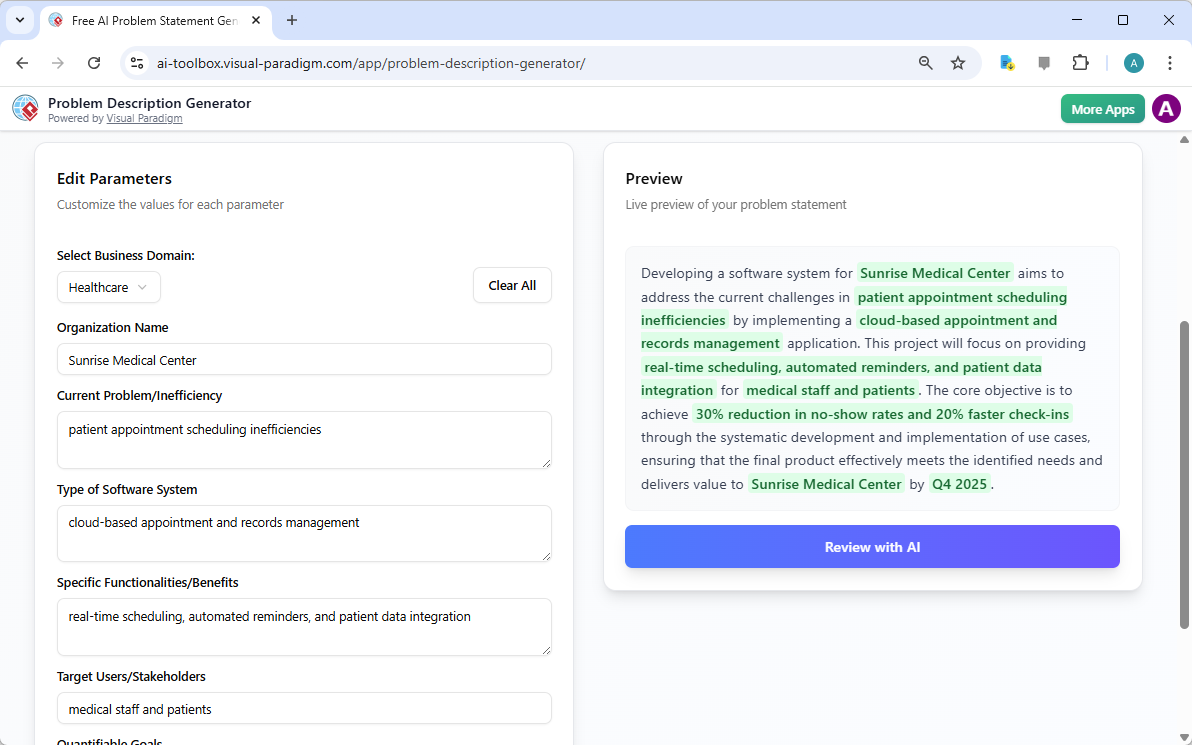
This is a screenshot of Visual Paradigm's AI Powered Problem Description Generator. It shows the second step, which involves

jasno ilustruje ten drugi krok. Po lewej stronie widzisz formularz wypełniony konkretnymi polami, takimi jak „Nazwa organizacji”, „Obecny problem/niewydajność” i „Typ systemu oprogramowania”. To właśnie tutaj wstrzykujesz unikalną DNA Twojego projektu. W miarę jak wpisujesz szczegóły, podgląd w czasie rzeczywistym po prawej stronie dynamicznie się aktualizuje, pokazując Ci dokładnie, jak wyglądać będą wypełnione zmienne w końcowym opisie problemu. Ten podgląd w czasie rzeczywistym jest niezwykle potężny. Pozwala Ci zobaczyć narrację, którą tworzą Twoje wpisy, zauważyć niezgrabne sformułowania i natychmiast dokonać poprawek. Zmienne są wyróżnione na zielono, co ułatwia zrozumienie, jakie treści są wstawiane do szablonu. Ten proces nie ogranicza się tylko do wypełniania pustych pól – to tworzenie spójnej historii, która jasno wyjaśnia problem, jego skutki i oczekiwany wynik. Możliwość obserwowania, jak opis się rozwija w czasie rzeczywistym, to przełom dla przejrzystości i pewności siebie.

Krok 3: Przejrzyj z AI – Twój natychmiastowy ekspert redaktorski

Ostatni, a może nawet najpotężniejszy krok, to przegląd z AI. Po wypełnieniu wszystkich zmiennych i zadowoleniu się z podglądu w czasie rzeczywistym możesz kliknąć przycisk „Przejrzyj z AI”.
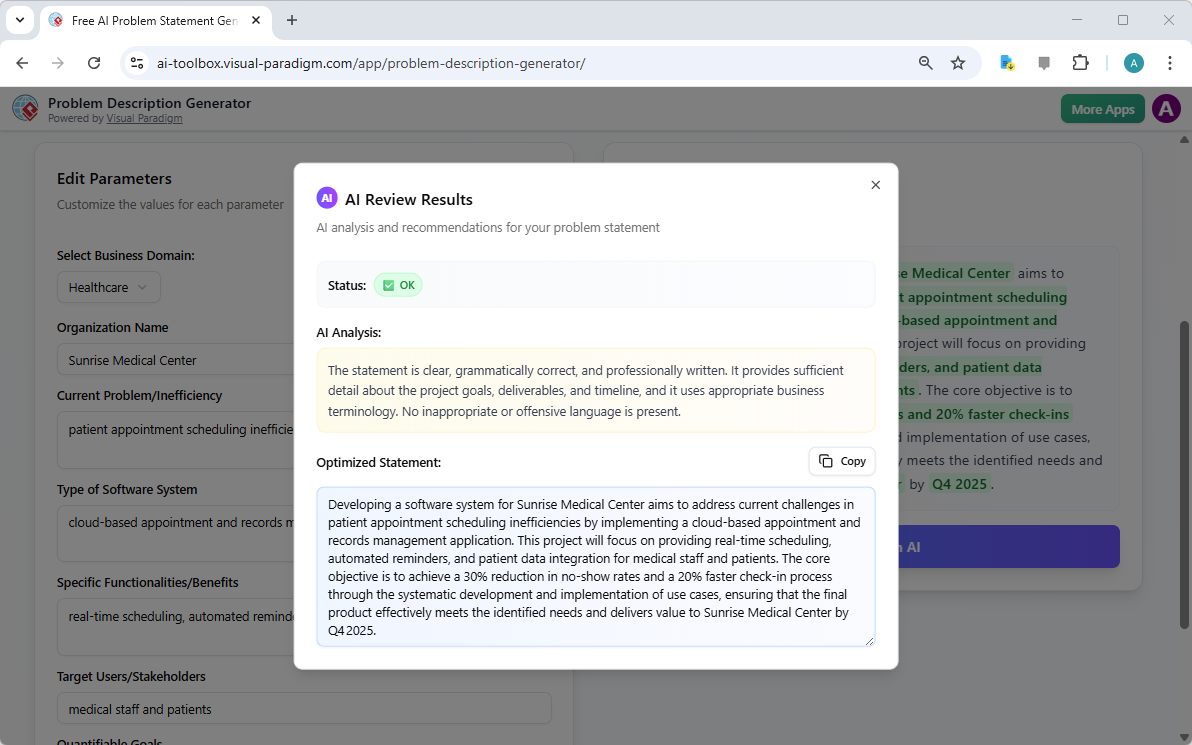
This is a screenshot of Visual Paradigm's AI Powered Problem Description Generator. Once the details are filled in, you can c

doskonale oddaje ten moment. Pojawia się okno modalne, które przedstawia szczegółową analizę Twojego wygenerowanego sformułowania problemu. AI nie tylko sprawdza gramatykę, ale ocenia stwierdzenie pod kątem przejrzystości, kompletności, logicznego przepływu i używania odpowiednich terminów biznesowych. Podaje jasny „Status” (np. „OK”) oraz szczegółową „Analizę AI”, która wyróżnia zalety i sugeruje poprawki. Na przykład AI może potwierdzić, że Twoje stwierdzenie jest jasne i profesjonalnie napisane, albo zaproponować bardziej wpływowe sformułowanie kluczowego celu. Ta natychmiastowa i obiektywna analiza działa jak wirtualny ekspert redaktorski, pomagając Ci dopasować sformułowanie problemu, aby było nie tylko poprawne, ale także bardzo skuteczne w przekazywaniu celu projektu. Ten ostatni krok gwarantuje, że Twoje sformułowanie problemu jest gotowe do udostępnienia stakeholderom, programistom lub klientom z pełnym zaufaniem.

Otwórz potencjał swojego projektu

Sformułowanie problemu to często najtrudniejszy element każdej inicjatywy. Wątpliwe lub słabo sformułowane sformułowanie problemu może prowadzić do marnotrawstwa wysiłku, niezgodnych rozwiązań i na końcu do porażki projektu. Generator opisu problemu od Visual Paradigm rozwiązuje ten podstawowy problem. Łączy siłę strukturalnych szablonów z inteligencją AI, tworząc proces, który jest zarówno efektywny, jak i skuteczny. Korzystając z trzech prostych kroków – wybierz szablon, wypełnij zmienne i przejrzyj z AI – możesz w ciągu kilku minut przekształcić początkową ideę projektu w jasne, przekonujące i profesjonalne sformułowanie problemu. To narzędzie to nie tylko wygoda, ale strategiczna przewaga, która zapewnia, że Twój projekt zaczyna się od właściwego punktu. Przestań zgadywać i zacznij definiować z pewnością siebie.Wypróbuj generator opisu problemu oparty na AI już teraz i poczuj różnicę, którą robi.

Linki powiązane

Optymalizacja wdrożeń platformy zaangażowania pracowników za pomocą narzędzia do zarządzania stakeholderami z AI od Visual Paradigm

Optimize employee engagement platform rollouts using Visual Paradigm’s AI tool. A 7-step guide to stakeholder management and organizational change.

Sukces zmian organizacyjnych, takich jak wdrożenie platformy cyfrowego zaangażowania na poziomie całej firmy, zależy mniej od samej technologii i bardziej od dynamiki ludzkiej otaczającej ją. Wykorzystywanie profesjonalnego oprogramowania do zarządzania stakeholderami już nie jest opcjonalne dla liderów projektów, którzy chcą zmniejszyć opór i maksymalizować przyjęcie.Visual Paradigm’s narzędzie do zarządzania stakeholderami z AI oferuje systematyczną metodologię siedmiokrokową, która pozwala poruszać się po tych skomplikowanych relacjach międzyludzkich. Automatyzując kroki identyfikacji i analizy, menedżerowie projektów mogą przejść od abstrakcyjnych koncepcji do konkretnych strategii zaangażowania w ciągu kilku minut, zapewniając odpowiednie zarządzanie każdym osobnikiem – od sponsorów kierowniczych po przedstawicieli związku zawodowego.

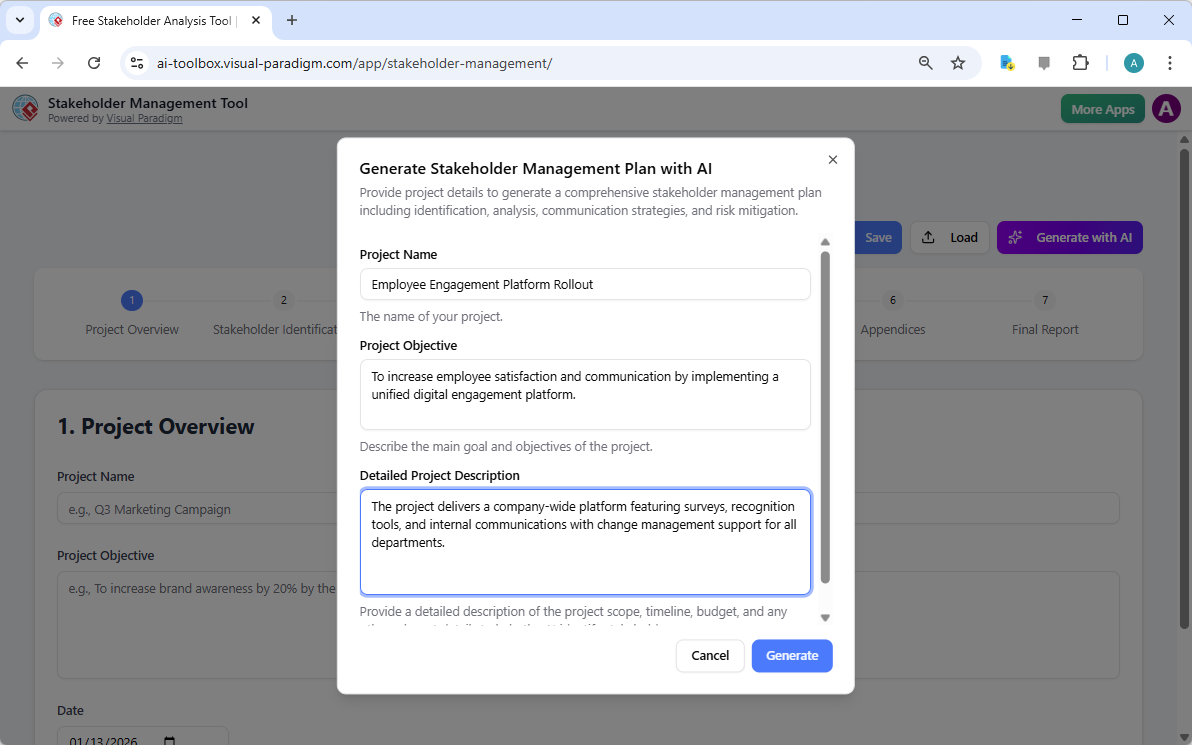
Proces zaczyna się od kontekstualizacji projektu. W interfejsie użytkownik definiuje zakres, cele i szczegóły inicjatywy. Na przykład w przypadku „Wdrożenia platformy zaangażowania pracowników” narzędzie prosi użytkownika o opisanie cech platformy, takich jak ankiety i narzędzia uznania, oraz potrzebę wsparcia w zarządzaniu zmianami. Ta początkowa informacja stanowi podstawę danych dla sztucznej inteligencji, która generuje dopasowany plan zarządzania.

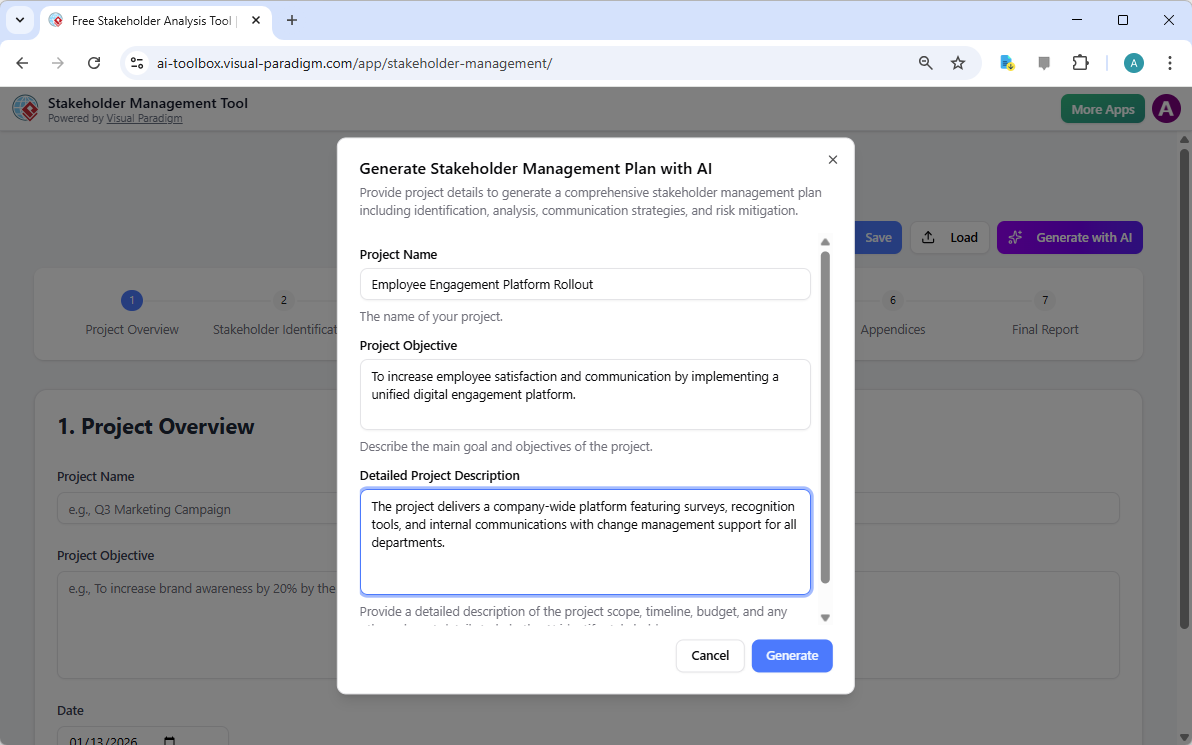
This is the screenshot of Visual Paradigm's AI-Powered Stakeholder Management Tool. It is now at AI generation screen, where

Systematyczny podejście do zarządzania projektami

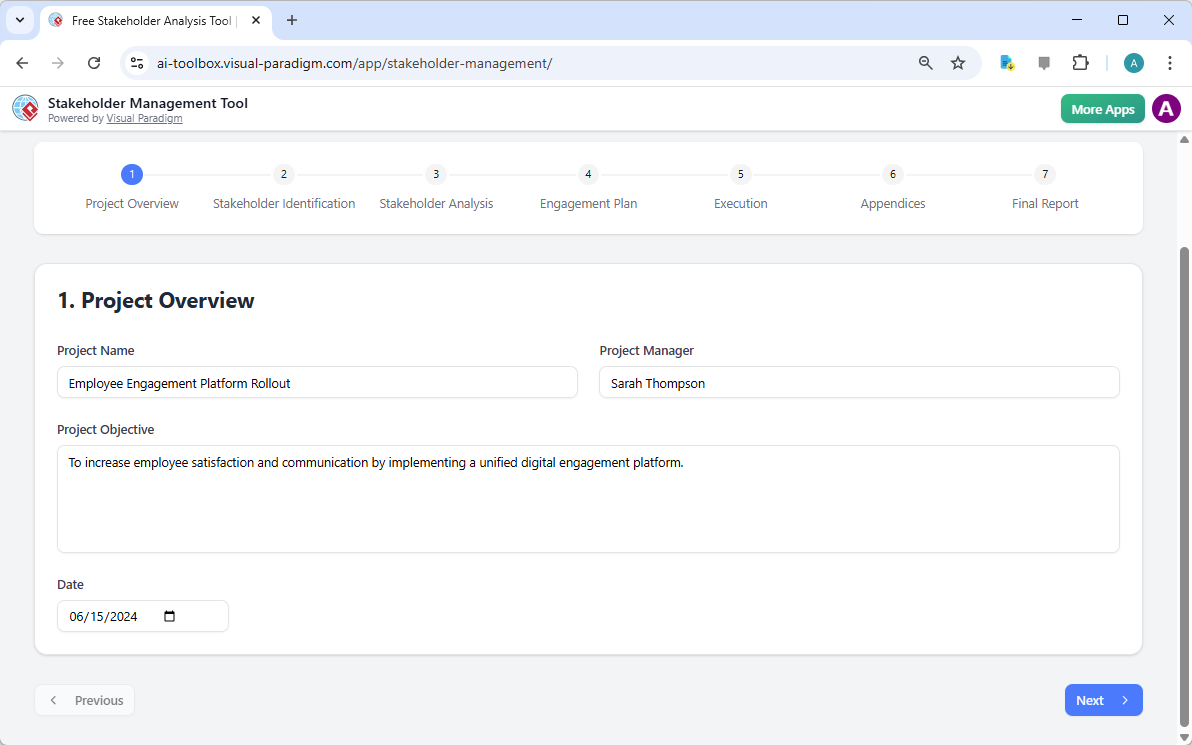
Precyzja w dokumentacji projektu to charakterystyczny cechą dyscyplinowanego menedżera. Pierwszym krokiem w procesie, czyli Podsumowaniem projektu, zapewnia się, że wszystkie podstawowe dane są zapisane przed przejściem do złożonej analizy. Ten krok zapisuje nazwę projektu, jego cel i przypisanego menedżera, tworząc jasny punkt odniesienia dla wszystkich kolejnych decyzji strategicznych. Jest kluczowe, aby te parametry ustalić jak najszybciej, aby zachować zgodność na całym cyklu życia projektu.

This is the screenshot of Visual Paradigm's AI-Powered Stakeholder Management Tool. The initial data is generated by AI and i

Kluczowe wnioski dotyczące skutecznego zarządzania stakeholderami

  • Systematyczna siedmiokrokowa procedura: Przewodniczy użytkownikom od początkowej identyfikacji po realizację i końcowe raportowanie.

  • Generowanie strategii z wykorzystaniem AI: Szybko tworzy kompletny szkic stakeholderów, ich interesów i poziomów zaangażowania na podstawie kontekstu projektu.

  • Obsługa danych zorientowana na prywatność: Wszystkie dane projektu są zapisywane lokalnie jako pliki .json, zapewniając, że wrażliwe informacje organizacyjne pozostają poza chmurą.

  • Dynamiczne planowanie komunikacji: Ułatwia tworzenie dopasowanych harmonogramów komunikatów i strategii ograniczania ryzyka.

  • Profesjonalne raportowanie: Generuje zintegrowane podsumowanie, które jest odpowiednie do przeglądu przez kierownictwo i ujednolicanie zespołu.

Identyfikacja i kategoryzacja elementu ludzkiego

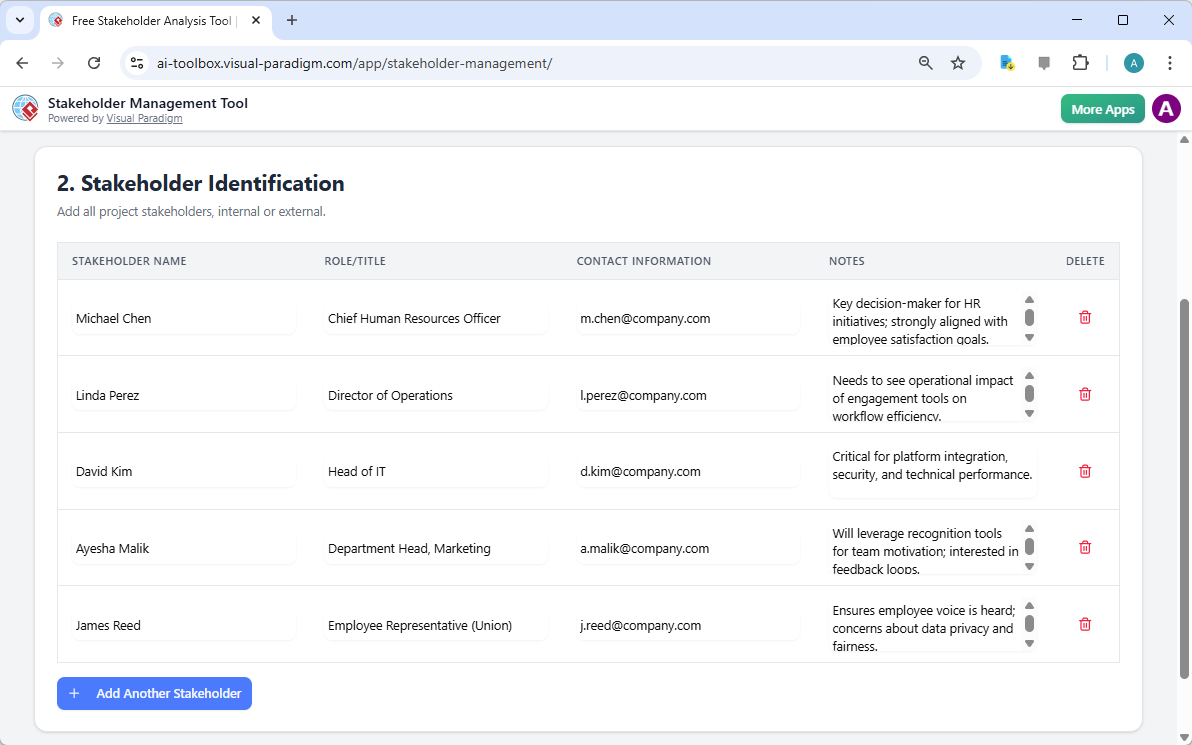
Po ustaleniu parametrów projektu następna krytyczna faza to identyfikacja stakeholderów. Ten krok obejmuje wyliczenie każdej osoby lub grupy, która może wpłynąć na inicjatywę lub zostać przez nią dotknięta. W kontekście platformy zaangażowania obejmuje to role takie jak dyrektor ds. zasobów ludzkich, dyrektor ds. operacji i kierownicy działów. A łatwe w użyciu narzędzie do zarządzania stakeholderami musi umożliwiać szczegółową profilizację, w tym informacje kontaktowe i specjalne uwagi dotyczące unikalnego punktu widzenia lub obaw każdej osoby.

This is the screenshot of Visual Paradigm's AI-Powered Stakeholder Management Tool. It is now at step 2 - Professional online

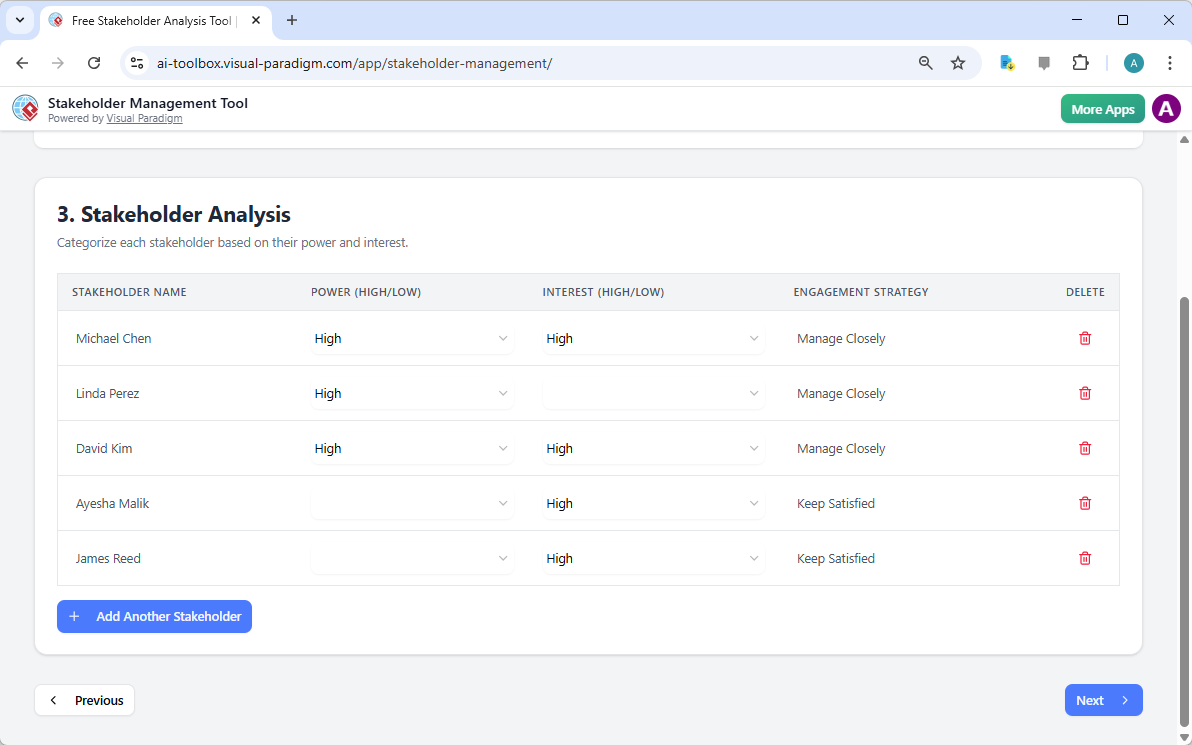
Samodzielna identyfikacja jest niewystarczająca; należy zastosować szczegółową analizę stakeholderów, aby priorytetyzować wysiłki w zakresie zaangażowania. Zazwyczaj osiąga się to poprzez ocenę dwóch głównych zmiennych: Mocy (Wpływ) i Zainteresowania. Stakeholderzy o wysokiej mocy i wysokim zainteresowaniu, takich jak dyrektor IT lub CHRO, wymagają „bliskiego zarządzania”, podczas gdy ci o niższej mocy mogą być po prostu „utrzymywani w zadowoleniu” lub „informowani”. Ta kategoryzacja zapewnia, że ograniczone zasoby komunikacji są wykorzystywane tam, gdzie będą miały największy wpływ na sukces projektu.

This is the screenshot of Visual Paradigm's AI-Powered Stakeholder Management Tool. It is now at step 3 - Professional online

Strategiczne zaangażowanie i ograniczanie ryzyka

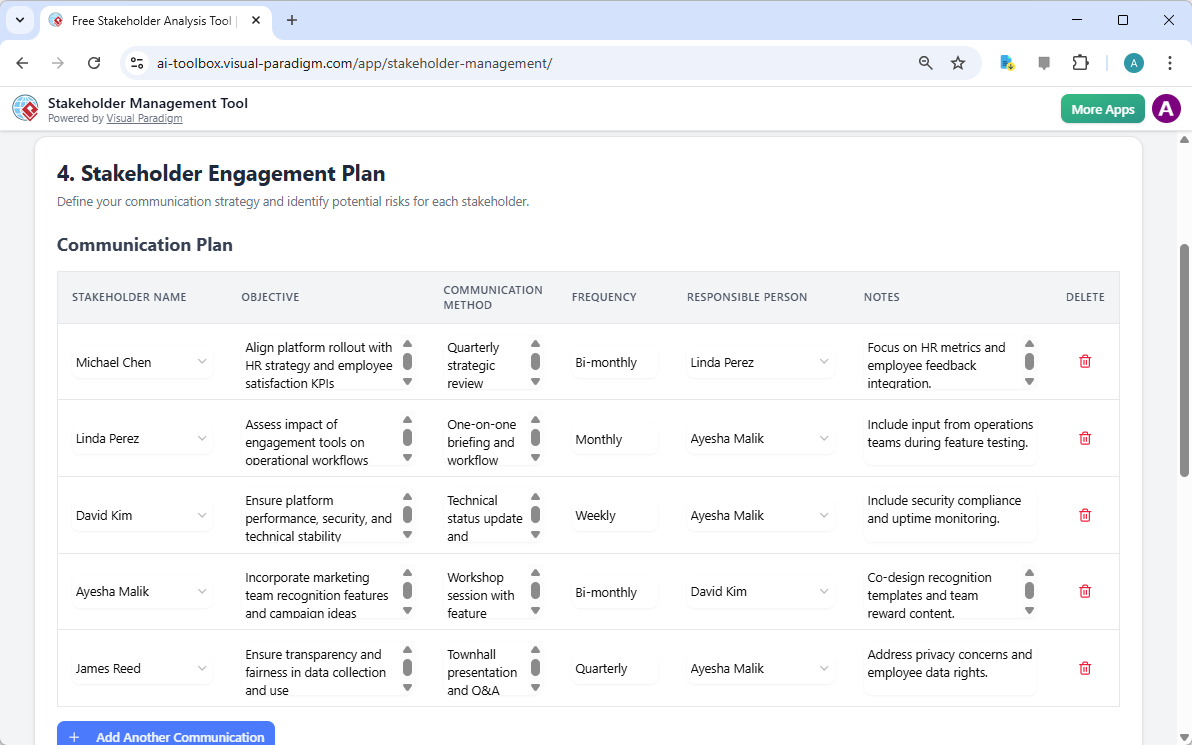
Po zakończeniu analizy skupienie przesuwa się na plan zaangażowania stakeholderów. To tu intencje strategiczne są przekształcane w plan komunikacji operacyjnej. Każdemu stakeholderowi przypisuje się konkretny cel komunikacji, preferowany sposób (np. przeglądy kwartalne lub spotkania town hall) i częstotliwość. Taki poziom szczegółowości zapobiega lukom komunikacyjnym, które często prowadzą do opóźnień projektu. Na przykład aktualizacja stanu technicznego może być zaplanowana co tydzień dla działu IT, aby zapewnić stabilność platformy, podczas gdy spotkanie town hall może odbywać się kwartalnie dla ogólnej grupy pracowników.

This is the screenshot of Visual Paradigm's AI-Powered Stakeholder Management Tool. It is now at the upper part of step 4 - P

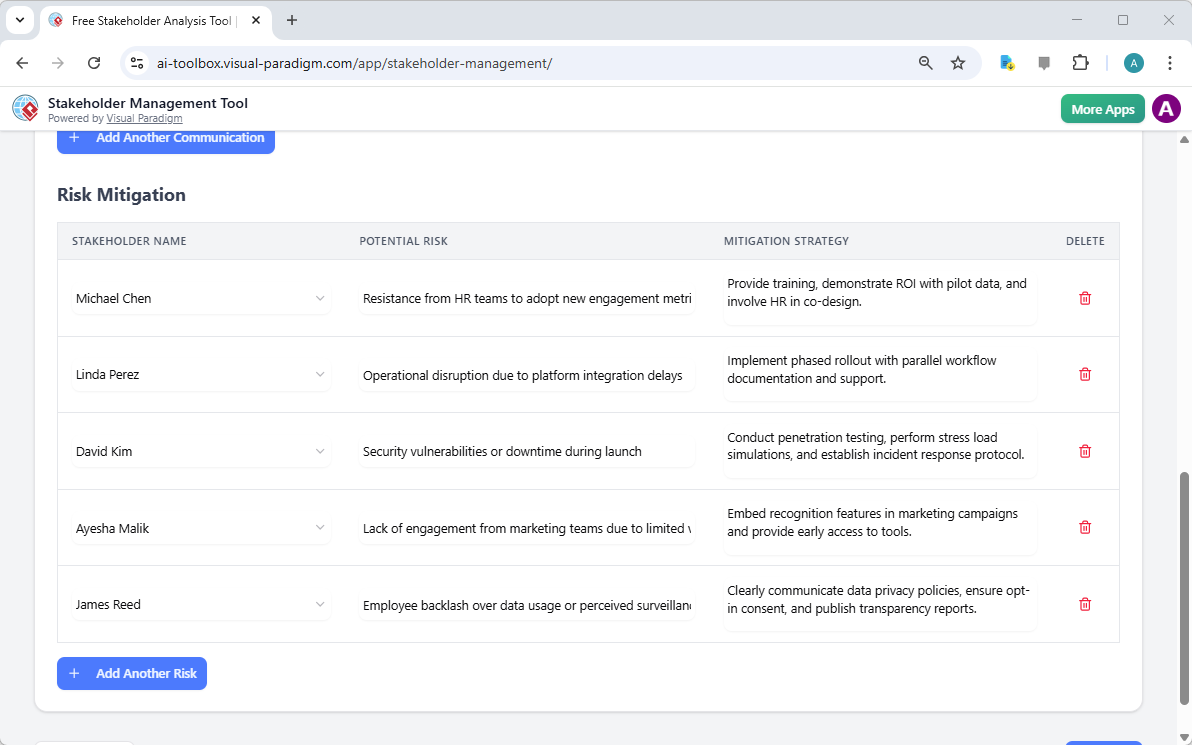
Dodatkowo, podejście proaktywne wymaga identyfikacji potencjalnych ryzyk i opracowania strategii ich ograniczania. Opór jest naturalnym skutkiem zmiany; jednak można go zarządzać. Jeśli AI wykryje ryzyko, takie jak „odpowiedź pracowników na wykorzystanie danych”, narzędzie pozwala menedżerowi zarejestrować konkretną strategię ograniczania, np. publikację raportów przejrzystości lub jasne komunikowanie zasad prywatności danych. To podejście przewidujące to to, co wyróżnia profesjonalny oprogramowanie do zarządzania interesariuszami z prostego arkusza kalkulacyjnego.

This is the screenshot of Visual Paradigm's AI-Powered Stakeholder Management Tool. It is now at the lower part of step 4 - P

Śledzenie realizacji i zapewnianie odpowiedzialności

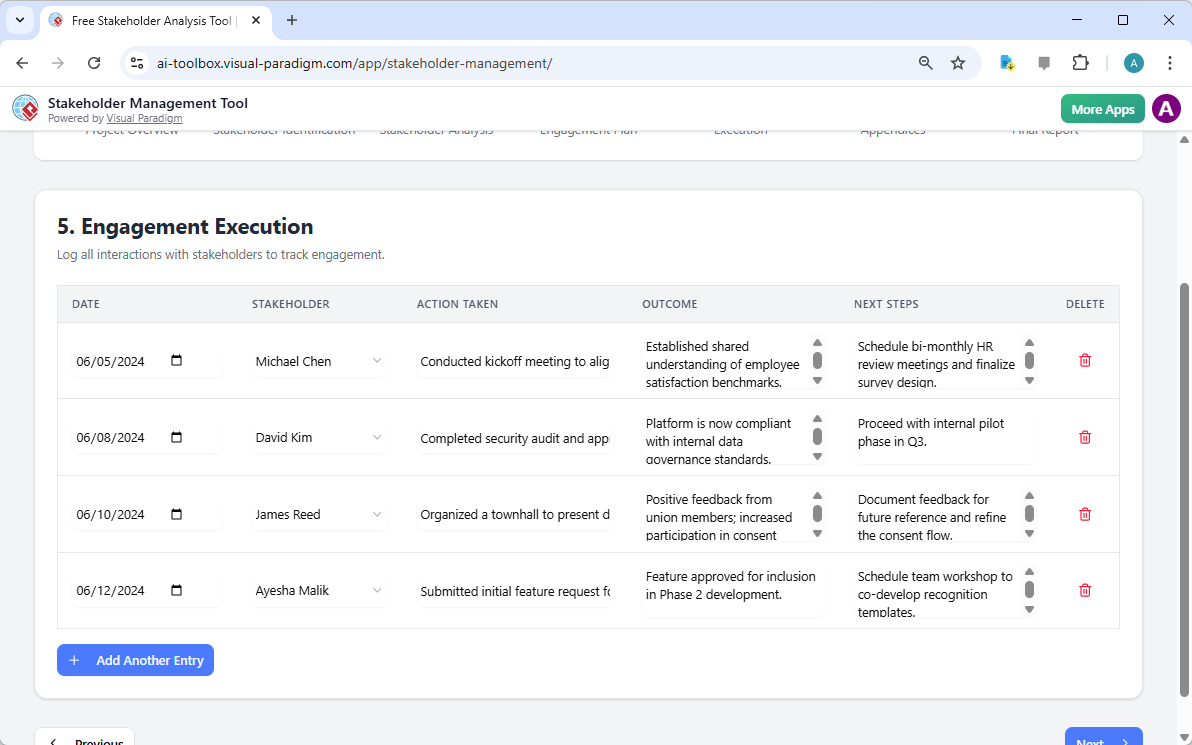
Strategia pozostaje teoretyczna, dopóki nie zostanie zrealizowana. Krok realizacji zaangażowania pełni rolę dziennika wszystkich interakcji. Poprzez zapisywanie daty, zaangażowanego interesariusza, podjętej czynności oraz wyniku, menedżerowie projektu utrzymują przejrzysty ślad audytowy swoich działań. Ten rekord historyczny jest nieoceniony przy dostosowywaniu strategii w trakcie projektu, jeśli nastąpi zmiana nastawienia konkretnego interesariusza lub pojawią się nieprzewidziane przeszkody podczas wdrażania.

This is the screenshot of Visual Paradigm's AI-Powered Stakeholder Management Tool. It is now at step 5 - Professional online

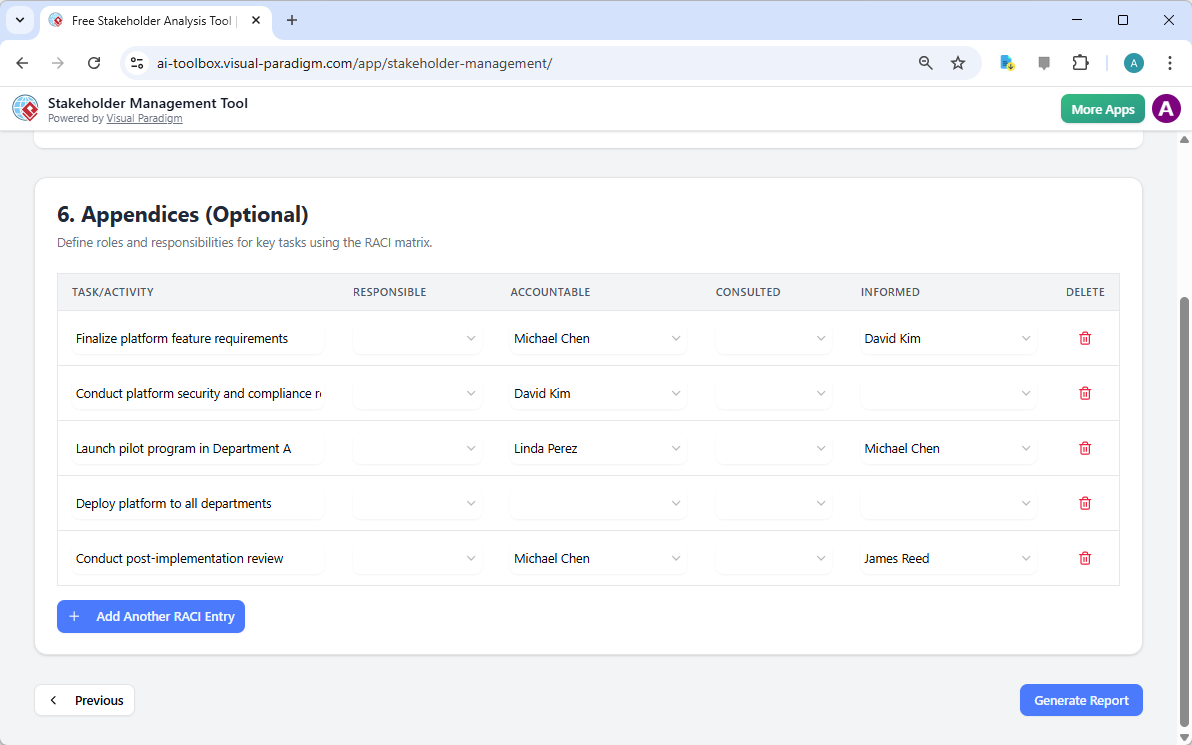
Aby upewnić się, że te zadania nie są jedynie zapisywane, ale skutecznie zarządzane, narzędzie zawiera sekcję dodatków z macierzą RACI (odpowiedzialny, odpowiedzialny za decyzję, konsultowany, poinformowany). Podczas wdrażania platformy zaangażowania jest kluczowe, by dokładnie wiedzieć, kto jest „odpowiedzialny” za ostateczne ustalenie wymagań platformy, a kto tylko „powinien zostać poinformowany” o uruchomieniu programu pilotowego. Określenie tych ról eliminuje niejasności i zapobiega „rozpraszaniu odpowiedzialności”, które często utrudnia duże inicjatywy korporacyjne.

This is the screenshot of Visual Paradigm's AI-Powered Stakeholder Management Tool. It is now at step 6 - Professional online

Konsolidacja wiedzy w raporcie końcowym

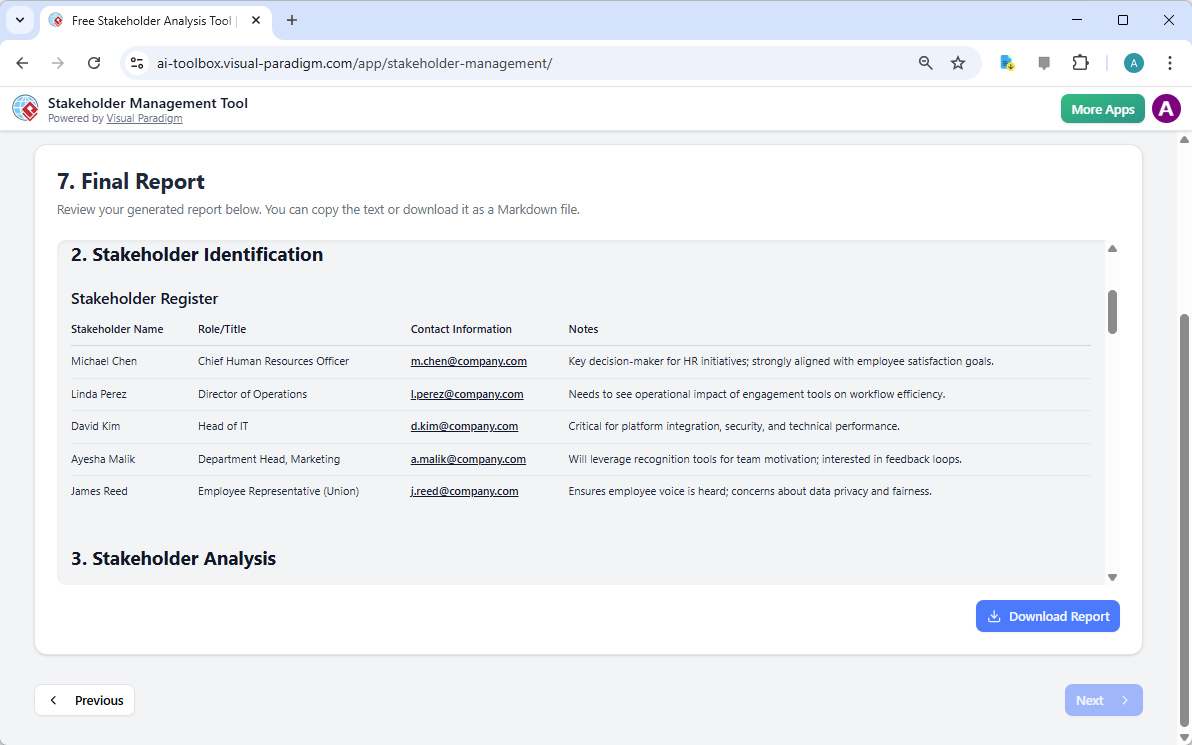
Końcowym etapem tego siedmiokrokowego procesu jest raport końcowy. Ten dokument konsoliduje wszystkie identyfikacje, analizy, harmonogramy komunikacji i logi realizacji w profesjonalnej, łatwej do odczytania formie. Służy jako ostateczny źródło prawdy dla strategii zaangażowania interesariuszy w projekcie. Ponieważ tennajlepsza aplikacja online do zarządzania interesariuszami zwraca priorytet na suwerenność danych, raport końcowy można wydrukować lub zapisać jako plik PDF z przeglądarki, podczas gdy dane podstawowe pozostają bezpiecznie przechowywane na Twoim lokalnym komputerze.

This is the screenshot of Visual Paradigm's AI-Powered Stakeholder Management Tool. It is now at step 7. A report is produced

Podsumowując, radzenie sobie z złożonością zmian organizacyjnych wymaga więcej niż tylko intuicji; wymaga systematycznej metodyki wspieranej przez inteligentne narzędzia. Visual Paradigm’snarzędzie do zarządzania interesariuszami z wykorzystaniem technologii AI ułatwia najbardziej pracochłonne aspekty zarządzania projektami, pozwalając liderom skupić się na tym, co naprawdę ma znaczenie: budowaniu relacji i osiąganiu wyników. Poprzez ścisłe przestrzeganie siedmiokrokowego przepływu pracy upewniasz się, że żaden interesariusz nie zostanie pominięty i że każdy ryzyko zostanie rozwiązane, zanim stanie się kryzysem.

Gotowy na opanowanie relacji z interesariuszami?

Skuteczne zarządzanie zaczyna się od odpowiedniego frameworku. Niezależnie od tego, czy jesteś menedżerem projektu, analitykiem biznesowym czy liderem zmian, umiejętność szybkiego tworzenia i realizacji planu zaangażowania interesariuszy to kluczowa kompetencja. Zapraszamy do doświadczenia efektywności podejścia opartego na technologii AI na własnej skórze.

Aby rozpocząć swój projekt:

  1. Użyj narzędzia przezWypróbuj teraz link poniżej.

  2. Wprowadź nazwę i cel projektu w sekcji „Przegląd projektu”.

  3. Skorzystaj z funkcji „Generuj za pomocą AI”, aby stworzyć początkową identyfikację i analizę.

  4. Dostosuj dane i zapisz postęp lokalnie, aby zachować pełną prywatność.

Dowiedz się więcej o metodologii:Przewodnik Visual Paradigm do zarządzania interesariuszami

Rozpocznij swój projekt już dziś:Wypróbuj teraz narzędzie do zarządzania interesariuszami z wykorzystaniem AI

Linki powiązane

Optimizing Employee Engagement Platform Rollouts with Visual Paradigm’s AI-Powered Stakeholder Management Tool

Optimize employee engagement platform rollouts using Visual Paradigm’s AI tool. A 7-step guide to stakeholder management and organizational change.

Successful organizational change, such as the implementation of a company-wide digital engagement platform, depends less on the technology itself and more on the human dynamics surrounding it. Utilizing a professional stakeholder management software is no longer optional for project leaders who aim to minimize resistance and maximize adoption. Visual Paradigm’s AI-powered stakeholder management tool offers a systematic, 7-step methodology to navigate these complex interpersonal landscapes. By automating the identification and analysis phases, project managers can move from abstract concepts to actionable engagement strategies in a matter of minutes, ensuring that every individual—from executive sponsors to union representatives—is appropriately managed.

The process begins with the contextualization of the project. Within the interface, the user defines the scope, objectives, and specific nuances of the initiative. For instance, in an “Employee Engagement Platform Rollout,” the tool prompts the user to describe the platform’s features, such as surveys and recognition tools, and the necessity for change management support. This initial input serves as the foundational data for the artificial intelligence to generate a tailored management plan.

This is the screenshot of Visual Paradigm's AI-Powered Stakeholder Management Tool. It is now at AI generation screen, where

A Structured Approach to Project Governance

Precision in project documentation is the hallmark of a disciplined manager. The first step of the workflow, the Project Overview, ensures that all foundational data is captured before moving into complex analysis. This step records the project name, the objective, and the designated manager, providing a clear reference point for all subsequent strategic decisions. It is essential to establish these parameters early to maintain alignment throughout the project lifecycle.

This is the screenshot of Visual Paradigm's AI-Powered Stakeholder Management Tool. The initial data is generated by AI and i

Key Takeaways for Effective Stakeholder Management

  • Systematic 7-Step Workflow: Guides users from initial identification through to execution and final reporting.

  • AI-Driven Strategy Generation: Quickly produces a comprehensive draft of stakeholders, interests, and engagement levels based on project context.

  • Privacy-Centric Data Handling: All project data is saved locally as .json files, ensuring sensitive organizational information remains off the cloud.

  • Dynamic Communication Planning: Facilitates the creation of tailored messaging schedules and risk mitigation strategies.

  • Professional Reporting: Generates a consolidated summary suitable for executive review and team alignment.

Identifying and Categorizing the Human Element

Once the project parameters are set, the next critical phase is Stakeholder Identification. This step involves listing every individual or group that may affect or be affected by the initiative. In the context of an engagement platform, this includes roles such as the Chief Human Resources Officer, the Director of Operations, and Department Heads. An easy-to-use stakeholder management app must allow for detailed profiling, including contact information and specific notes regarding each person’s unique perspective or concerns.

This is the screenshot of Visual Paradigm's AI-Powered Stakeholder Management Tool. It is now at step 2 - Professional online

Identification alone is insufficient; one must apply a rigorous Stakeholder Analysis to prioritize engagement efforts. This is typically achieved by evaluating two primary variables: Power (Influence) and Interest. Stakeholders with high power and high interest, such as the Head of IT or the CHRO, require “close management,” whereas those with lower influence may simply need to be “kept satisfied” or “informed.” This categorization ensures that limited communication resources are allocated where they will have the most significant impact on project success.

This is the screenshot of Visual Paradigm's AI-Powered Stakeholder Management Tool. It is now at step 3 - Professional online

Strategic Engagement and Risk Mitigation

With the analysis complete, the focus shifts to the Stakeholder Engagement Plan. This is where strategic intent is converted into a tactical communication plan. Each stakeholder is assigned a specific communication objective, a preferred method (such as quarterly reviews or town halls), and a frequency. This level of detail prevents communication gaps that often lead to project delays. For example, a Technical Status Update might be scheduled weekly for the IT department to ensure platform stability, while a broader Town Hall might occur quarterly for the general employee population.

This is the screenshot of Visual Paradigm's AI-Powered Stakeholder Management Tool. It is now at the upper part of step 4 - P

Furthermore, a proactive approach requires the identification of potential risks and the development of mitigation strategies. Resistance is a natural byproduct of change; however, it can be managed. If the AI identifies a risk such as “employee backlash over data usage,” the tool allows the manager to document a specific mitigation strategy, such as publishing transparency reports or clearly communicating data privacy policies. This forward-thinking approach is what distinguishes a professional stakeholder management software from a simple spreadsheet.

This is the screenshot of Visual Paradigm's AI-Powered Stakeholder Management Tool. It is now at the lower part of step 4 - P

Tracking Execution and Ensuring Accountability

Strategy remains theoretical until it is executed. The Engagement Execution step serves as a ledger for all interactions. By logging the date, the stakeholder involved, the action taken, and the resulting outcome, project managers maintain a transparent audit trail of their engagement efforts. This historical record is invaluable for adjusting strategies mid-project if a particular stakeholder’s sentiment shifts or if unexpected obstacles arise during the rollout.

This is the screenshot of Visual Paradigm's AI-Powered Stakeholder Management Tool. It is now at step 5 - Professional online

To ensure that these tasks are not merely recorded but effectively managed, the tool includes an Appendices section featuring a RACI matrix (Responsible, Accountable, Consulted, Informed). In the rollout of an engagement platform, it is vital to know exactly who is “Accountable” for finalizing platform requirements versus who merely needs to be “Informed” of the pilot program launch. Defining these roles eliminates ambiguity and prevents the “diffusion of responsibility” that often plagues large-scale corporate initiatives.

This is the screenshot of Visual Paradigm's AI-Powered Stakeholder Management Tool. It is now at step 6 - Professional online

Consolidating Intelligence into a Final Report

The culmination of this 7-step process is the Final Report. This document consolidates every identification, analysis, communication schedule, and execution log into a professional, easy-to-read format. It serves as the definitive source of truth for the project’s stakeholder strategy. Because this best online stakeholder management app prioritizes data sovereignty, the final report can be printed or saved as a PDF from your browser, while the underlying data remains securely stored on your local machine.

This is the screenshot of Visual Paradigm's AI-Powered Stakeholder Management Tool. It is now at step 7. A report is produced

In summary, navigating the complexities of organizational change requires more than just intuition; it requires a structured methodology supported by intelligent tools. Visual Paradigm’s AI-powered stakeholder management tool streamlines the most labor-intensive aspects of project governance, allowing leaders to focus on what truly matters: building relationships and driving results. By following a guided 7-step workflow, you ensure that no stakeholder is overlooked and every risk is addressed before it becomes a crisis.

Ready to Master Your Stakeholder Relationships?

Effective management begins with the right framework. Whether you are a project manager, a business analyst, or a change leader, the ability to rapidly generate and execute a stakeholder engagement plan is a critical competency. We invite you to experience the efficiency of an AI-driven approach firsthand.

To begin your project:

  1. Access the tool via the Try Now link below.

  2. Enter your project name and objective in the “Project Overview.”

  3. Use the “Generate with AI” feature to produce your initial identification and analysis.

  4. Refine the data and save your progress locally to maintain full privacy.

Learn more about the methodology: Visual Paradigm Stakeholder Management Guide

Start your project today: Try the AI-Powered Stakeholder Management Tool Now

Related Links

Crafting a Crystal-Clear Problem Statement for Software Development

Use Visual Paradigm’s AI-powered tool to craft clear, structured problem statements for software projects with templates and real-time feedback.

Struggling to articulate the core challenge your software project aims to solve? The Problem Description Generator from Visual Paradigm is the ultimate AI-powered tool to transform your project’s initial chaos into a clear, focused, and compelling narrative. This innovative solution empowers project managers, business analysts, and product owners to define the “why” behind their work with unprecedented speed and precision. By leveraging a library of structured templates and real-time AI feedback, this tool ensures your problem statement is not just written, but optimized for maximum impact from day one. It’s the secret weapon for launching projects with laser focus and setting the stage for success.

Key Takeaways:

  • Use a template-driven approach to ensure your problem statement is comprehensive and structured.

  • Fill in specific variables to customize the description for your unique project.

  • Get instant AI feedback to refine your problem statement for clarity and effectiveness.

  • Start any project with a solid, well-articulated understanding of the core issue.

Step 1: Choose Your Template – The Foundation of a Strong Problem Statement

Every great project begins with a solid foundation, and for a problem statement, that foundation is the right template. The first step in using the AI-Powered Problem Description Generator is to select a template that perfectly aligns with your project’s nature. As shown in

This is a screenshot of Visual Paradigm's AI Powered Problem Description Generator. It shows the first step, which involves c

, the interface presents a clean, intuitive dashboard with a variety of templates for different business needs. Whether you’re tackling a software development initiative, optimizing a business process, or conducting a strategic analysis like a SWOT or PEST analysis, you can find a dedicated template. The “Software System Development” template, for instance, is specifically designed to help you create comprehensive software system requirements and specifications. By selecting the correct template, you immediately establish a professional structure that guides you to cover all critical aspects of the problem, ensuring no vital detail is overlooked. This step is crucial because it sets the tone and framework for the entire problem description, making the subsequent steps much more efficient and effective.

Step 2: Fill in the Variables – Customize Your Narrative

Once you’ve chosen your template, the magic happens in the “Edit Parameters” section.

This is a screenshot of Visual Paradigm's AI Powered Problem Description Generator. It shows the second step, which involves

vividly illustrates this second step. On the left, you’re presented with a form filled with specific fields, such as “Organization Name,” “Current Problem/Inefficiency,” and “Type of Software System.” This is where you inject your project’s unique DNA. As you type in the details, the tool’s real-time preview on the right side dynamically updates, showing you exactly how your filled-in variables will look in the final problem description. This live preview is incredibly powerful. It allows you to see the narrative form your inputs are creating, spot any awkward phrasing, and make adjustments on the fly. The variables are highlighted in green, making it easy to see exactly what content is being inserted into the template. This process is not just about filling blanks; it’s about shaping a coherent story that clearly explains the problem, its impact, and the desired outcome. The ability to see your description evolve in real-time is a game-changer for clarity and confidence.

Step 3: Review with AI – Your Instant Expert Editor

The final, and arguably most powerful, step is the AI review. After you’ve filled in all the variables and are satisfied with the live preview, you can click the “Review with AI” button.

This is a screenshot of Visual Paradigm's AI Powered Problem Description Generator. Once the details are filled in, you can c

captures this moment perfectly. A modal window appears, presenting a detailed analysis of your generated problem statement. The AI doesn’t just check for grammar; it evaluates the statement for clarity, completeness, logical flow, and the use of appropriate business terminology. It provides a clear “Status” (like “OK”) and a detailed “AI Analysis” that highlights strengths and suggests improvements. For example, the AI might confirm that your statement is clear and professionally written, or it might suggest a more impactful way to phrase a key objective. This instant, objective feedback acts as a virtual expert editor, helping you refine your problem statement to ensure it is not only correct but also highly effective in communicating the project’s purpose. This final step ensures that your problem statement is ready to be shared with stakeholders, developers, or clients with confidence.

Unlock Your Project’s Potential

Defining a problem is often the hardest part of any initiative. A vague or poorly articulated problem statement can lead to wasted effort, misaligned solutions, and ultimately, project failure. The Problem Description Generator from Visual Paradigm solves this fundamental challenge. It combines the power of structured templates with the intelligence of AI to create a workflow that is both efficient and effective. By following the three simple steps—choose a template, fill in the variables, and review with AI—you can transform your initial project idea into a clear, compelling, and professional problem statement in minutes. This tool is not just a convenience; it’s a strategic advantage that ensures your project starts on the right foot. Stop guessing and start defining with confidence. Try the AI-Powered Problem Description Generator now and experience the difference it makes.

Related Links