為軟體開發撰寫清晰明確的問題陳述

Use Visual Paradigm’s AI-powered tool to craft clear, structured problem statements for software projects with templates and real-time feedback.

是否苦於無法清楚表達您的軟體專案所要解決的核心挑戰?問題描述生成器來自Visual Paradigm是終極的AI驅動工具,能將專案初期的混亂轉化為清晰、聚焦且具說服力的敘述。此創新解決方案賦予專案經理、業務分析師與產品負責人前所未有的速度與精準度,明確定義其工作背後的「原因」。透過使用結構化範本庫與即時AI反饋,此工具確保您的問題陳述不僅被撰寫出來,更從第一天起就經過最佳化,以達到最大影響力。這正是讓專案以極致專注啟動,並為成功奠定基礎的秘密武器。

關鍵要點:

  • 採用範本驅動的方法,確保您的問題陳述內容完整且結構清晰。

  • 填入特定變數,以針對您獨特的專案客製化描述內容。

  • 即時獲得AI反饋,以提升問題陳述的清晰度與有效性。

  • 以穩固且清晰的基礎,開始任何專案,掌握核心問題。

步驟一:選擇您的範本——強大問題陳述的基礎

每個偉大的專案都從穩固的基礎開始,而對於問題陳述而言,這基礎正是合適的範本。使用AI驅動問題描述生成器的第一步,是選擇一個與您專案性質完全契合的範本。如圖所示
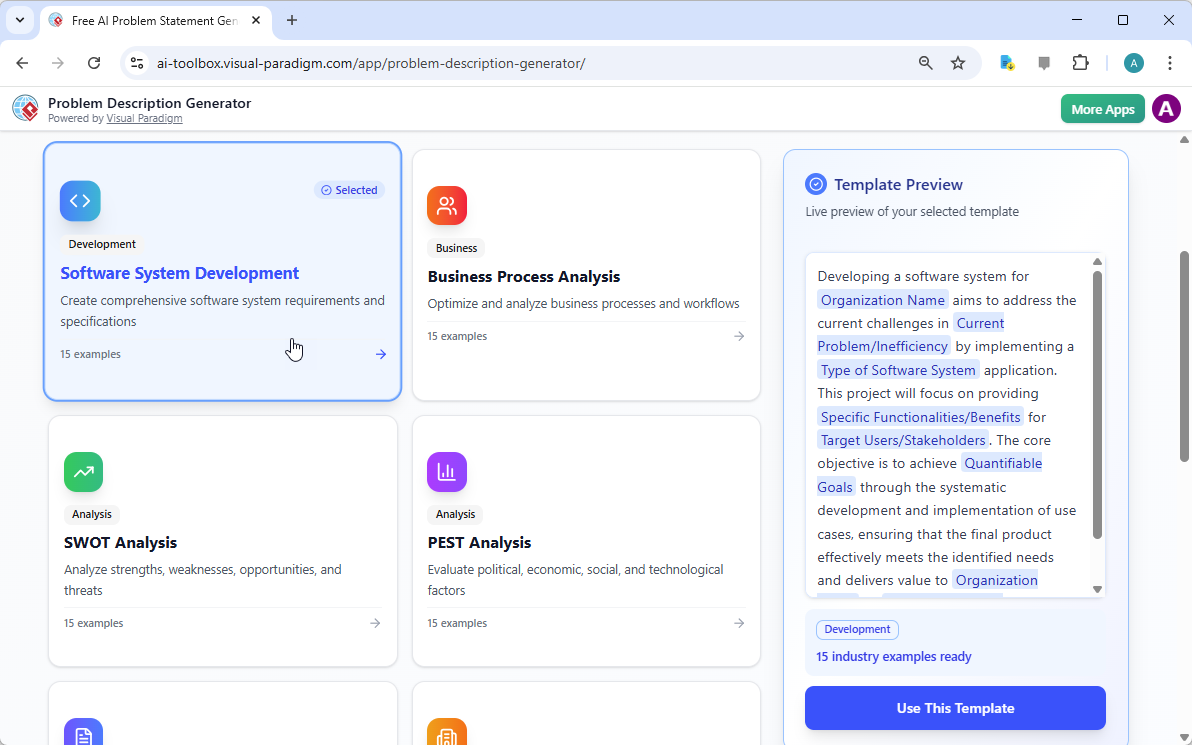
This is a screenshot of Visual Paradigm's AI Powered Problem Description Generator. It shows the first step, which involves c

介面呈現出一個乾淨且直覺的儀表板,提供多種適用於不同商業需求的範本。無論您正在處理軟體開發計畫、優化商業流程,或進行SWOT或PEST等戰略分析,都能找到專屬的範本。例如「軟體系統開發」範本,專門用於協助您建立完整的軟體系統需求與規格。透過選擇正確的範本,您能立即建立專業的結構,引導您涵蓋問題的所有關鍵面向,確保不會遺漏任何重要細節。這一步至關重要,因為它確立了整個問題描述的基調與架構,使後續步驟更加高效且有效。

步驟二:填入變數——客製化您的敘述

選擇範本後,神奇之處便出現在「編輯參數」區塊。
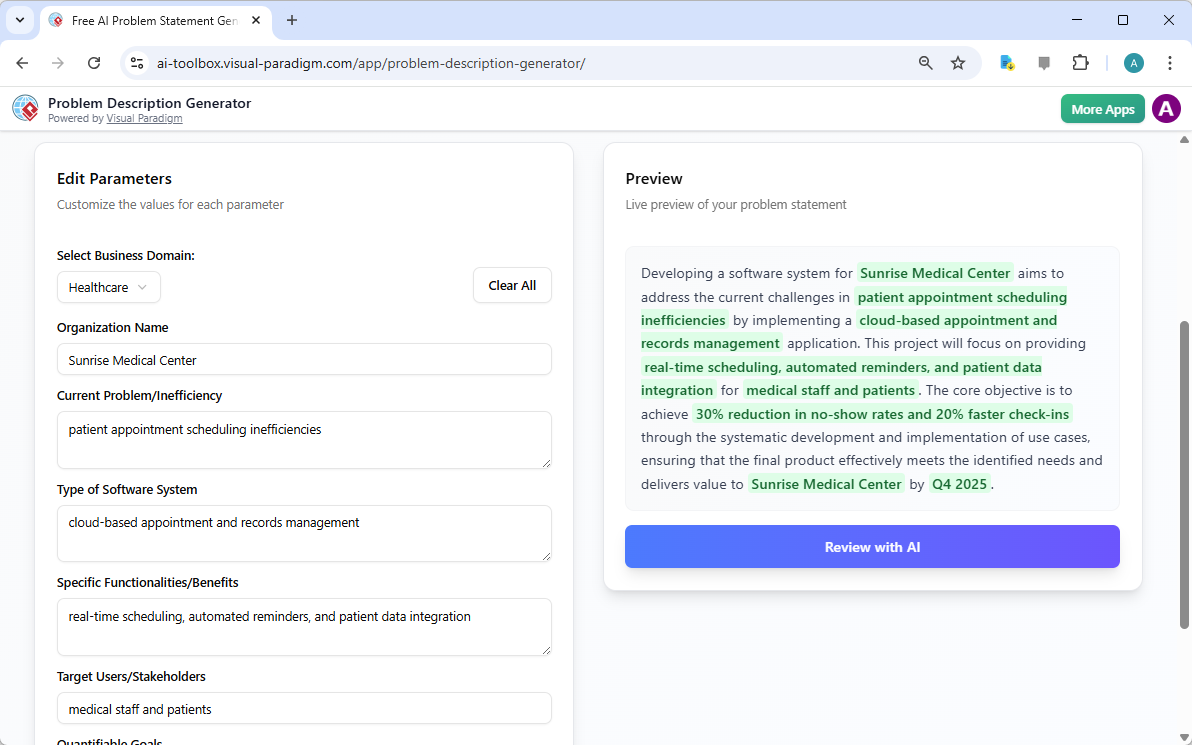
This is a screenshot of Visual Paradigm's AI Powered Problem Description Generator. It shows the second step, which involves

鮮明地呈現了這第二步。左側顯示一個填滿特定欄位的表單,例如「組織名稱」、「當前問題/低效率」以及「軟體系統類型」。這正是注入您專案獨特DNA的地方。當您輸入細節時,工具右側的即時預覽會動態更新,清楚顯示您填入的變數在最終問題描述中會呈現的樣貌。此即時預覽極具威力,讓您能看見輸入內容所形成的敘述脈絡,察覺任何不自然的語句,並立即調整。變數以綠色標示,讓您輕易看出哪些內容正被插入範本中。此過程不僅是填空,更是塑造一個連貫故事,清楚闡述問題、影響與期望成果。能夠即時看見描述內容的演變,是提升清晰度與信心的關鍵轉折。

步驟三:透過AI審查——您的即時專家編輯

最後一步,也是最具威力的一步,是AI審查。在您填完所有變數並對即時預覽感到滿意後,即可點擊「透過AI審查」按鈕。
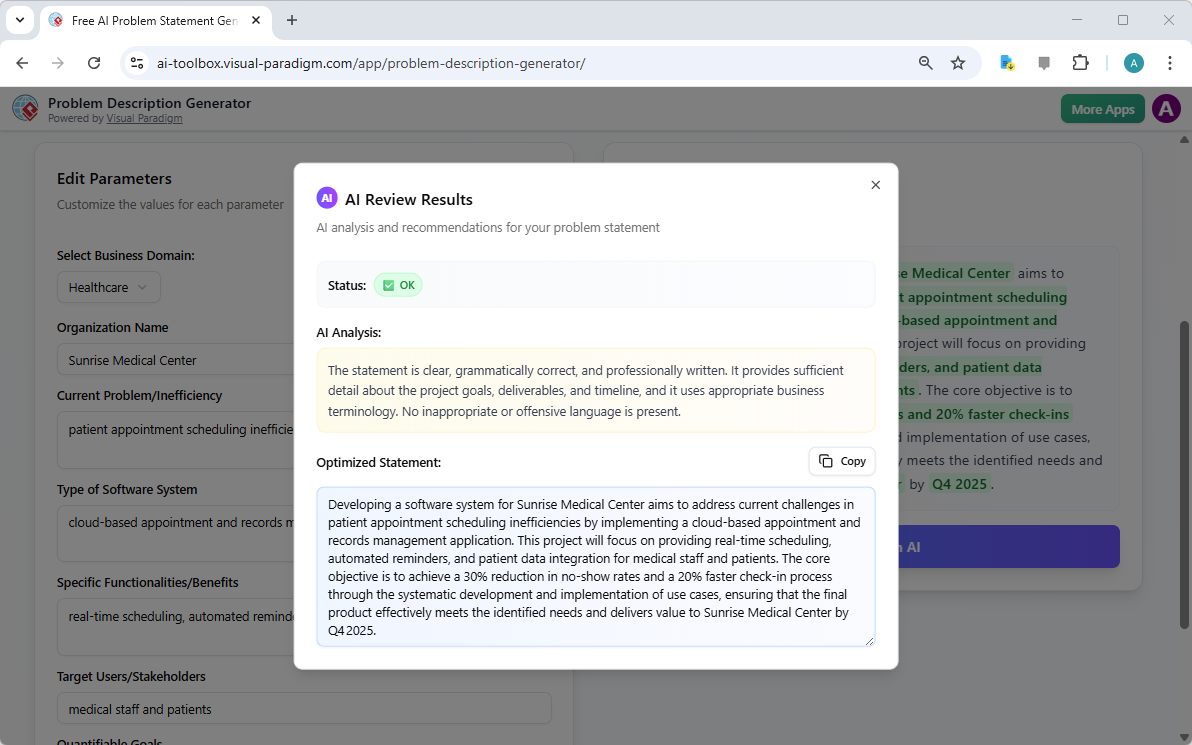
This is a screenshot of Visual Paradigm's AI Powered Problem Description Generator. Once the details are filled in, you can c

完美捕捉了這個瞬間。彈出視窗出現,提供您生成的問題陳述的詳細分析。AI不僅檢查語法,更評估陳述的清晰度、完整性、邏輯流程以及商業術語的使用是否恰當。它提供明確的「狀態」(例如「OK」)與詳細的「AI分析」,指出優點並提出改進建議。例如,AI可能確認您的陳述清晰且專業,或建議以更具影響力的方式表達關鍵目標。這項即時且客觀的反饋,如同一位虛擬專家編輯,協助您精煉問題陳述,確保其不僅正確,更能有效傳達專案的宗旨。此最後一步確保您的問題陳述可自信地與利害關係人、開發人員或客戶分享。

釋放專案的潛能

定義問題往往是任何行動中最困難的部分。模糊或表達不清的問題陳述,可能導致資源浪費、解決方案偏離目標,最終導致專案失敗。Visual Paradigm的問題描述生成器解決了這一根本挑戰。它結合結構化範本的力量與AI的智慧,打造出既高效又有效的流程。透過遵循三個簡單步驟——選擇範本、填入變數、透過AI審查——您可在數分鐘內將最初的專案構想轉化為清晰、具說服力且專業的問題陳述。此工具不僅是便利工具,更是戰略優勢,確保您的專案從正確的起點出發。停止猜測,自信地開始定義。立即試用AI驅動的問題描述生成器並親身體驗它帶來的差異。

相關連結

透過 Visual Paradigm 的 AI 驅動利益相關者管理工具,優化員工參與平台的推出

Optimize employee engagement platform rollouts using Visual Paradigm’s AI tool. A 7-step guide to stakeholder management and organizational change.

成功的組織變革,例如公司範圍內數位參與平台的實施,取決於周圍的人際動態,而非技術本身。利用專業的利益相關者管理軟體對希望減少抵觸並最大化採用率的專案領導者而言,已不再是可選的。Visual ParadigmAI 驅動的利益相關者管理工具提供一套系統性的七步法,協助應對這些複雜的人際關係環境。透過自動化識別與分析階段,專案經理可在短短幾分鐘內從抽象概念轉化為具體的參與策略,確保每位個人——從高階贊助者到工會代表——都能得到適當的管理。

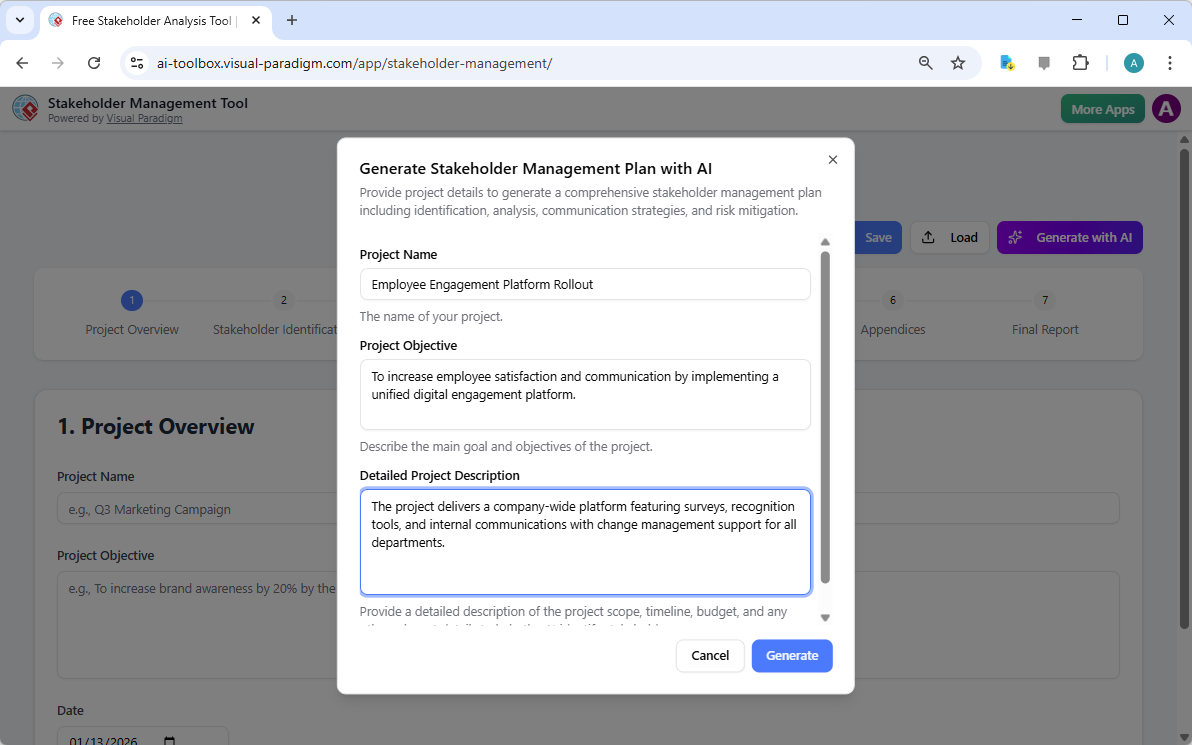
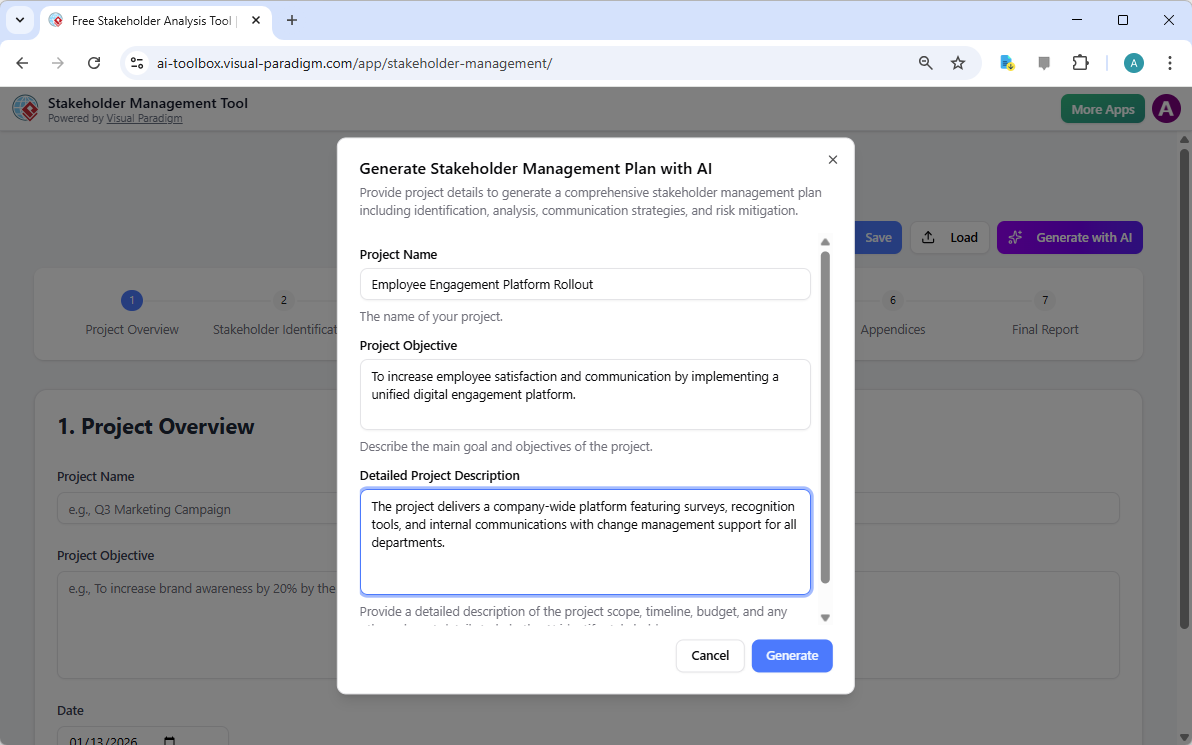
該流程從專案的背景化開始。在介面中,使用者定義專案的範圍、目標以及具體細節。例如,在「員工參與平台推出」的情境下,工具會提示使用者描述平台的功能,如問卷與表彰工具,以及變革管理支援的必要性。此初始輸入將作為人工智慧生成客製化管理計畫的基礎資料。

This is the screenshot of Visual Paradigm's AI-Powered Stakeholder Management Tool. It is now at AI generation screen, where

專案治理的結構化方法

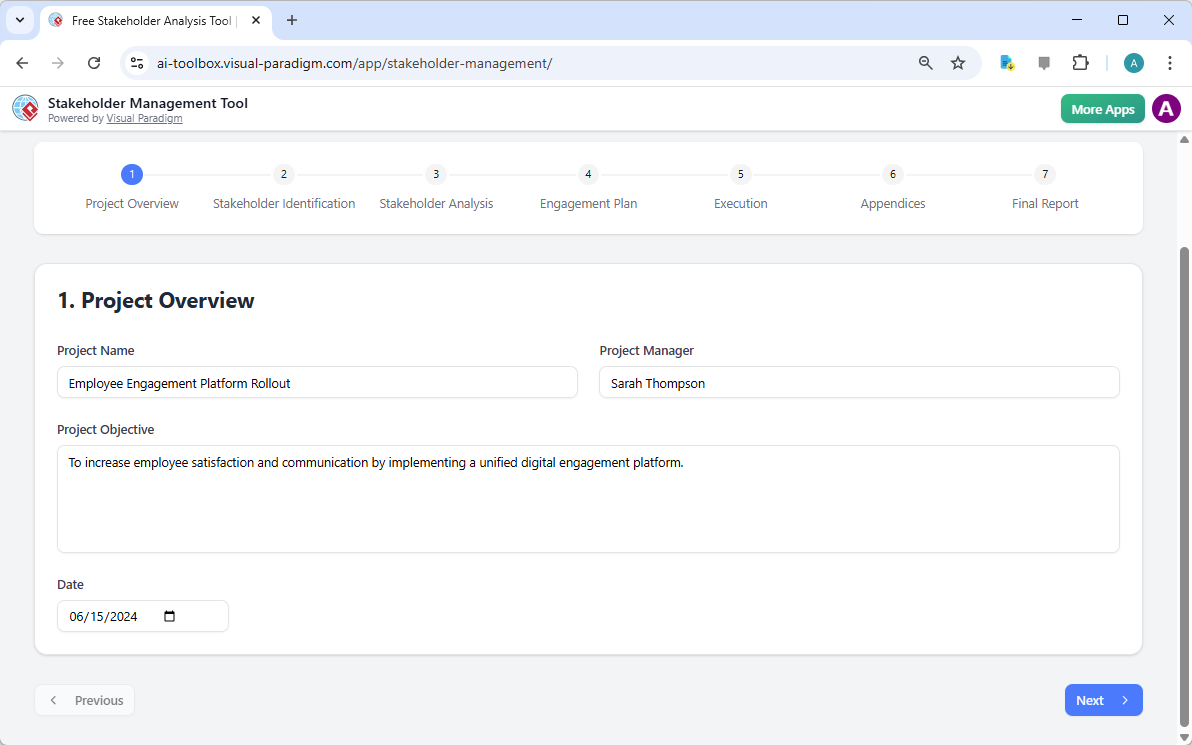
專案文件的精確性是紀律嚴明管理者的標誌。工作流程的第一步——專案概覽——確保在進入複雜分析之前,所有基礎資料都已完整記錄。此步驟會記錄專案名稱、目標以及指定的管理人員,為後續所有戰略決策提供明確的參考點。在專案生命週期初期建立這些參數至關重要,以確保全程保持一致。

This is the screenshot of Visual Paradigm's AI-Powered Stakeholder Management Tool. The initial data is generated by AI and i

有效利益相關者管理的關鍵要點

  • 系統性的七步工作流程:引導使用者從最初的識別,一路到執行與最終報告。

  • AI 驅動的策略生成:根據專案背景,快速生成利益相關者、興趣與參與程度的完整草稿。

  • 以隱私為核心的資料處理:所有專案資料均以 .json 檔案格式本地儲存,確保敏感的組織資訊不會上傳至雲端。

  • 動態溝通規劃:協助建立客製化的訊息時程與風險緩解策略。

  • 專業報告:生成一份整合性摘要,適合高階主管審閱與團隊協調。

識別與分類人際要素

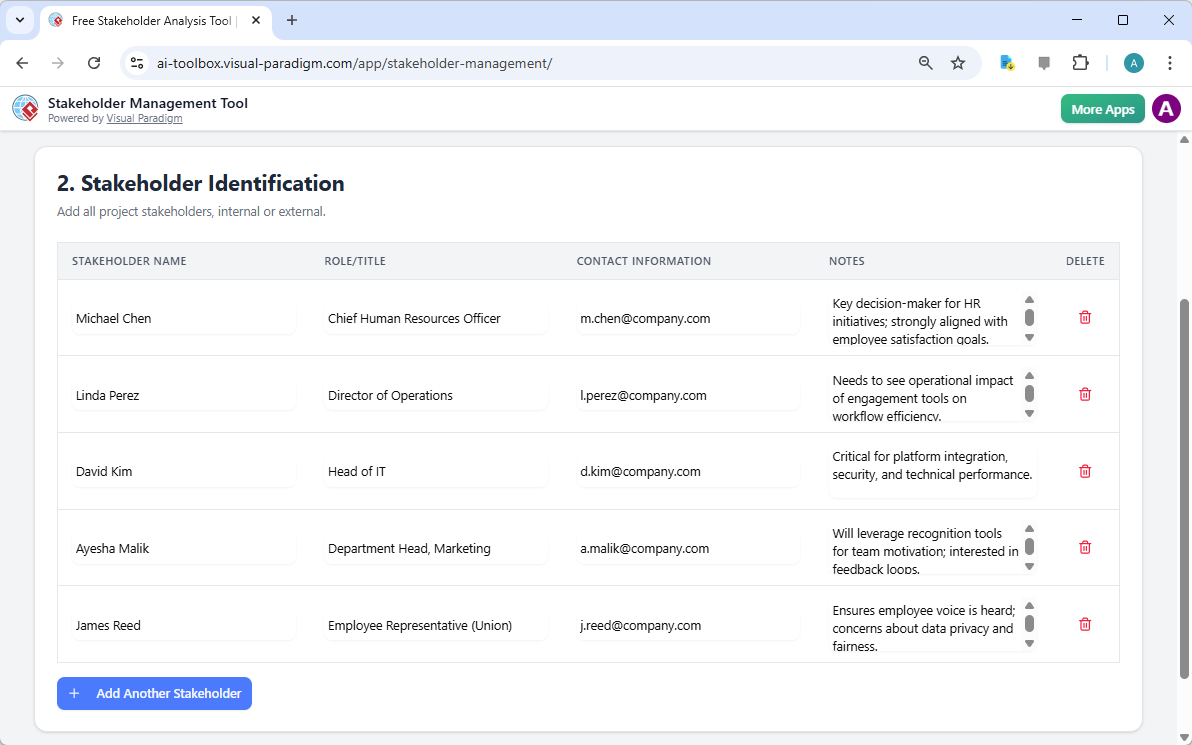
專案參數設定完成後,接下來的關鍵階段是利益相關者識別。此步驟需列出所有可能影響或受該計畫影響的個人或群體。在參與平台的背景下,這包括首席人力資源長、營運總監及各部門主管等角色。一個易於使用的利益相關者管理應用程式必須支援詳細的個人資料設定,包括聯絡資訊以及針對每位人士獨特觀點或關切事項的具體備註。

This is the screenshot of Visual Paradigm's AI-Powered Stakeholder Management Tool. It is now at step 2 - Professional online

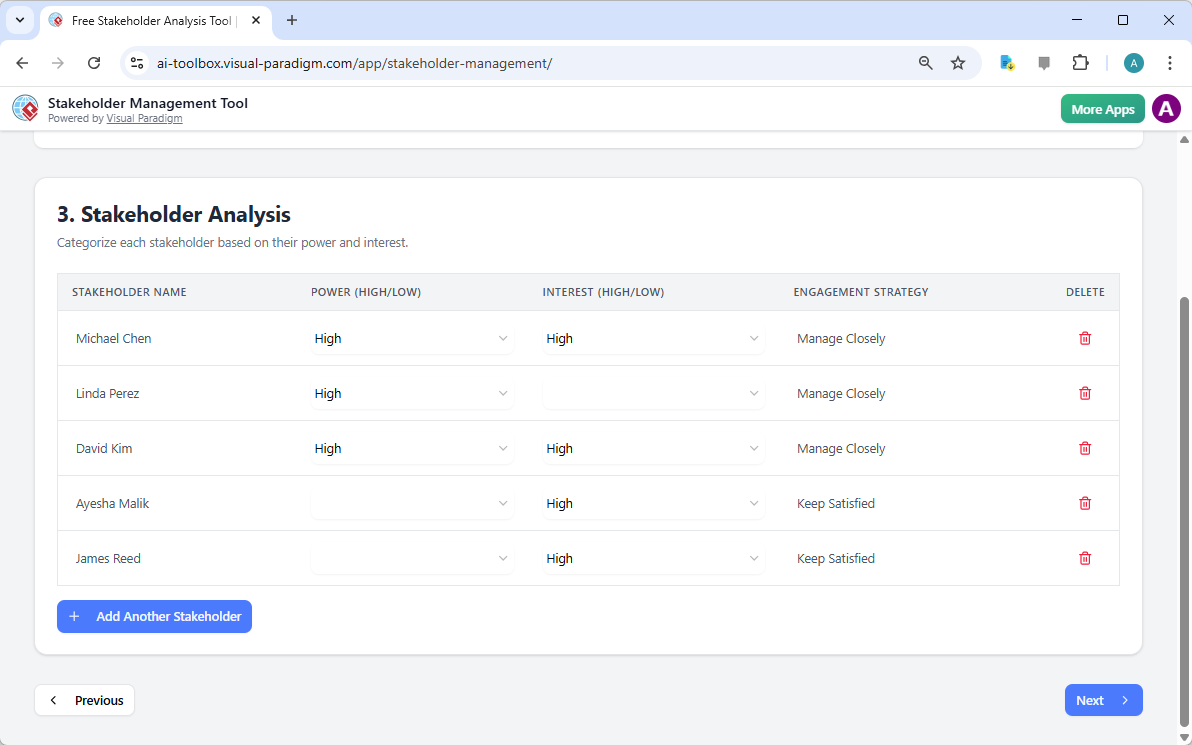
僅有識別尚不夠;必須進行嚴謹的利益相關者分析,以優先排序參與努力。這通常透過評估兩個主要變數來實現:權力(影響力)與興趣。具有高權力與高興趣的利益相關者,例如資訊長或首席人力資源長,需要「密切管理」;而影響力較低者,則只需「保持滿意」或「知會」即可。這種分類方式確保有限的溝通資源能配置在對專案成功最具影響力的領域。

This is the screenshot of Visual Paradigm's AI-Powered Stakeholder Management Tool. It is now at step 3 - Professional online

策略性參與與風險緩解

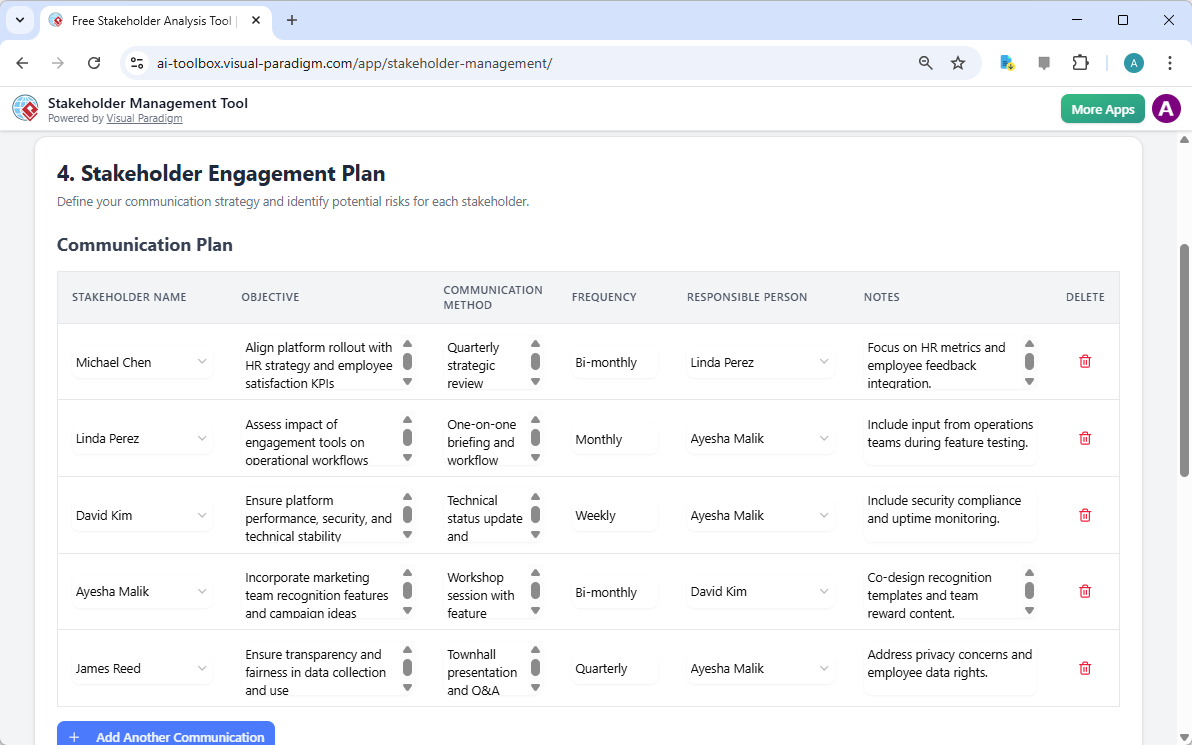
分析完成後,重點轉向利益相關者參與計畫。這正是將戰略意圖轉化為具體溝通計畫的階段。每位利益相關者都會被分配特定的溝通目標、偏好的溝通方式(例如季度檢討或員工大會)以及頻率。這種細節程度可防止常見的溝通落差,進而避免專案延宕。例如,技術進度更新可針對資訊部門訂為每周一次,以確保平台穩定;而更廣泛的員工大會則可每季舉行一次。

This is the screenshot of Visual Paradigm's AI-Powered Stakeholder Management Tool. It is now at the upper part of step 4 - P

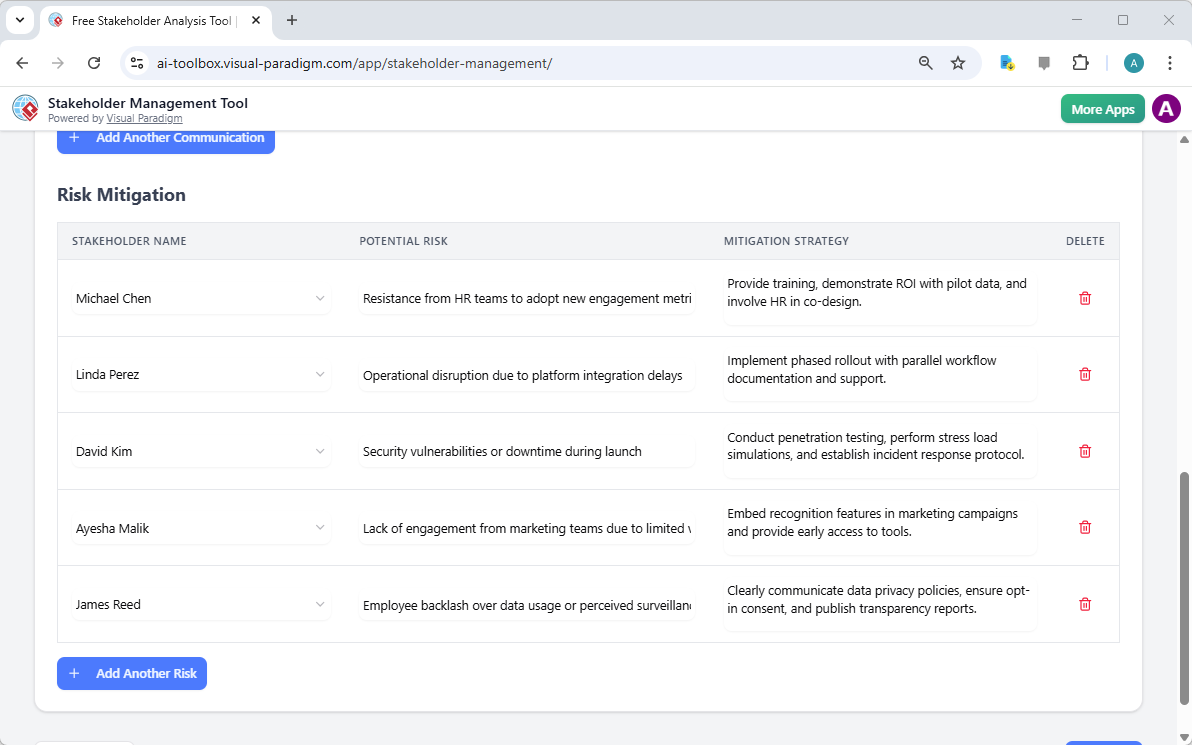
此外,主動的作法還需識別潛在風險並制定緩解策略。抵觸是變革的自然副產品,但可加以管理。若 AI 識別出「員工對資料使用產生反彈」等風險,該工具允許管理者記錄具體的緩解策略,例如發布透明度報告或明確傳達資料隱私政策。這種前瞻性的做法正是區分出專業的利益相關者管理軟件來自一個簡單的試算表。

This is the screenshot of Visual Paradigm's AI-Powered Stakeholder Management Tool. It is now at the lower part of step 4 - P

追蹤執行並確保責任落實

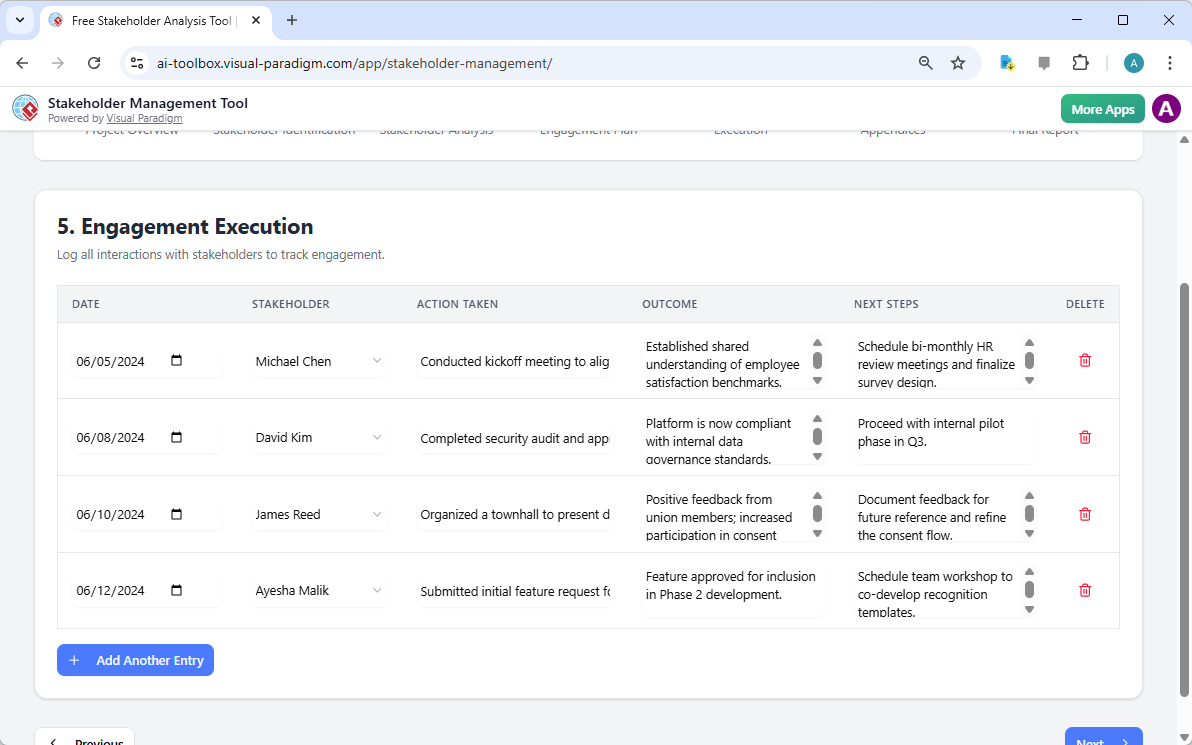
策略在執行之前僅是理論。參與執行步驟可作為所有互動的帳簿。透過記錄日期、參與的利益相關者、採取的行動以及產生的結果,專案經理能維持透明的審計追蹤,以反映其參與努力。若某位特定利益相關者的情緒發生變化,或在推廣過程中出現意外障礙,此歷史紀錄對於在專案進行中調整策略至關重要。

This is the screenshot of Visual Paradigm's AI-Powered Stakeholder Management Tool. It is now at step 5 - Professional online

為確保這些任務不僅被記錄,更能有效管理,該工具包含一個附錄部分,內含RACI矩陣(負責、負責人、諮詢、知會)。在推出參與平台時,明確知道誰對最終確定平台需求負「責任」,而誰僅需「知會」試行計畫的啟動,至關重要。明確界定這些角色可消除模糊性,並防止大型企業計畫常見的「責任分散」問題。

This is the screenshot of Visual Paradigm's AI-Powered Stakeholder Management Tool. It is now at step 6 - Professional online

將智慧整合為最終報告

此七步流程的最終成果是最終報告。該文件將每一項識別、分析、溝通時程與執行日誌整合為專業且易於閱讀的格式。它成為專案利益相關者策略的最終真實來源。由於此最佳線上利益相關者管理應用程式強調資料主權,最終報告可從您的瀏覽器列印或儲存為PDF,而底層資料則安全地儲存在您的本地電腦上。

This is the screenshot of Visual Paradigm's AI-Powered Stakeholder Management Tool. It is now at step 7. A report is produced

總而言之,應對組織變革的複雜性不僅需要直覺,更需要由智能工具支援的結構化方法。Visual Paradigm的AI驅動的利益相關者管理工具簡化專案治理中最耗時的環節,讓領導者能專注於真正重要的事:建立關係並推動成果。透過遵循引導式的七步工作流程,確保不會忽略任何利益相關者,並在風險演變為危機前加以處理。

準備好掌握您的利益相關者關係了嗎?

有效的管理始於正確的架構。無論您是專案經理、業務分析師或變革領導者,能夠快速制定並執行利益相關者參與計畫,是一項關鍵能力。我們誠摯邀請您親身體驗AI驅動方法的高效性。

開始您的專案:

  1. 透過以下連結存取工具立即試用下方連結。

  2. 在「專案概覽」中輸入您的專案名稱與目標。

  3. 使用「AI生成」功能,產生您的初步識別與分析。

  4. 優化資料並本地儲存進度,以確保完全隱私。

了解更多方法論:Visual Paradigm利益相關者管理指南

立即啟動您的專案:立即試用AI驅動的利益相關者管理工具

相關連結

Optimizing Employee Engagement Platform Rollouts with Visual Paradigm’s AI-Powered Stakeholder Management Tool

Optimize employee engagement platform rollouts using Visual Paradigm’s AI tool. A 7-step guide to stakeholder management and organizational change.

Successful organizational change, such as the implementation of a company-wide digital engagement platform, depends less on the technology itself and more on the human dynamics surrounding it. Utilizing a professional stakeholder management software is no longer optional for project leaders who aim to minimize resistance and maximize adoption. Visual Paradigm’s AI-powered stakeholder management tool offers a systematic, 7-step methodology to navigate these complex interpersonal landscapes. By automating the identification and analysis phases, project managers can move from abstract concepts to actionable engagement strategies in a matter of minutes, ensuring that every individual—from executive sponsors to union representatives—is appropriately managed.

The process begins with the contextualization of the project. Within the interface, the user defines the scope, objectives, and specific nuances of the initiative. For instance, in an “Employee Engagement Platform Rollout,” the tool prompts the user to describe the platform’s features, such as surveys and recognition tools, and the necessity for change management support. This initial input serves as the foundational data for the artificial intelligence to generate a tailored management plan.

This is the screenshot of Visual Paradigm's AI-Powered Stakeholder Management Tool. It is now at AI generation screen, where

A Structured Approach to Project Governance

Precision in project documentation is the hallmark of a disciplined manager. The first step of the workflow, the Project Overview, ensures that all foundational data is captured before moving into complex analysis. This step records the project name, the objective, and the designated manager, providing a clear reference point for all subsequent strategic decisions. It is essential to establish these parameters early to maintain alignment throughout the project lifecycle.

This is the screenshot of Visual Paradigm's AI-Powered Stakeholder Management Tool. The initial data is generated by AI and i

Key Takeaways for Effective Stakeholder Management

  • Systematic 7-Step Workflow: Guides users from initial identification through to execution and final reporting.

  • AI-Driven Strategy Generation: Quickly produces a comprehensive draft of stakeholders, interests, and engagement levels based on project context.

  • Privacy-Centric Data Handling: All project data is saved locally as .json files, ensuring sensitive organizational information remains off the cloud.

  • Dynamic Communication Planning: Facilitates the creation of tailored messaging schedules and risk mitigation strategies.

  • Professional Reporting: Generates a consolidated summary suitable for executive review and team alignment.

Identifying and Categorizing the Human Element

Once the project parameters are set, the next critical phase is Stakeholder Identification. This step involves listing every individual or group that may affect or be affected by the initiative. In the context of an engagement platform, this includes roles such as the Chief Human Resources Officer, the Director of Operations, and Department Heads. An easy-to-use stakeholder management app must allow for detailed profiling, including contact information and specific notes regarding each person’s unique perspective or concerns.

This is the screenshot of Visual Paradigm's AI-Powered Stakeholder Management Tool. It is now at step 2 - Professional online

Identification alone is insufficient; one must apply a rigorous Stakeholder Analysis to prioritize engagement efforts. This is typically achieved by evaluating two primary variables: Power (Influence) and Interest. Stakeholders with high power and high interest, such as the Head of IT or the CHRO, require “close management,” whereas those with lower influence may simply need to be “kept satisfied” or “informed.” This categorization ensures that limited communication resources are allocated where they will have the most significant impact on project success.

This is the screenshot of Visual Paradigm's AI-Powered Stakeholder Management Tool. It is now at step 3 - Professional online

Strategic Engagement and Risk Mitigation

With the analysis complete, the focus shifts to the Stakeholder Engagement Plan. This is where strategic intent is converted into a tactical communication plan. Each stakeholder is assigned a specific communication objective, a preferred method (such as quarterly reviews or town halls), and a frequency. This level of detail prevents communication gaps that often lead to project delays. For example, a Technical Status Update might be scheduled weekly for the IT department to ensure platform stability, while a broader Town Hall might occur quarterly for the general employee population.

This is the screenshot of Visual Paradigm's AI-Powered Stakeholder Management Tool. It is now at the upper part of step 4 - P

Furthermore, a proactive approach requires the identification of potential risks and the development of mitigation strategies. Resistance is a natural byproduct of change; however, it can be managed. If the AI identifies a risk such as “employee backlash over data usage,” the tool allows the manager to document a specific mitigation strategy, such as publishing transparency reports or clearly communicating data privacy policies. This forward-thinking approach is what distinguishes a professional stakeholder management software from a simple spreadsheet.

This is the screenshot of Visual Paradigm's AI-Powered Stakeholder Management Tool. It is now at the lower part of step 4 - P

Tracking Execution and Ensuring Accountability

Strategy remains theoretical until it is executed. The Engagement Execution step serves as a ledger for all interactions. By logging the date, the stakeholder involved, the action taken, and the resulting outcome, project managers maintain a transparent audit trail of their engagement efforts. This historical record is invaluable for adjusting strategies mid-project if a particular stakeholder’s sentiment shifts or if unexpected obstacles arise during the rollout.

This is the screenshot of Visual Paradigm's AI-Powered Stakeholder Management Tool. It is now at step 5 - Professional online

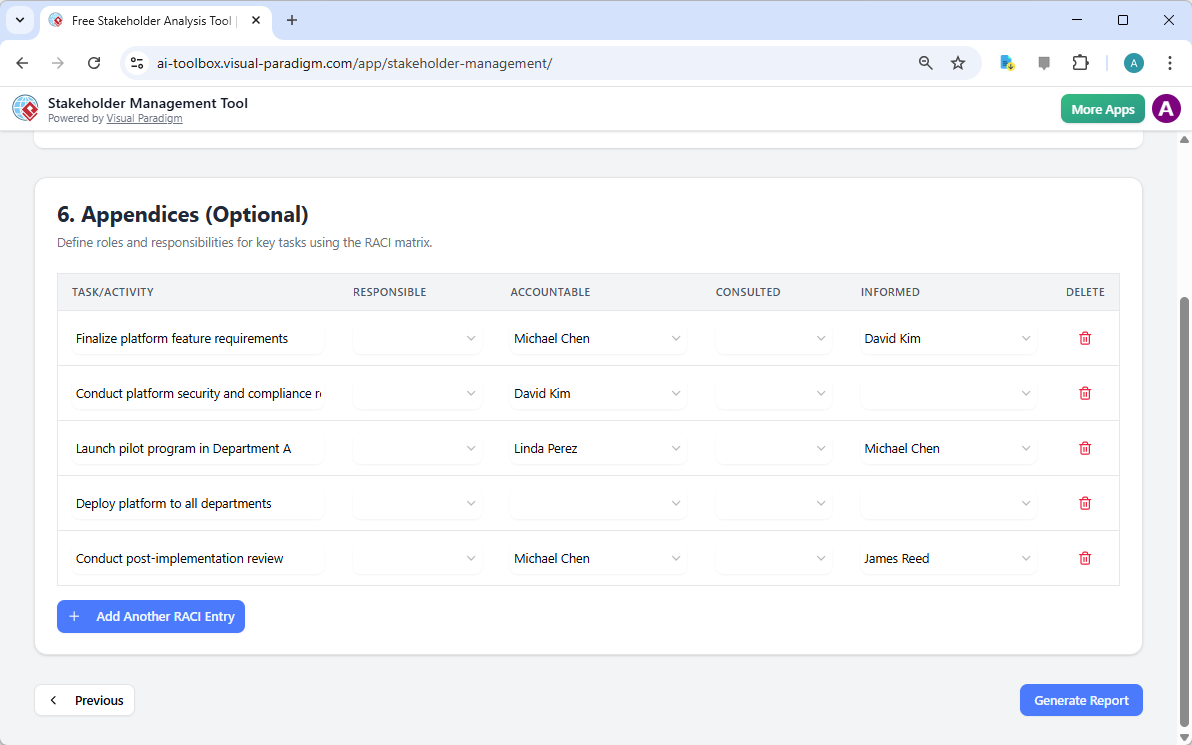
To ensure that these tasks are not merely recorded but effectively managed, the tool includes an Appendices section featuring a RACI matrix (Responsible, Accountable, Consulted, Informed). In the rollout of an engagement platform, it is vital to know exactly who is “Accountable” for finalizing platform requirements versus who merely needs to be “Informed” of the pilot program launch. Defining these roles eliminates ambiguity and prevents the “diffusion of responsibility” that often plagues large-scale corporate initiatives.

This is the screenshot of Visual Paradigm's AI-Powered Stakeholder Management Tool. It is now at step 6 - Professional online

Consolidating Intelligence into a Final Report

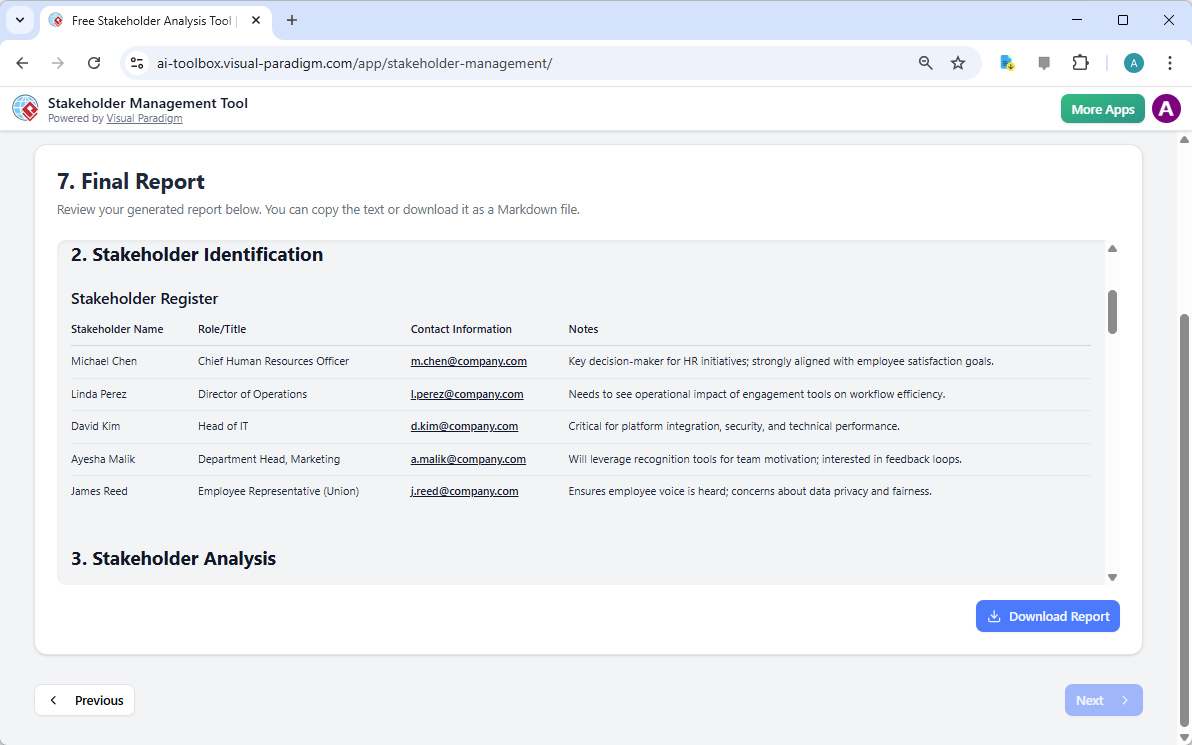
The culmination of this 7-step process is the Final Report. This document consolidates every identification, analysis, communication schedule, and execution log into a professional, easy-to-read format. It serves as the definitive source of truth for the project’s stakeholder strategy. Because this best online stakeholder management app prioritizes data sovereignty, the final report can be printed or saved as a PDF from your browser, while the underlying data remains securely stored on your local machine.

This is the screenshot of Visual Paradigm's AI-Powered Stakeholder Management Tool. It is now at step 7. A report is produced

In summary, navigating the complexities of organizational change requires more than just intuition; it requires a structured methodology supported by intelligent tools. Visual Paradigm’s AI-powered stakeholder management tool streamlines the most labor-intensive aspects of project governance, allowing leaders to focus on what truly matters: building relationships and driving results. By following a guided 7-step workflow, you ensure that no stakeholder is overlooked and every risk is addressed before it becomes a crisis.

Ready to Master Your Stakeholder Relationships?

Effective management begins with the right framework. Whether you are a project manager, a business analyst, or a change leader, the ability to rapidly generate and execute a stakeholder engagement plan is a critical competency. We invite you to experience the efficiency of an AI-driven approach firsthand.

To begin your project:

  1. Access the tool via the Try Now link below.

  2. Enter your project name and objective in the “Project Overview.”

  3. Use the “Generate with AI” feature to produce your initial identification and analysis.

  4. Refine the data and save your progress locally to maintain full privacy.

Learn more about the methodology: Visual Paradigm Stakeholder Management Guide

Start your project today: Try the AI-Powered Stakeholder Management Tool Now

Related Links

Crafting a Crystal-Clear Problem Statement for Software Development

Use Visual Paradigm’s AI-powered tool to craft clear, structured problem statements for software projects with templates and real-time feedback.

Struggling to articulate the core challenge your software project aims to solve? The Problem Description Generator from Visual Paradigm is the ultimate AI-powered tool to transform your project’s initial chaos into a clear, focused, and compelling narrative. This innovative solution empowers project managers, business analysts, and product owners to define the “why” behind their work with unprecedented speed and precision. By leveraging a library of structured templates and real-time AI feedback, this tool ensures your problem statement is not just written, but optimized for maximum impact from day one. It’s the secret weapon for launching projects with laser focus and setting the stage for success.

Key Takeaways:

  • Use a template-driven approach to ensure your problem statement is comprehensive and structured.

  • Fill in specific variables to customize the description for your unique project.

  • Get instant AI feedback to refine your problem statement for clarity and effectiveness.

  • Start any project with a solid, well-articulated understanding of the core issue.

Step 1: Choose Your Template – The Foundation of a Strong Problem Statement

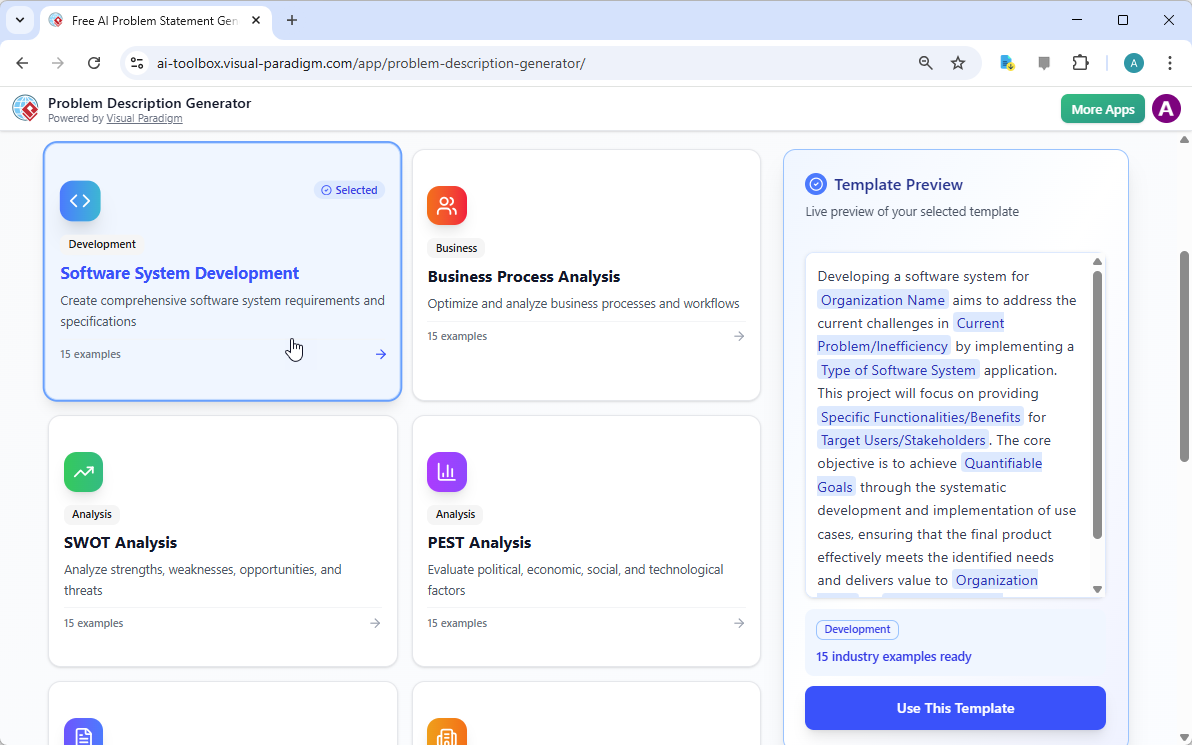
Every great project begins with a solid foundation, and for a problem statement, that foundation is the right template. The first step in using the AI-Powered Problem Description Generator is to select a template that perfectly aligns with your project’s nature. As shown in

This is a screenshot of Visual Paradigm's AI Powered Problem Description Generator. It shows the first step, which involves c

, the interface presents a clean, intuitive dashboard with a variety of templates for different business needs. Whether you’re tackling a software development initiative, optimizing a business process, or conducting a strategic analysis like a SWOT or PEST analysis, you can find a dedicated template. The “Software System Development” template, for instance, is specifically designed to help you create comprehensive software system requirements and specifications. By selecting the correct template, you immediately establish a professional structure that guides you to cover all critical aspects of the problem, ensuring no vital detail is overlooked. This step is crucial because it sets the tone and framework for the entire problem description, making the subsequent steps much more efficient and effective.

Step 2: Fill in the Variables – Customize Your Narrative

Once you’ve chosen your template, the magic happens in the “Edit Parameters” section.

This is a screenshot of Visual Paradigm's AI Powered Problem Description Generator. It shows the second step, which involves

vividly illustrates this second step. On the left, you’re presented with a form filled with specific fields, such as “Organization Name,” “Current Problem/Inefficiency,” and “Type of Software System.” This is where you inject your project’s unique DNA. As you type in the details, the tool’s real-time preview on the right side dynamically updates, showing you exactly how your filled-in variables will look in the final problem description. This live preview is incredibly powerful. It allows you to see the narrative form your inputs are creating, spot any awkward phrasing, and make adjustments on the fly. The variables are highlighted in green, making it easy to see exactly what content is being inserted into the template. This process is not just about filling blanks; it’s about shaping a coherent story that clearly explains the problem, its impact, and the desired outcome. The ability to see your description evolve in real-time is a game-changer for clarity and confidence.

Step 3: Review with AI – Your Instant Expert Editor

The final, and arguably most powerful, step is the AI review. After you’ve filled in all the variables and are satisfied with the live preview, you can click the “Review with AI” button.

This is a screenshot of Visual Paradigm's AI Powered Problem Description Generator. Once the details are filled in, you can c

captures this moment perfectly. A modal window appears, presenting a detailed analysis of your generated problem statement. The AI doesn’t just check for grammar; it evaluates the statement for clarity, completeness, logical flow, and the use of appropriate business terminology. It provides a clear “Status” (like “OK”) and a detailed “AI Analysis” that highlights strengths and suggests improvements. For example, the AI might confirm that your statement is clear and professionally written, or it might suggest a more impactful way to phrase a key objective. This instant, objective feedback acts as a virtual expert editor, helping you refine your problem statement to ensure it is not only correct but also highly effective in communicating the project’s purpose. This final step ensures that your problem statement is ready to be shared with stakeholders, developers, or clients with confidence.

Unlock Your Project’s Potential

Defining a problem is often the hardest part of any initiative. A vague or poorly articulated problem statement can lead to wasted effort, misaligned solutions, and ultimately, project failure. The Problem Description Generator from Visual Paradigm solves this fundamental challenge. It combines the power of structured templates with the intelligence of AI to create a workflow that is both efficient and effective. By following the three simple steps—choose a template, fill in the variables, and review with AI—you can transform your initial project idea into a clear, compelling, and professional problem statement in minutes. This tool is not just a convenience; it’s a strategic advantage that ensures your project starts on the right foot. Stop guessing and start defining with confidence. Try the AI-Powered Problem Description Generator now and experience the difference it makes.

Related Links