

When studying strategic management, you will encounter many frameworks designed to help analyze business environments. Among the most common is the PEST analysis. However, you may also see it referred to as PESTLE or PESTEL. This variation in spelling often causes confusion for students and professionals alike. Understanding the difference, or lack thereof, is crucial for writing effective business plans and passing examinations.
This guide breaks down the history, the components, and the practical usage of these frameworks. We will explore why the letters appear in different orders and how to apply them correctly in your academic and professional work.
🔍 Understanding the Acronyms
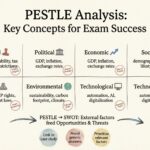
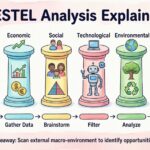
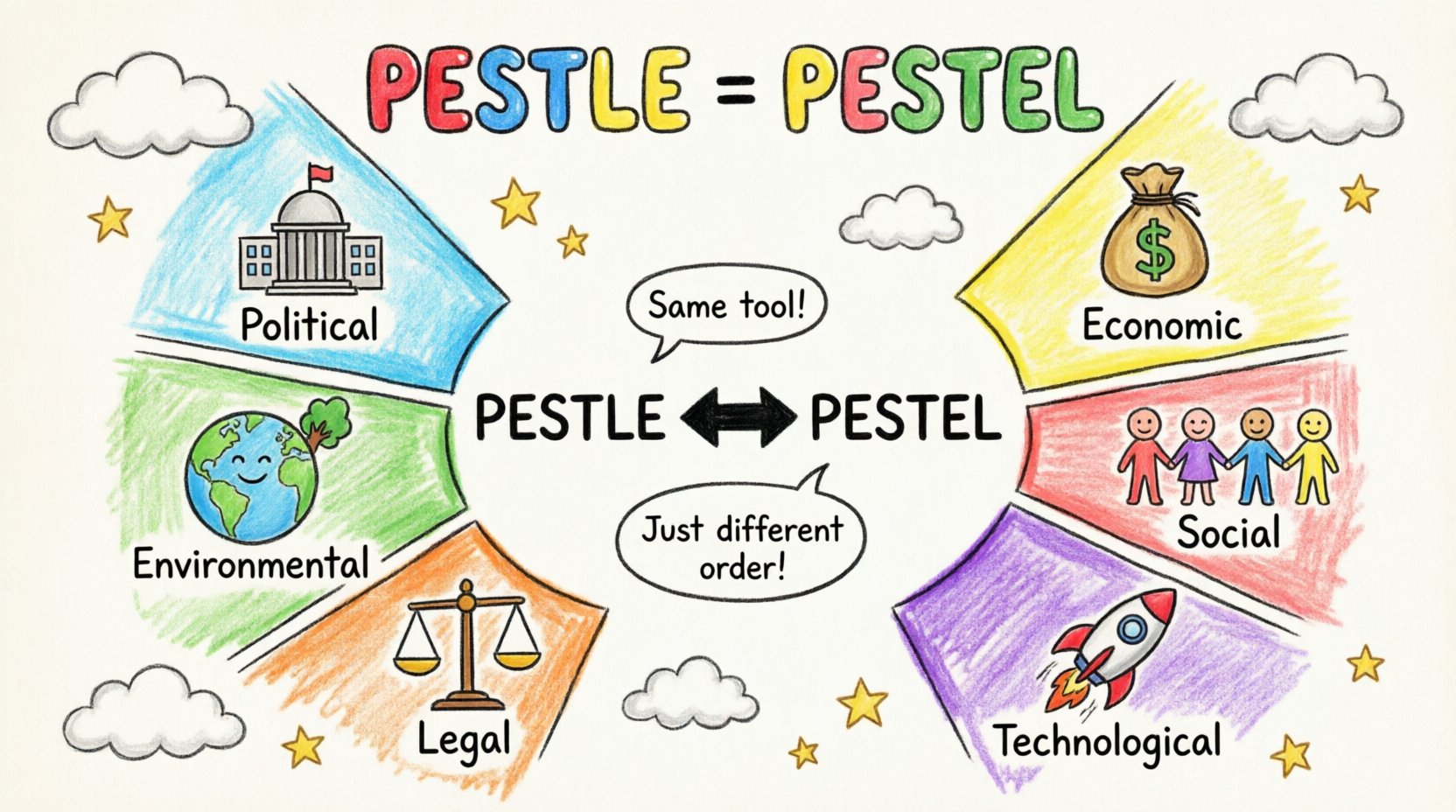
At their core, PEST, PESTLE, and PESTEL represent the same analytical tool. They are used to scan the macro-environmental factors that impact an organization. The variation lies in the specificity of the factors included and the order in which they are listed.
- PEST: Political, Economic, Social, Technological.
- PESTLE: Political, Economic, Social, Technological, Legal, Environmental.
- PESTEL: Political, Economic, Social, Technological, Environmental, Legal.
While PEST is the foundational model, PESTLE (or PESTEL) is an extension. It adds two critical dimensions that have become increasingly important in the modern business landscape. The addition of Legal and Environmental factors ensures a more comprehensive view of external risks.
There is no significant difference between PESTLE and PESTEL regarding the meaning of the analysis. The difference is purely alphabetical. Some organizations prefer L before E, while others prefer E before L. Both spellings are accepted in academic and professional contexts.
🏛️ The Origins of Strategic Scanning
To understand why these frameworks exist, we must look at their history. The concept of scanning the external environment emerged in the mid-20th century. In 1967, Reginald Jones, then CEO of General Electric, recognized that senior managers needed a better way to plan for the long term. He suggested that managers should focus on the future rather than just managing current operations.
Following this suggestion, Harvard Business Review published a paper in 1978 by Francis Aguilar titled Scanning the Business Environment. This work formalized the process of monitoring external factors. The acronym PEST was later developed to categorize these factors into four distinct buckets.
As the business world evolved, the four original factors were not enough. Companies faced new challenges related to sustainability and regulation. Consequently, the model expanded. The “L” was added to represent Legal issues, and the “E” was added to represent Environmental concerns. This expansion happened gradually over the decades.
The exact moment the acronym became PESTLE or PESTEL is debated. Different business schools and consulting firms adopted the extended version at different times. This lack of a single governing body for the terminology has led to the dual spelling that exists today.
📉 Decoding the Factors
To use these frameworks effectively, you must understand what each letter represents. Below is a detailed breakdown of the components. Each factor includes examples of what might be analyzed.
🏛️ Political Factors
Political factors refer to the extent to which a government intervenes in the economy. This includes government stability, tax policies, trade restrictions, and labor laws. A change in government can drastically alter the business landscape.
- Taxation: How corporate tax rates change affects profit margins.
- Trade Controls: Tariffs and quotas impact import and export costs.
- Stability: Political unrest can disrupt supply chains and operations.
- Subsidies: Government support for specific industries can create competitive advantages.
💰 Economic Factors
Economic factors determine the purchasing power of potential customers and the cost of capital. These are often cyclical and can be difficult to control. Students should look at both local and global economic indicators.
- Inflation: Rising prices can increase costs for raw materials and labor.
- Interest Rates: High rates make borrowing expensive, slowing expansion.
- Exchange Rates: Fluctuations affect the cost of imports and the value of exports.
- GDP Growth: A growing economy usually means higher consumer spending.
👥 Social Factors
Social factors look at the human element of the market. This includes demographics, cultural trends, and lifestyle changes. Understanding the target audience is essential for product development.
- Demographics: Age distribution, population growth, and migration patterns.
- Cultural Norms: Attitudes toward work, leisure, and health.
- Health Consciousness: Trends in fitness and diet impact food and retail sectors.
- Education: The skill level of the workforce affects hiring strategies.
🚀 Technological Factors
Technological factors involve innovation, automation, and research and development (R&D). This area changes rapidly and can disrupt entire industries overnight.
- Automation: Robotics and AI can reduce labor costs but require new skills.
- Innovation: The pace of product development cycles.
- Infrastructure: The quality of internet and transport networks.
- Disruption: New technologies rendering old business models obsolete.
⚖️ Legal Factors
Legal factors are the laws and regulations that businesses must comply with. While similar to Political factors, Legal factors are more specific to the rules and statutes in place. Non-compliance can lead to fines or shutdowns.
- Employment Law: Minimum wage, working hours, and safety standards.
- Consumer Protection: Laws regarding product safety and advertising.
- Intellectual Property: Patents, trademarks, and copyright laws.
- Health and Safety: Regulations to ensure safe working environments.
🌍 Environmental Factors
Environmental factors have gained prominence due to climate change and resource scarcity. This includes weather, climate, and environmental policies. Sustainability is now a core component of strategic planning.
- Climate Change: Long-term weather patterns affecting agriculture and logistics.
- Waste Management: Regulations on disposal and recycling.
- Carbon Footprint: Pressures to reduce emissions and energy usage.
- Resource Availability: Scarcity of water, raw materials, or energy.
🔄 The Spelling Controversy: PESTLE vs PESTEL
Why do two spellings exist? The answer is historical inconsistency. When the model was expanded from PEST to include the last two letters, different groups prioritized the order differently.
PESTLE: This order lists Legal before Environmental. It is often used in contexts where regulatory compliance is the primary concern.
PESTEL: This order lists Environmental before Legal. It is frequently used in contexts where sustainability is the primary driver, or simply because E comes before L in the alphabet.
For business students, the specific order does not change the outcome of the analysis. The goal is to identify the external factors. However, consistency is key. If you choose PESTLE for your introduction, use it throughout your document.
📋 Comparison of Frameworks
Using a table can help visualize the relationship between the different versions of the analysis.
| Framework | Factors Included | Best Used For | Complexity |
|---|---|---|---|
| PEST | Political, Economic, Social, Technological | Quick overviews, early-stage brainstorming | Low |
| PESTLE | Political, Economic, Social, Technological, Legal, Environmental | Comprehensive strategic planning, compliance heavy industries | Medium |
| PESTEL | Political, Economic, Social, Technological, Environmental, Legal | Comprehensive strategic planning, sustainability focus | Medium |
🎓 Practical Application in Academic Work
When you are assigned a project involving this analysis, follow a structured approach. Examiners look for depth and relevance, not just a list of definitions.
- Define the Scope: Clearly state which industry or company you are analyzing.
- Be Specific: Do not write general statements. Instead of saying “Technology is changing,” specify “The rise of AI is automating customer service roles.”
- Connect to Strategy: Explain how these factors influence the decision-making process. How do they create opportunities or threats?
- Use Data: Support your points with statistics or recent news events where possible.
- Review Regularly: The external environment changes quickly. A report written six months ago may be outdated.
🚫 Common Pitfalls to Avoid
Students often make the same mistakes when applying this framework. Avoiding these errors will improve the quality of your work.
- Internal Confusion: Do not mix internal strengths or weaknesses into this analysis. PESTLE is strictly external.
- Generalization: Avoid vague statements that could apply to any company. Tailor the factors to the specific sector.
- Ignoring Interconnectivity: Factors often overlap. A new law (Legal) might be caused by political pressure (Political) and affect the environment (Environmental). Acknowledge these links.
- Static Analysis: Treat the analysis as a snapshot in time, not a permanent state. Highlight trends that are moving.
- Overlooking Negatives: Focus on threats as well as opportunities. A balanced view is more credible.
💼 Industry Examples
To illustrate how these factors apply in the real world, consider the following scenarios.
The Automotive Industry
A car manufacturer must analyze the shift toward electric vehicles. This is a Technological factor. However, government subsidies for EVs are a Political factor. The cost of lithium batteries is an Economic factor. Safety regulations for autonomous driving are Legal factors. Finally, the push to reduce carbon emissions is an Environmental factor.
The Technology Sector
A software company faces Legal challenges regarding data privacy (GDPR). They must also consider Social trends in remote work. Economic factors include the spending habits of their B2B clients. Technological factors involve the need to update their code to new standards.
Retail and Consumer Goods
A clothing retailer faces Social pressure to use sustainable materials. Economic factors include inflation affecting disposable income. Legal factors involve labor laws in supply chain countries. Technological factors include the shift to e-commerce platforms.
📝 Final Thoughts on Strategic Analysis
Mastery of these tools comes with practice. The goal is not just to memorize the letters, but to understand how the macro-environment shapes business reality. Whether you use PEST, PESTLE, or PESTEL, the objective remains the same: to make informed decisions based on external realities.
For business students, this analysis is a fundamental building block. It prepares you for more complex strategic models. As you progress in your career, you will find that external scanning becomes a continuous habit rather than a one-time project. Staying updated on these factors ensures your organization remains resilient in a changing world.
Remember to keep your analysis current and specific. By focusing on the details, you can provide valuable insights that drive strategy forward.