
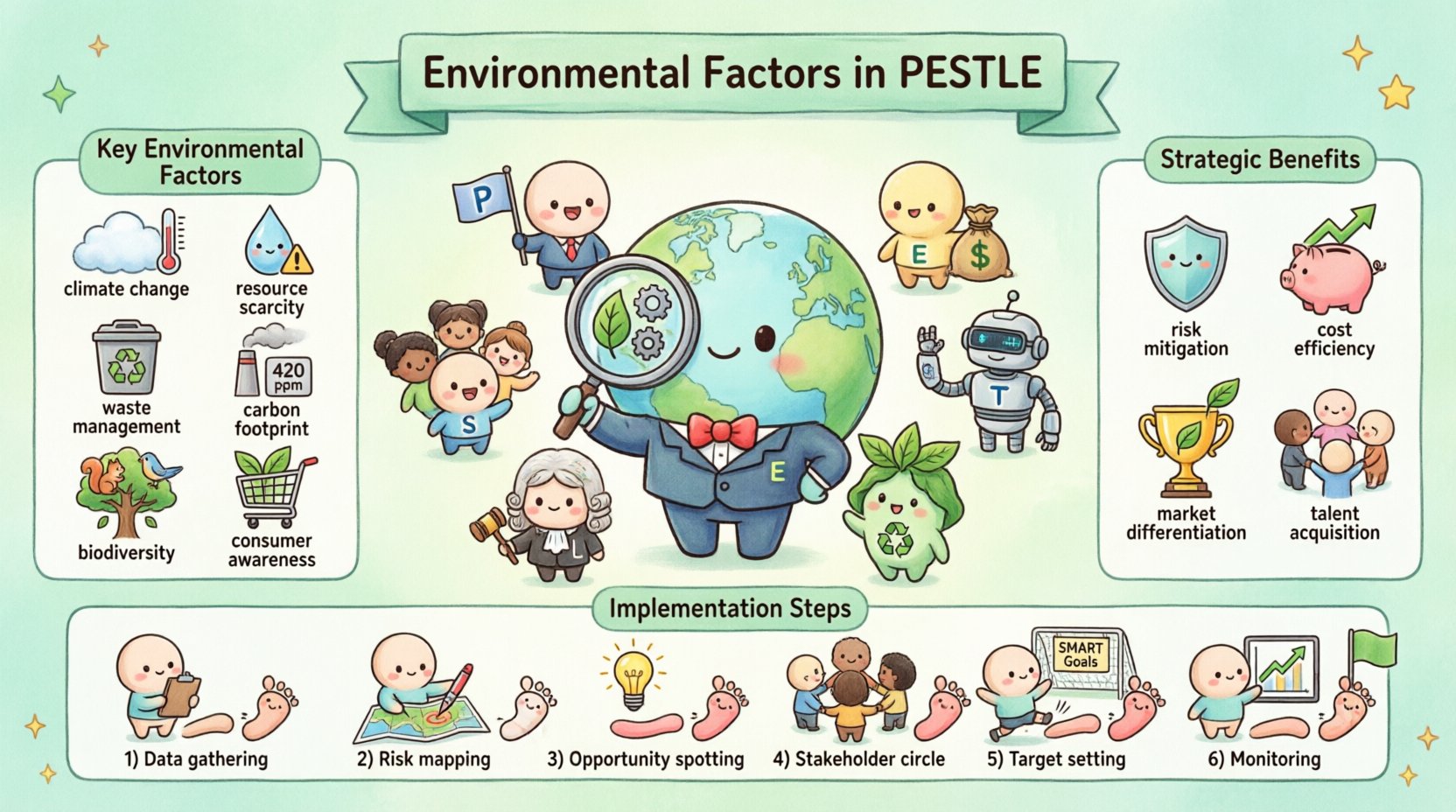
In the landscape of strategic planning, understanding the macro-environment is crucial for long-term viability. While the PEST analysis framework provides a solid foundation, the expanded PESTLE model offers a deeper lens through which organizations can view external pressures. Among its components, the Environmental factors have gained unprecedented prominence in recent years. This comprehensive guide explores the nuances of ecological considerations within strategic analysis, ensuring businesses remain resilient against shifting global dynamics.
Understanding the PESTLE Framework 📊
Before dissecting the environmental component, it is essential to establish the context of the PESTLE model. This analytical tool helps organizations identify external factors that impact their operations. The acronym stands for:
- Political: Government policies, stability, and trade restrictions.
- Economic: Growth rates, exchange rates, and inflation.
- Social: Demographic trends, cultural attitudes, and lifestyle changes.
- Technological: Innovation, automation, and research and development.
- Legal: Employment laws, health and safety regulations, and consumer protection.
- Environmental: Ecological and physical factors affecting the business.
Historically, the Environmental section was often overlooked or merged into the Political or Legal categories. Today, climate change, resource scarcity, and sustainability mandates require it to stand as a distinct pillar. Ignoring these elements can lead to operational disruptions, reputational damage, and financial loss.
Defining Environmental Factors in Business Context 🌿
Environmental factors in PESTLE refer to the physical and ecological conditions that influence a company. This goes beyond simple compliance; it encompasses the entire lifecycle of a product or service relative to the planet. These factors are generally categorized into two main groups:
- Physical Environmental Factors: Climate change, weather patterns, natural disasters, and resource availability.
- Regulatory Environmental Factors: Laws regarding waste disposal, carbon emissions, and conservation efforts.
For a manufacturing firm, physical factors might mean water scarcity affecting production lines. For a service industry, regulatory factors might dictate energy efficiency standards for office buildings. Understanding this distinction is vital for accurate risk assessment.
Key Components of Environmental Analysis 🌱
To conduct a thorough analysis, organizations must break down the environmental component into actionable data points. The following list details the specific elements that require monitoring:
- Climate Change: Rising temperatures and shifting weather patterns impact supply chains and logistics.
- Resource Scarcity: Availability of raw materials, water, and energy sources dictates production costs.
- Waste Management: Regulations on disposal, recycling, and circular economy practices.
- Carbon Footprint: Emissions generated during production and distribution processes.
- Biodiversity Loss: Impact on ecosystems that support agricultural or supply chain inputs.
- Consumer Awareness: Growing demand for sustainable and ethically sourced products.
Each of these points requires specific data collection and monitoring. For instance, a company relying on agriculture must track rainfall patterns, while a tech company must monitor e-waste regulations.
The Interplay with Other PESTLE Factors 🔄
Environmental factors do not exist in isolation. They interact dynamically with the other dimensions of the PESTLE framework. Recognizing these connections provides a holistic view of the business environment.
1. Political and Environmental 🏛️
Government policy is often the driver behind environmental regulations. International agreements like the Paris Accord influence national laws regarding carbon taxes. Political stability determines whether long-term environmental goals are prioritized over short-term economic gains. A shift in administration can drastically alter the regulatory landscape.
2. Economic and Environmental 💰
Cost is a central economic factor. Implementing green technologies often requires high upfront capital. However, the long-term economic benefit of energy efficiency and waste reduction can outweigh initial costs. Furthermore, carbon pricing mechanisms directly affect the bottom line, making environmental compliance an economic imperative.
3. Social and Environmental 🤝
Public perception plays a massive role. Consumers are increasingly eco-conscious. Brands that fail to address environmental concerns risk boycotts or loss of market share. Conversely, companies that lead in sustainability often build stronger brand loyalty. Social media amplifies these expectations, making transparency non-negotiable.
4. Technological and Environmental ⚙️
Innovation drives solutions. Renewable energy technologies, biodegradable materials, and waste-to-energy systems are technological responses to environmental pressures. Access to these technologies can provide a competitive advantage. Conversely, failure to adopt them can render a business obsolete.
5. Legal and Environmental ⚖️
Compliance is the baseline. Laws regarding pollution, hazardous waste, and emissions are becoming stricter globally. Non-compliance results in fines, litigation, and operational shutdowns. Legal teams must work alongside sustainability officers to ensure adherence to evolving statutes.
Strategic Implications for Organizations 📈
Integrating environmental factors into strategic planning requires more than just a checklist. It demands a shift in mindset from compliance to opportunity. Below are the strategic implications of a robust environmental analysis.
1. Risk Mitigation 🛡️
Physical risks, such as supply chain disruption due to extreme weather, can be mitigated by diversifying suppliers and investing in climate-resilient infrastructure. Regulatory risks can be managed by staying ahead of legislation rather than reacting to it.
2. Cost Efficiency 💸
Reducing energy consumption and waste directly lowers operational costs. While the initial investment may be significant, the return on investment (ROI) from efficiency improvements is often substantial over time.
3. Market Differentiation 🏆
In saturated markets, sustainability can be a key differentiator. Consumers and B2B partners are increasingly selecting vendors based on environmental performance. A strong environmental record can open doors to new contracts and markets.
4. Talent Acquisition 👥
Top talent prefers to work for organizations with strong values. A clear commitment to environmental stewardship enhances employer branding and aids in recruiting and retaining skilled employees.
Real-World Application: Industry Examples 🏭
To illustrate the practical application of environmental analysis, consider how different sectors approach these factors.
Manufacturing Sector
- Focus: Waste reduction and energy efficiency.
- Challenge: High carbon emissions from production.
- Strategy: Adopting circular economy principles, recycling materials, and investing in renewable energy sources for factories.
Technology Sector
- Focus: E-waste and data center energy usage.
- Challenge: Rapid obsolescence of hardware and high energy demand.
- Strategy: Designing for longevity, recycling programs for old devices, and powering data centers with green energy.
Service Sector
- Focus: Travel emissions and office sustainability.
- Challenge: Indirect carbon footprint from employee travel.
- Strategy: Promoting remote work, optimizing travel policies, and ensuring office buildings meet green certification standards.
Implementing Environmental Analysis in Your Strategy 📝
Executing a PESTLE analysis focused on environmental factors requires a structured approach. The following steps outline the process for effective implementation.
- Gather Data: Collect information on current regulations, climate trends, and stakeholder expectations.
- Identify Risks: Map out potential threats related to physical and regulatory environmental factors.
- Assess Opportunities: Look for areas where sustainability can drive innovation or cost savings.
- Engage Stakeholders: Involve employees, suppliers, and investors in the discussion.
- Set Targets: Establish clear, measurable goals for carbon reduction, waste management, and resource efficiency.
- Monitor and Report: Regularly track progress and communicate results transparently.
Future Trends in Environmental Factors 🔮
The landscape of environmental factors is evolving rapidly. Several trends are shaping the future of this component in PESTLE analysis.
- Biodiversity Credits: Similar to carbon credits, businesses may need to offset impacts on local ecosystems.
- Water Scarcity: As water becomes scarcer, industries using high volumes of water will face increased scrutiny and costs.
- Regulatory Convergence: Global standards are becoming more aligned, reducing the complexity of operating across borders.
- Supply Chain Transparency: Companies will be held accountable for the environmental practices of their suppliers, not just their own operations.
Challenges in Environmental Analysis ⚠️
While the benefits are clear, implementing this analysis comes with challenges. Organizations must navigate uncertainty and complexity.
1. Data Availability
Reliable data on climate impacts and resource availability can be difficult to source. Inconsistent reporting standards across regions add to the difficulty.
2. Short-Term vs. Long-Term
Environmental investments often yield long-term benefits, which may conflict with quarterly financial reporting pressures. Balancing these timelines requires strong leadership.
3. Greenwashing Accusations
Marketing sustainability efforts without substantive action can lead to accusations of greenwashing. Authenticity is critical. Claims must be backed by verifiable data and third-party certifications.
Comparison Table: Environmental vs. Traditional PESTLE 📋
The following table highlights how the Environmental factor differs from the traditional scope of strategic analysis.
| Aspect | Traditional PEST | PESTLE (Environmental) |
|---|---|---|
| Focus | General external influences | Specific ecological and physical impacts |
| Time Horizon | Short to Medium term | Long term and intergenerational |
| Regulatory Driver | Compliance focused | Proactive and preventative |
| Stakeholder Pressure | Investors and Customers | Investors, Customers, Activists, and Communities |
| Impact on Strategy | Operational adjustments | Transformational change and innovation |
Conclusion on Strategic Integration 🎯
The inclusion of environmental factors in PESTLE analysis is no longer optional; it is a fundamental requirement for modern business strategy. The interplay between physical realities and regulatory frameworks creates a complex web of risks and opportunities. By dedicating resources to understand and address these factors, organizations can build resilience and secure their future.
Strategic planning must evolve to reflect the urgency of the climate crisis. This involves moving beyond superficial compliance to deep integration of sustainability into core business models. The companies that recognize environmental factors as central to their PESTLE analysis will be the ones that thrive in a resource-constrained world.
Effective analysis requires continuous monitoring. The environment is not static, and neither should be the strategy. Regular reviews of political shifts, economic pressures, and ecological changes ensure that the organization remains adaptive. This dynamic approach transforms potential threats into opportunities for growth and innovation.
Ultimately, the goal is sustainable value creation. This means generating profit while preserving the natural systems that support business operations. It is a balance that requires precision, commitment, and a clear understanding of the environmental factors at play.
Key Takeaways 📌
- Environmental factors are a distinct and critical component of the PESTLE model.
- Physical and regulatory factors both influence business operations significantly.
- Integration with Political, Economic, and Social factors is essential for a holistic view.
- Risk mitigation and cost efficiency are primary drivers for environmental strategy.
- Future trends include biodiversity credits and supply chain transparency.
- Implementation requires data gathering, stakeholder engagement, and clear targets.