
In the world of agile delivery, the rhythm of work often accelerates. Intensive sprint cycles are not uncommon, particularly when market demands shift or critical deadlines approach. While velocity is a valued metric, it cannot come at the expense of the human element. Sustaining high morale during these high-pressure periods requires intentional strategy, clear communication, and a deep understanding of team dynamics.
This guide explores practical, actionable methods to preserve team energy and focus without relying on tools or external hype. The goal is sustainable performance, ensuring that the team can deliver quality work while remaining engaged and healthy.
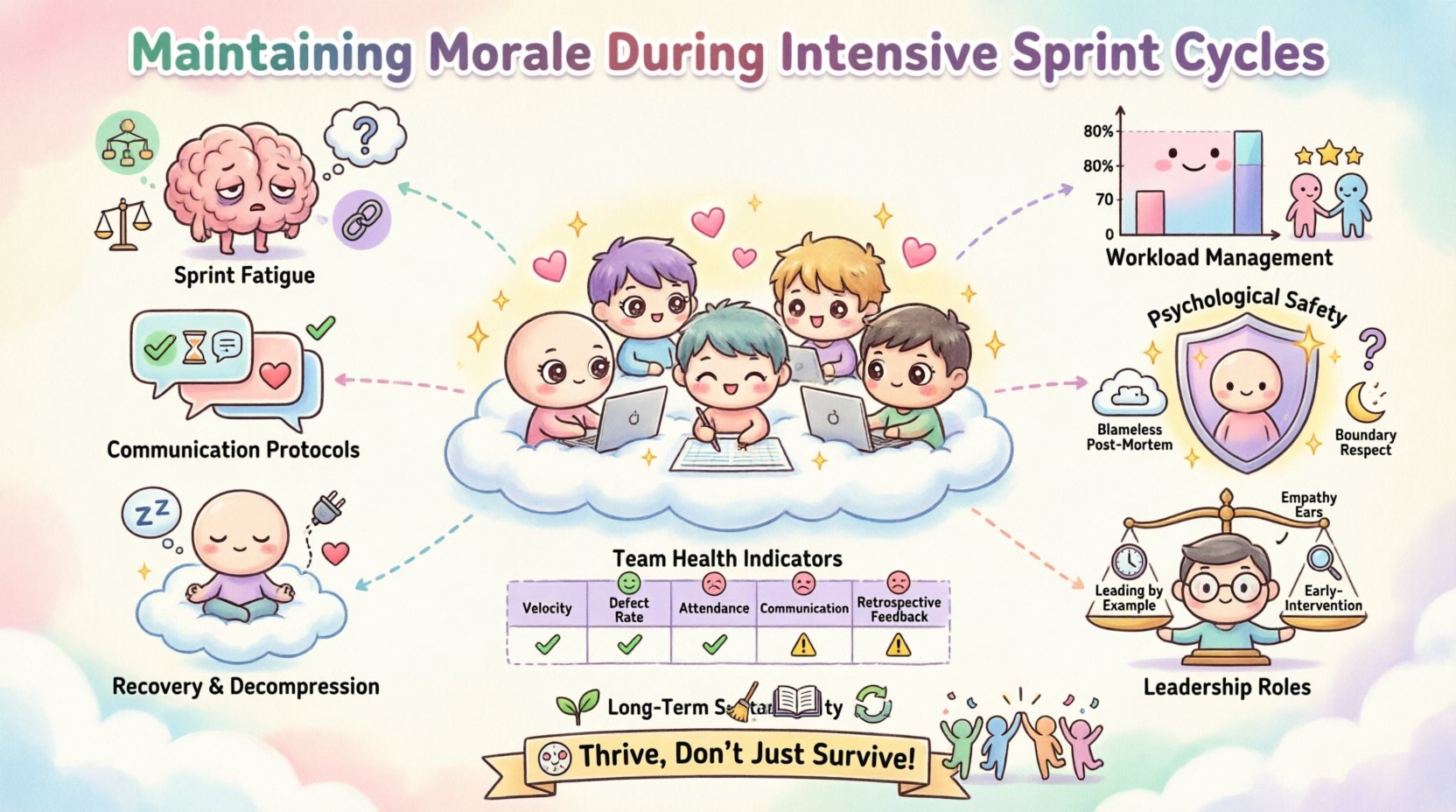
Understanding the Anatomy of Sprint Fatigue 🧠
Before implementing solutions, one must understand the root causes of morale decline. Fatigue is not merely physical exhaustion; it is cognitive and emotional depletion. When teams face back-to-back intensive sprints, several psychological factors come into play:
- Decision Fatigue: Constant context switching and prioritization deplete mental energy reserves.
- Perceived Inequity: When some team members feel they are carrying a heavier load than others, resentment builds.
- Loss of Autonomy: Micromanagement during crunch time often strips away the ownership that drives motivation.
- Uncertainty: Ambiguity regarding project scope or deadlines creates anxiety.
Recognizing these factors allows leadership to address the symptoms before they become chronic issues. Ignoring these signs often leads to increased bug rates, missed deadlines, and eventual turnover.
Strategic Workload Management 📊
Effective planning is the first line of defense against burnout. Workload management during intensive periods requires discipline and honesty about capacity.
Realistic Capacity Estimation
Teams often underestimate the time required for complex tasks. During intensive cycles, buffers are essential. Consider the following adjustments:
- Reduce Commitment: Cap the number of stories at 70-80% of maximum theoretical capacity.
- Buffer for Interruptions: Account for unplanned work, such as production hotfixes or stakeholder queries.
- Prioritize Ruthlessly: Identify the critical path items that must be delivered and deprioritize nice-to-have features.
Balancing the Load
Uneven distribution of work is a primary morale killer. Ensure tasks are split based on skill and availability.
- Pair Programming: Use pairing to distribute cognitive load and share knowledge.
- Swarm on Critical Items: Instead of spreading everyone thin, focus the team on the most complex blockers together.
- Rotate Support Roles: If one person is handling support tickets, rotate this duty so no single individual becomes the bottleneck.
Communication Protocols for High Pressure 🗣️
Communication channels can become noisy or toxic under stress. Establishing clear protocols helps maintain clarity without increasing anxiety.
Meeting Hygiene
Meetings should add value, not drain energy. During intensive sprints, scrutinize every agenda item.
- Shorten Stand-ups: Keep daily check-ins to 15 minutes maximum. Focus strictly on blockers and progress.
- Cancel Non-Essentials: Postpone status meetings with external stakeholders unless absolutely necessary.
- Asynchronous Updates: Use written status updates where possible to allow for deep work time.
Feedback Loops
Feedback must be timely but constructive. Criticism during high stress can be devastating.
- Focus on Work, Not Person: Address the code or process, not the individual’s capability.
- Positive Reinforcement: Acknowledge effort publicly. Specific praise is more effective than generic compliments.
- Safe Channels: Create a private channel for venting or raising concerns without fear of judgment.
Recognition and Psychological Safety 🛡️
When pressure mounts, the need for appreciation grows. Recognition validates the hard work being done and reinforces the value of the individual.
Celebrating Small Wins
Intensive sprints can feel like a marathon with no finish line in sight. Break the journey into smaller milestones.
- Complete Feature Highlights: Celebrate when a specific module is done, not just the whole sprint.
- Technical Achievements: Acknowledge refactoring or performance improvements that might not be visible to stakeholders.
- Public Shout-outs: Use team channels to highlight specific contributions.
Building Psychological Safety
Team members must feel safe to admit mistakes or ask for help without fear of retribution.
- Blameless Post-Mortems: When things go wrong, focus on process improvement rather than individual fault.
- Encourage Questions: Leaders should admit what they do not know to model vulnerability.
- Respect Boundaries: Discourage after-hours communication unless it is a true emergency.
Structured Recovery and Decompression 🧘
Recovery is not a luxury; it is a requirement for sustained performance. Teams need time to reset between intensive cycles.
The Power of Rest
Sleep and downtime are biological necessities. Pushing through fatigue reduces cognitive function and increases error rates.
- Enforce Time Off: If a sprint was particularly intense, schedule a lighter sprint or a rest period immediately after.
- Encourage Disconnects: Remind the team to log off completely after work hours.
- Wellness Initiatives: Provide resources for mental health, such as meditation apps or counseling access.
Transition Rituals
Creating a ritual to mark the end of a hard cycle helps the brain switch off.
- Celebration Event: Even a simple lunch or virtual coffee can mark the end of the grind.
- Retrospective Closure: Ensure the retrospective addresses the intensity of the cycle and plans for recovery.
- Clear Handoff: Ensure there is a clear definition of done so work does not bleed into personal time.
Leadership Roles in Sustaining Energy ⚖️
Leadership behavior sets the tone for the entire team. Leaders must model healthy work habits to expect them from others.
Leading by Example
If a leader is working late every night, the team will feel pressured to do the same.
- Respect Hours: Leaders should not send messages outside of working hours.
- Take Breaks: Visible breaks signal that rest is acceptable and encouraged.
- Manage Up: Leaders should protect the team from unnecessary pressure coming from upper management.
Empathy and Observation
Leaders must be attuned to the emotional state of the team.
- One-on-Ones: Use these meetings to check on well-being, not just task status.
- Watch for Signs: Look for changes in participation, tone, or punctuality.
- Intervene Early: Address signs of burnout before they become critical.
Monitoring Team Health Indicators 📈
Just as you monitor code quality, you must monitor team health. Data helps identify trends before they become crises.
The following table outlines key indicators to track during intensive cycles.
| Indicator | Healthy Sign | Warning Sign |
|---|---|---|
| Velocity | Consistent or slightly fluctuating | Sudden drop or erratic spikes |
| Defect Rate | Low and stable | Increasing number of bugs post-release |
| Attendance | Regular and on-time | Increased absences or tardiness |
| Communication | Open and collaborative | Withdrawal or silence in channels |
| Retrospective Feedback | Constructive and forward-looking | Cynical or focused on blame |
Regularly reviewing these metrics allows for proactive adjustments. If velocity drops while morale indicators worsen, it is a signal to pause and reset.
Long-Term Sustainability Strategies 🌱
Beyond the immediate cycle, long-term health requires structural changes to how work is organized.
- Capacity Planning: Never plan for 100% capacity. Always leave room for the unexpected.
- Technical Debt Management: Dedicate time to address debt. Unaddressed debt creates future pressure.
- Skill Development: Invest time in training. Cross-training reduces bottlenecks and stress.
- Continuous Improvement: Regularly refine processes to remove friction and inefficiency.
Sustaining morale is an ongoing practice, not a one-time fix. It requires vigilance, empathy, and a commitment to the well-being of the people who build the product. By prioritizing the human element, teams can achieve high performance without sacrificing their health or happiness.
Final Thoughts on Sustainable Pace 🏁
The pace of work is a choice. While market pressures exist, the team’s longevity is the primary asset. Intensive sprints are inevitable, but their impact is manageable. By implementing these strategies, leaders can guide their teams through high-pressure periods with resilience intact. The focus remains on delivering value while keeping the team strong, engaged, and ready for the next challenge.
Remember, the goal is not to survive the sprint, but to thrive through it. A healthy team is the foundation of any successful agile transformation. Prioritize the people, and the results will follow naturally.