
In the fast-paced world of software development, the tension between building new features and maintaining existing code is constant. Teams often face a difficult choice: ship quickly and risk accumulating debt, or slow down to refactor and delay value. This is not a binary choice. With the right strategies, organizations can navigate this landscape effectively. This guide explores practical methods to handle technical debt without sacrificing the agility that drives business growth. 💡
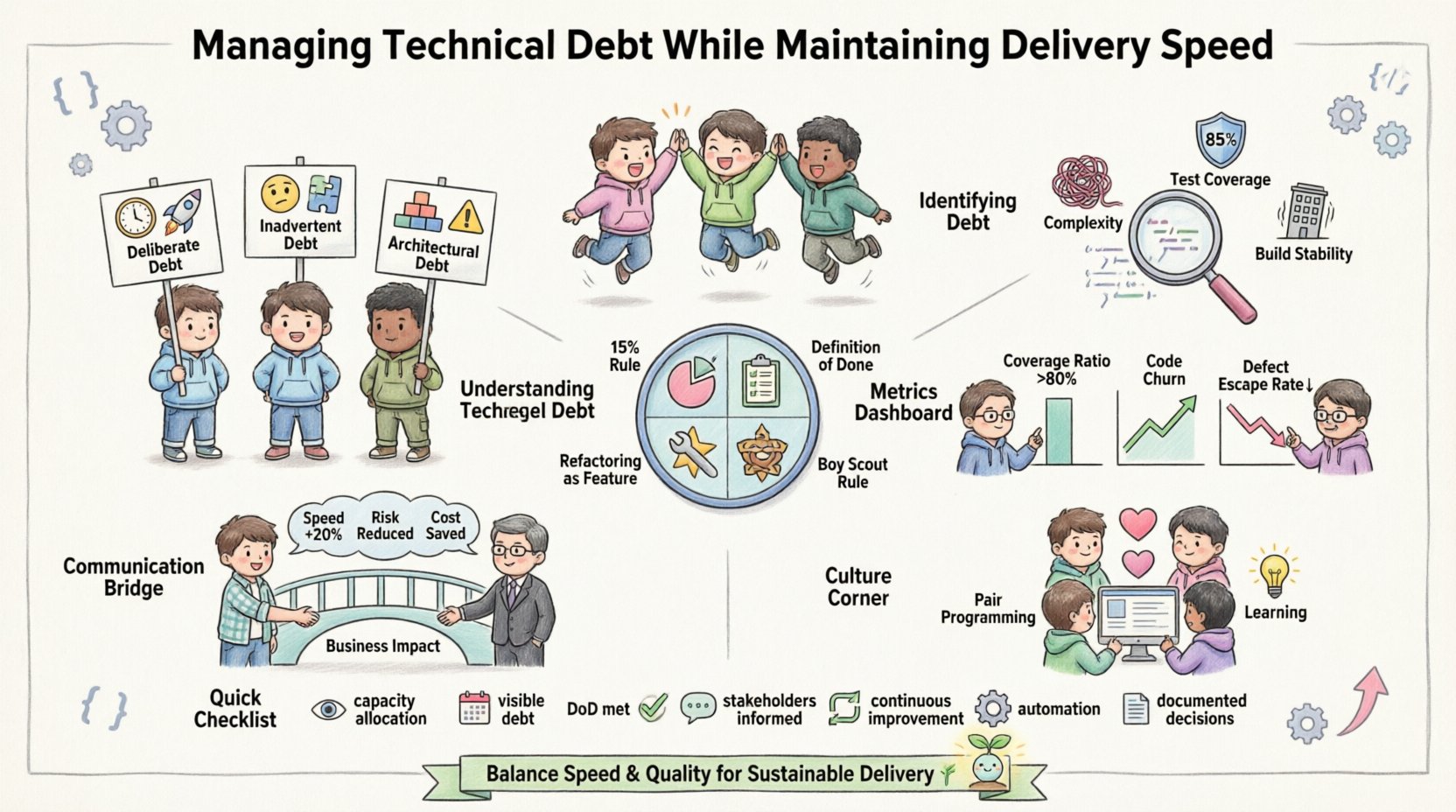
Understanding the Core Trade-off 🧠
Technical debt is not inherently bad. It is a strategic decision to prioritize speed over perfection in specific instances. However, like financial debt, it accrues interest. If ignored, the cost of change increases over time, eventually stalling progress. In an Agile environment, the goal is to keep the velocity sustainable while ensuring the codebase remains healthy. 🛠️
The concept was introduced to describe the implied cost of additional rework caused by choosing an easy (limited) solution now instead of using a better approach that would take longer. When teams focus solely on delivery speed, they often defer necessary maintenance. This creates a backlog of hidden work that is invisible until a crisis occurs.
Key aspects of this balance include:
Visibility: You cannot manage what you cannot see. Debt must be tracked explicitly.
Intentionality: Debt should be incurred deliberately, not accidentally.
Repayment: There must be a plan to pay down the principal and interest.
Types of Technical Debt 📉
To manage debt effectively, teams must categorize it. Different types require different approaches for repayment. Understanding these categories helps in prioritizing work during sprint planning.
1. Deliberate Debt
This is incurred when a team consciously chooses a quicker solution to meet a deadline or capture a market opportunity. It is a calculated risk. Examples include:
Hard-coding configuration values for a quick launch.
Simplifying a complex algorithm to meet a release date.
Using a temporary workaround for an integration issue.
2. Inadvertent Debt
This happens when knowledge gaps or lack of resources lead to suboptimal solutions. It is not a strategic choice but a result of constraints. Examples include:
Writing code without proper documentation due to time pressure.
Implementing a feature without considering edge cases.
Lack of unit tests due to unfamiliarity with the testing framework.
3. Architectural Debt
This relates to the high-level design of the system. It often stems from decisions made early in the project lifecycle that become limiting factors later. This is the most expensive debt to repay.
Identifying and Measuring Debt 📏
How do you know how much debt you have? Unlike financial debt, there is no single ledger. However, several indicators can signal the presence of significant technical debt. Teams should look for these signs during code reviews and retrospectives.
Code Quality Indicators:
Code Complexity: High cyclomatic complexity makes code harder to test and understand.
Test Coverage: A significant drop in coverage often correlates with increased risk.
Build Stability: Frequent build failures indicate underlying instability.
Code Duplication: Copy-pasting code leads to maintenance nightmares when changes are needed.
Process Indicators:
Time to Resolve Bugs: If it takes longer to fix bugs than to write new features, debt is likely high.
Onboarding Time: If new developers take weeks to become productive, documentation and structure are lacking.
Deployment Frequency: A sudden drop in deployment frequency often signals fear of breaking things.
Tracking Metrics
While metrics should not drive behavior alone, they provide context. Consider tracking the following:
Metric | What it Indicates | Target |
|---|---|---|
Coverage Ratio | Amount of code covered by automated tests | > 80% for critical paths |
Code Churn | Frequency of changes to the same file | Low churn for stable modules |
Defect Escape Rate | Bugs found in production vs. pre-release | Decreasing trend over time |
Lead Time for Changes | Time from commit to production | Consistent or decreasing |
Strategies for Integration 🔄
The most effective way to manage debt is to integrate it into the daily workflow rather than treating it as a separate project. This ensures continuous improvement without halting feature development.
1. The 15% Rule
Allocate a portion of every sprint specifically for technical work. A common recommendation is to reserve 15% to 20% of capacity for refactoring, debt repayment, and infrastructure improvements. This prevents debt from compounding unchecked. If the team consistently fails to complete this allocation, it may indicate the sprint capacity is too aggressive.
2. Definition of Done (DoD)
Strengthen your Definition of Done to include technical quality criteria. A story is not complete until it meets quality standards. This might include:
Unit tests written and passing.
Code reviewed and approved.
Documentation updated.
No new static analysis warnings.
3. Refactoring as a Feature
When refactoring is needed to support a new feature, treat the refactoring as part of that feature’s story. This ensures the work is accounted for in the sprint plan. Do not hide refactoring behind vague tickets. Be specific about what is being improved and why.
4. Boy Scout Rule
Encourage a culture where developers leave the codebase cleaner than they found it. Every time a developer touches a file, they should make a small improvement. This could be renaming a variable, simplifying a condition, or adding a comment. Small, consistent improvements accumulate over time.
Communication and Stakeholder Alignment 🗣️
Technical debt is a business risk, not just a technical problem. Stakeholders need to understand the implications of carrying debt. Communication must be clear, factual, and focused on business impact.
Talking to Leadership
When discussing debt with non-technical stakeholders, avoid jargon. Focus on outcomes:
Speed: “We can deliver features 20% faster if we reduce this complexity.”
Risk: “This area is unstable. If we proceed, there is a high chance of regression bugs.”
Cost: “Fixing this now takes 3 days. Waiting will likely take 2 weeks later.”
Visualizing Debt
Use charts and graphs to show the accumulation of debt. A simple line graph showing the number of open bugs or the time taken to deploy changes over months can be very persuasive. Visual data helps stakeholders see the trend without needing to understand the code.
Team Culture and Psychological Safety 🤝
Managing debt requires a supportive environment. If developers fear blame for introducing debt, they will hide it. Psychological safety is essential for honest reporting and collaborative problem-solving.
Encouraging Transparency
Create a culture where admitting to a mistake is seen as a learning opportunity. Post-mortems should focus on process improvements, not individual blame. When a bug slips through, ask “Why did the process allow this?” rather than “Who made this error?”
Continuous Learning
Dedicate time for knowledge sharing. Hold regular sessions where team members present on refactoring techniques or new architectural patterns. This keeps the team up-to-date and reduces the likelihood of reinventing suboptimal solutions.
Pair Programming
Pair programming can significantly reduce debt by ensuring that code is reviewed in real-time. It also helps spread knowledge about the codebase. When two people work on a task together, the likelihood of introducing complex, hard-to-maintain code decreases.
Long-Term Sustainability 🏗️
The goal is not to eliminate all technical debt, as that is impossible. The goal is to keep it manageable. This requires a long-term view of the software lifecycle.
Regular Audits
Schedule periodic deep dives into the codebase. Once a quarter, dedicate time to analyze the architecture and identify areas of high risk. This proactive approach prevents small issues from becoming critical failures.
Architecture Decision Records
Document major architectural decisions. Why was a specific database chosen? Why was a certain pattern implemented? These records provide context for future developers and help prevent recurring decisions that lead to debt.
Deprecation Policies
Establish clear policies for removing old code. Features that are no longer used should be identified and removed. Dead code increases cognitive load and risk without providing value. A policy should mandate that unused code be flagged for removal after a specific period.
Common Pitfalls to Avoid ⚠️
Even with a good plan, teams can stumble. Being aware of common mistakes helps avoid them.
Ignoring Small Issues: Small fixes are often ignored in favor of big features. Over time, these small issues create a massive barrier to change.
Over-Engineering: Trying to build for every possible future scenario leads to complexity that slows down delivery. Build for the current requirements and be ready to adapt.
One-Time Cleanup Sprints: Dedicating a whole sprint to refactoring often leads to feature backlog burning. It is better to integrate cleanup into regular flow.
Lack of Automation: Relying on manual testing to find bugs is unsustainable. Invest in automation to catch regressions early.
Conclusion on Sustainable Delivery 🌱
Managing technical debt is an ongoing process, not a destination. It requires constant vigilance, clear communication, and a commitment to quality. By integrating debt management into the Agile workflow, teams can maintain high delivery speeds without compromising the integrity of the system. The balance between speed and quality is dynamic. It shifts based on business needs, but the foundation of a healthy codebase remains constant. 🏗️
Start small. Identify one area of debt. Plan a small improvement. Measure the impact. Repeat. Over time, these steps will lead to a resilient, maintainable, and fast-moving software delivery pipeline. The journey is continuous, but the reward is a team that can innovate without fear.
Quick Reference Checklist ✅
☑️ Is debt visible in the backlog?
☑️ Is there a dedicated percentage of capacity for maintenance?
☑️ Are new features meeting the Definition of Done?
☑️ Are stakeholders informed about technical risks?
☑️ Is there a culture of continuous improvement?
☑️ Is automation in place for testing and deployment?
☑️ Are architectural decisions documented?