
In the early stages of product development, stability is not a luxury; it is a necessity. Users have high expectations but low tolerance for friction. When a product feels broken or unreliable, the decision to leave is often immediate. This phenomenon is known as churn, and it poses the most significant threat to growth before a product even finds its footing.
Agile methodologies allow for rapid iteration, but speed without quality creates a fragile foundation. To sustain growth, teams must measure what matters. We are not talking about vanity metrics that look good on a dashboard. We are talking about quality indicators that directly correlate to user retention. By tracking specific data points, teams can identify instability before it becomes a business crisis.
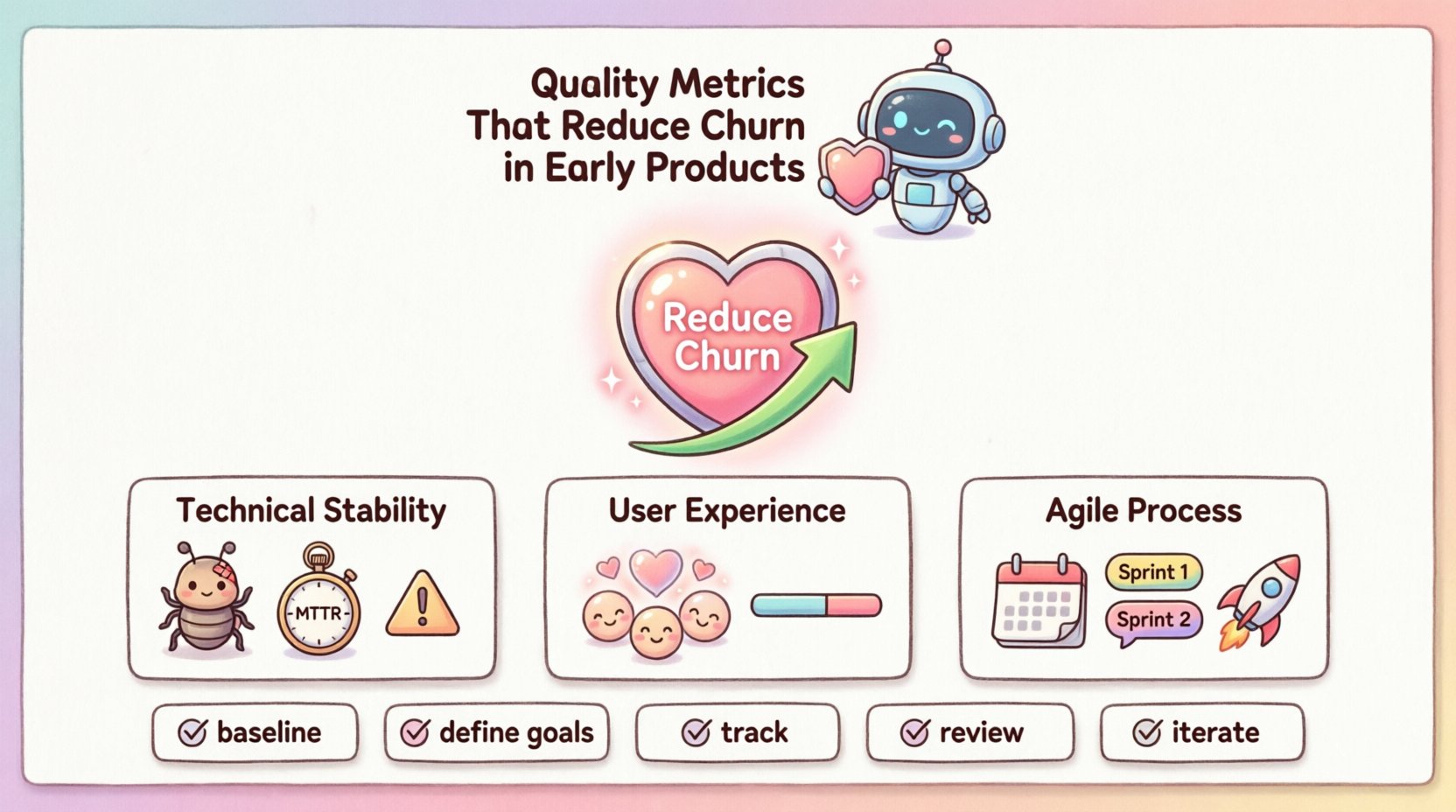
🔍 Understanding Churn in the Early Lifecycle
Churn is the rate at which users stop using a product. In the early stages, this is often called early churn or time-to-value failure. Users sign up expecting a solution to a problem. If the experience is marred by bugs, slow performance, or confusion, they disengage.
Why does this happen? Usually, it is a combination of three factors:
- Functional Gaps: The product does not do what the user expects.
- Technical Instability: The product crashes or errors frequently.
- Performance Friction: The product is too slow to be enjoyable.
Agile teams often focus on shipping features. However, shipping features without ensuring quality is akin to building a house without a foundation. The structure might stand for a while, but the first strong wind will bring it down. Quality metrics act as the structural integrity tests.
🛠 Technical Quality Metrics for Stability
Technical quality forms the backbone of user experience. If the underlying system is unstable, no amount of feature work will save the product. Here are the critical technical indicators to monitor.
1. Defect Density and Escaped Bugs
Defect density measures the number of confirmed defects per unit of size (e.g., per thousand lines of code or per story point). In early products, the goal is not zero defects, but a trend toward reduction.
- Escaped Defects: These are bugs found by users after deployment. A high count here indicates weak testing protocols.
- Severity Levels: Not all bugs are equal. A crash is more damaging than a cosmetic typo. Prioritize fixing high-severity issues immediately.
2. Mean Time to Recovery (MTTR)
When things go wrong, how long does it take to fix them? MTTR measures the average time from the detection of a failure to the resolution of that failure.
- Impact on Churn: If a user encounters an error, they wait. If the wait is too long, frustration builds. Fast recovery signals that the team is responsive and in control.
- Agile Context: This metric fits well into sprint retrospectives. If MTTR is high, the team needs better monitoring or deployment pipelines.
3. Change Failure Rate
This metric tracks the percentage of deployments that cause a failure in production. It is a direct measure of the safety of the release process.
- High Rate Warning: A high failure rate suggests that testing is not catching issues before they reach users.
- Quality Gate: Use this to determine if a release is ready. If the rate spikes, pause deployment and investigate.
👥 User Experience Metrics
Technical stability is invisible until it breaks. User experience metrics, however, are felt daily. These indicators tell you how the product feels to the human on the other end.
1. Session Duration and Stickiness
How long do users stay? Are they returning? In early products, you want to see increasing stickiness over time.
- Short Sessions: If users log in, do one thing, and leave immediately, the value proposition might be unclear.
- Returning Users: High return rates indicate that the product solves a recurring need.
2. Error Rate per User
Track how many users encounter errors during a session. This is more specific than a general bug count.
- Thresholds: Set a baseline. If 5% of users hit an error, that is a critical signal.
- Context: Where do errors happen? Is it during login? During a specific workflow? This helps isolate the problem.
3. Net Promoter Score (NPS) and CSAT
While these are subjective, they provide direct feedback on satisfaction.
- CSAT (Customer Satisfaction): Ask users to rate a specific interaction. Low scores indicate immediate friction.
- NPS: Measure willingness to recommend. This is a leading indicator of long-term retention.
⚙️ Process Metrics in Agile
How the team works impacts the quality of the output. Agile metrics help optimize the flow of work to ensure quality is not sacrificed for speed.
1. Lead Time and Cycle Time
Lead Time: Time from request to delivery. Cycle Time: Time from work started to work finished.
- Optimization: Shorter cycle times allow for faster feedback. If a bug is introduced, it is found sooner.
- Quality Check: If cycle time is dropping but quality is also dropping, you are moving too fast.
2. Sprint Burndown and Scope Creep
Tracking progress within a sprint helps identify when quality work is being cut.
- Unfinished Work: If items are consistently moved to the next sprint, the team is overcommitted.
- Definition of Done: Ensure the Definition of Done includes quality checks, not just code completion.
3. Deployment Frequency
How often do you release value? In modern engineering, higher frequency is often correlated with higher quality.
- Small Batches: Small changes are easier to debug and roll back.
- Feedback Loops: Frequent releases mean frequent user feedback, allowing for quicker adjustments to quality standards.
📉 Metrics Impact Table
Understanding the relationship between metrics and churn is crucial. The following table outlines how specific measurements influence user retention.
| Category | Metric | Impact on Churn | Target Action |
|---|---|---|---|
| Technical | Crash Rate | High (Immediate) | Fix critical stability issues in current sprint. |
| Technical | Page Load Time | Medium (Gradual) | Optimize assets and database queries. |
| UX | Task Completion Rate | High (Frustration) | Redesign workflow for clarity. |
| Process | Defect Escape Rate | High (Trust) | Strengthen QA and automated testing. |
| Process | MTTR | Medium (Perception) | Improve incident response protocols. |
🔄 Integrating Metrics into Agile Ceremonies
Metrics are useless if they are not discussed. They must be embedded into the rhythm of the team.
Sprint Planning
When planning a sprint, review technical debt. If the defect density is high, allocate capacity for refactoring. Do not promise new features if the foundation is shaky.
- Capacity Allocation: Reserve 20% of sprint capacity for quality improvements.
- Risk Assessment: Identify features that might introduce instability.
Daily Standups
Keep the focus on flow and blockers. If a bug is blocking progress, it should be escalated immediately.
- Focus: Discuss current stability. Are there any new errors reported?
- Collaboration: Developers and testers should communicate frequently.
Sprint Review
This is the moment to show value. Show not just what was built, but how well it works.
- Live Demo: Demonstrate the feature in a real-world scenario.
- Feedback: Invite stakeholders to test and report issues immediately.
Sprint Retrospective
This is the most important meeting for quality improvement. Analyze the metrics from the past sprint.
- Root Cause Analysis: Why did the bug escape? Was it a test gap or a process gap?
- Action Items: Create specific tasks to improve the process for the next sprint.
📈 Building a Feedback Loop
Data collection is only half the battle. The loop must close with action. A feedback loop ensures that insights lead to improvements.
1. Automated Monitoring
Set up systems to alert the team when metrics cross thresholds.
- Alerts: Notify developers if error rates spike.
- Dashboards: Make metrics visible to the whole team.
2. User Interviews
Numbers tell you what is happening; users tell you why.
- Outreach: Contact users who churned to understand their reasons.
- Surveys: Send short surveys to active users about their experience.
3. Prioritization Framework
When you have many issues, how do you decide what to fix first?
- Impact vs. Effort: Fix high impact, low effort issues first.
- User Count: Prioritize issues affecting the most users.
🚧 Common Pitfalls to Avoid
Even with the right metrics, teams can stumble. Be aware of these common mistakes.
- Metric Vanity: Chasing numbers that look good but do not affect business. Focus on retention, not just activity.
- Over-Engineering: Spending too much time on perfection before launch. Aim for stability, not flawlessness.
- Ignoring Context: A spike in errors might be due to a feature launch, not a regression. Understand the cause.
- Blame Culture: When bugs happen, focus on the process, not the person. Blame discourages honesty.
🛡️ Prioritizing Quality vs. Speed
This is the eternal debate in product development. You need speed to validate, but you need quality to retain. The solution lies in balance.
- MVP Phase: Focus on core stability. Features can be simple, but they must work.
- Growth Phase: As the user base grows, technical debt becomes more expensive. Invest in refactoring.
- Feedback Integration: Use speed to gather feedback, and use quality to act on it.
Do not view quality as a phase that comes after development. It is part of the development process itself. Every line of code should be written with the expectation that it will be used by real people.
📝 Actionable Steps for Your Team
How do you start? Here is a roadmap for implementation.
- Baseline Current State: Measure your current defect rates and churn. Know where you stand.
- Define Goals: Set targets for reduction. For example, reduce crash rate by 10% in the next quarter.
- Instrument Tracking: Ensure you have the tools to capture the necessary data.
- Review Regularly: Make metrics a standard agenda item in meetings.
- Iterate: Adjust your strategy based on what the data tells you.
🔗 Moving Forward
Reducing churn in early products requires a disciplined approach to quality. It is not about writing perfect code; it is about building a system that is resilient and responsive. By tracking the right metrics, you gain visibility into the health of your product.
Agile provides the framework for iteration, but quality metrics provide the compass. They guide you away from instability and toward a product that users trust. Trust is the currency of retention. Without it, growth is unsustainable.
Start measuring today. Focus on the indicators that matter most to your users. As you improve stability, you will see retention follow. This is the path to sustainable growth in the early stages of product life.