


You already know modeling state machine diagrams takes time – blank-page syndrome, numerous iterations, and a struggle to visualize complex states. In the fast-moving world of SaaS, tracking states like trial, active, grace, suspended, and canceled can be overwhelming. Here’s how AI transforms this challenge into a streamlined process. This case study illustrates how a SaaS company effectively accelerated their management of subscription plans, revealing invaluable insights during the design phase and improving outcomes across the board.
The Real-World Bottleneck in Modeling Subscription Plan State Transitions

In the competitive landscape of a SaaS company selling tiered subscription plans, managing state transitions is crucial. The company faced significant challenges in tracking various subscription states effectively. Key issues included:
- Frequent manual rework due to evolving requirements.
- Inconsistencies in visual representation of subscription states.
- Difficulty in communicating active statuses among teams.
- Time-consuming iterations that slowed down feature deployment.
The reliance on traditional modeling methods created a bottleneck, leading to missed opportunities and frustrating delays. As the team sought a solution, they recognized that adopting AI-powered diagramming could provide the swift clarity they desperately needed in visualizing their subscription states.
AI as Your Modeling Accelerator for State Machine Diagrams
- AI eliminates blank-page syndrome by offering starting points tailored to your needs.
- Generate multiple variants rapidly, allowing for immediate exploration of ideas.
- Seamlessly integrate AI-generated diagrams with existing models for a cohesive workflow.
- Reduce the risk of error-prone manual notation through precise automation.
Experienced modelers can especially benefit from the AI capabilities when facing tight deadlines, complex refinements for team reviews, or iterative design changes. Visual Paradigm’s suite of professional tools complements AI features, enabling teams to elevate their diagramming accuracy and efficiency.
One-Click Generation Workflow in Visual Paradigm Desktop
- Launch Visual Paradigm Desktop Professional or Enterprise Edition.
- Go to menu Tools → AI Diagram Generation.
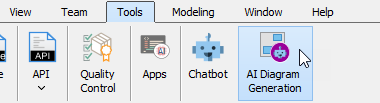
- In the AI Diagram Generation window, choose State Machine Diagram in the Diagram Type dropdown.
- In the Topic field, write a clear description in plain English.
Recommended prompt example for this case (copy-paste friendly):
“The subscription plan states of a SaaS company.”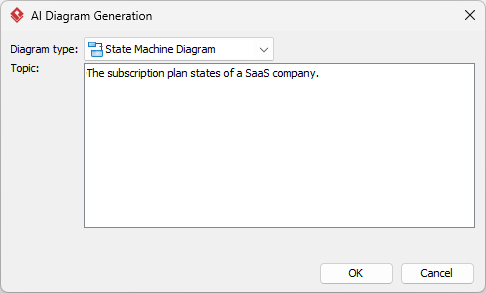
- Click Generate.
Instant, editable results await, ready for professional-level tweaks that meet your team’s specifications.
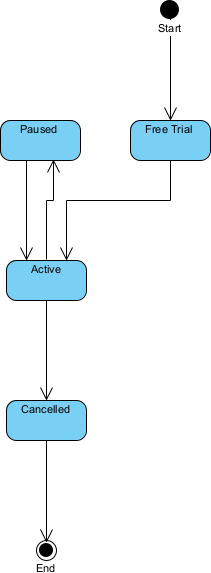
Fine-Tuning & Scaling the Model
Assuming familiarity with basic functionality, let’s focus on acceleration techniques that enhance your model’s effectiveness.
Typical Cleanup Moves
To refine the AI-generated state machine diagram, consider:
- Applying custom stereotypes to differentiate between types of subscription states.
- Optimizing the diagram layout for clarity and cohesive flow.
- Adding annotations to elaborate on complex transitions for team communication.
Turning Diagram into Living Asset
Transform your generated diagram into a living resource through various advanced uses. For instance:
- Traceability: Link your diagram to code components for real-time updates on state changes.
- Code Generation: Use the diagram to automate boilerplate code for state management functions.
- Simulation: Conduct simulations that track user progression through different subscription states, enhancing insights and identifying bottlenecks.
- Stakeholder Communication: Provide a visual aid during meetings to convey complex ideas effectively, ensuring alignment and understanding.
By embedding the diagram into practitioners’ workflows, it becomes more than just a static document—it evolves into a crucial asset that drives decision-making and strategic updates.
Outcome Comparison: Manual vs AI+Refine
- Time Saved: AI-generated diagrams often cut initial drawing time by up to 50%.
- Quality Gains: Consistent representation of state transitions minimizes inconsistencies.
- Scalability: Ability to modify diagrams rapidly as business needs evolve ensures that models remain relevant.
The metrics illustrate a significant transformation, with teams reporting a sharp decline in time-to-market for new features. Between manual adjustments and AI-assisted creation, organizations can achieve results at an unprecedented pace without sacrificing quality.
Next Modeling Project? Try This Approach
Ready to elevate your workflow? Download Visual Paradigm Desktop to harness the power of AI acceleration in your modeling tasks.