Successful organizational change, such as the implementation of a company-wide digital engagement platform, depends less on the technology itself and more on the human dynamics surrounding it. Utilizing a professional stakeholder management software is no longer optional for project leaders who aim to minimize resistance and maximize adoption. Visual Paradigm’s AI-powered stakeholder management tool offers a systematic, 7-step methodology to navigate these complex interpersonal landscapes. By automating the identification and analysis phases, project managers can move from abstract concepts to actionable engagement strategies in a matter of minutes, ensuring that every individual—from executive sponsors to union representatives—is appropriately managed.
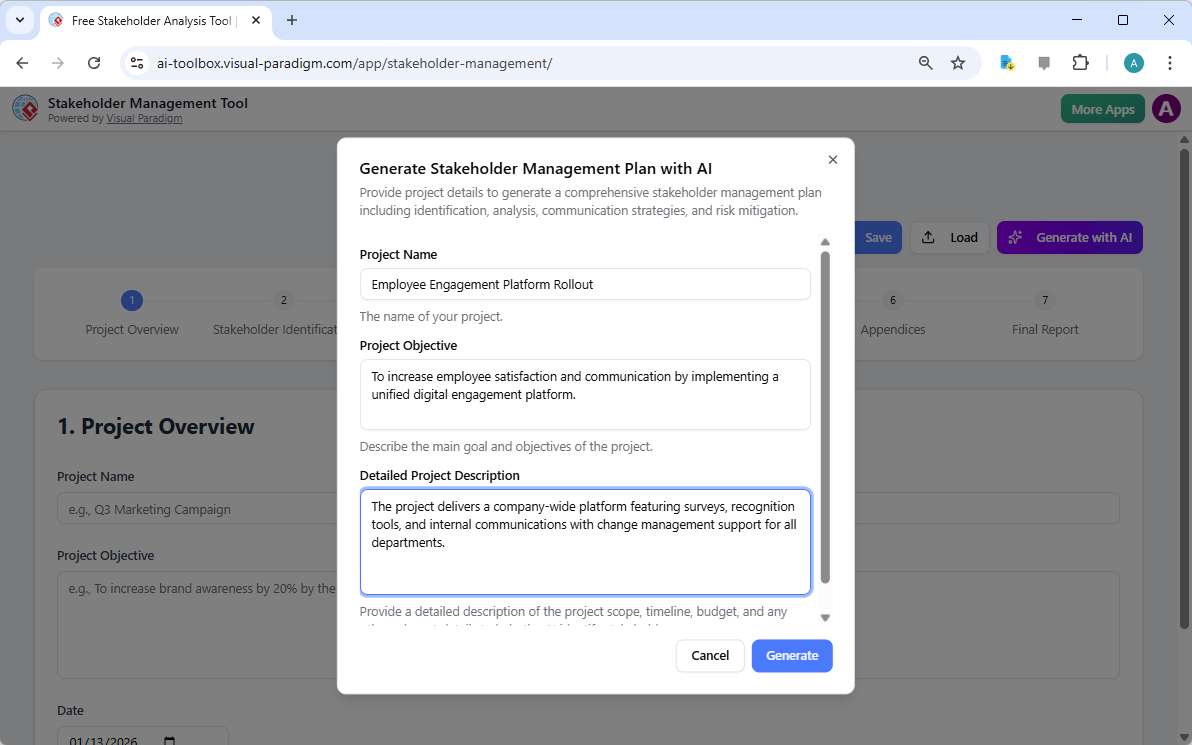
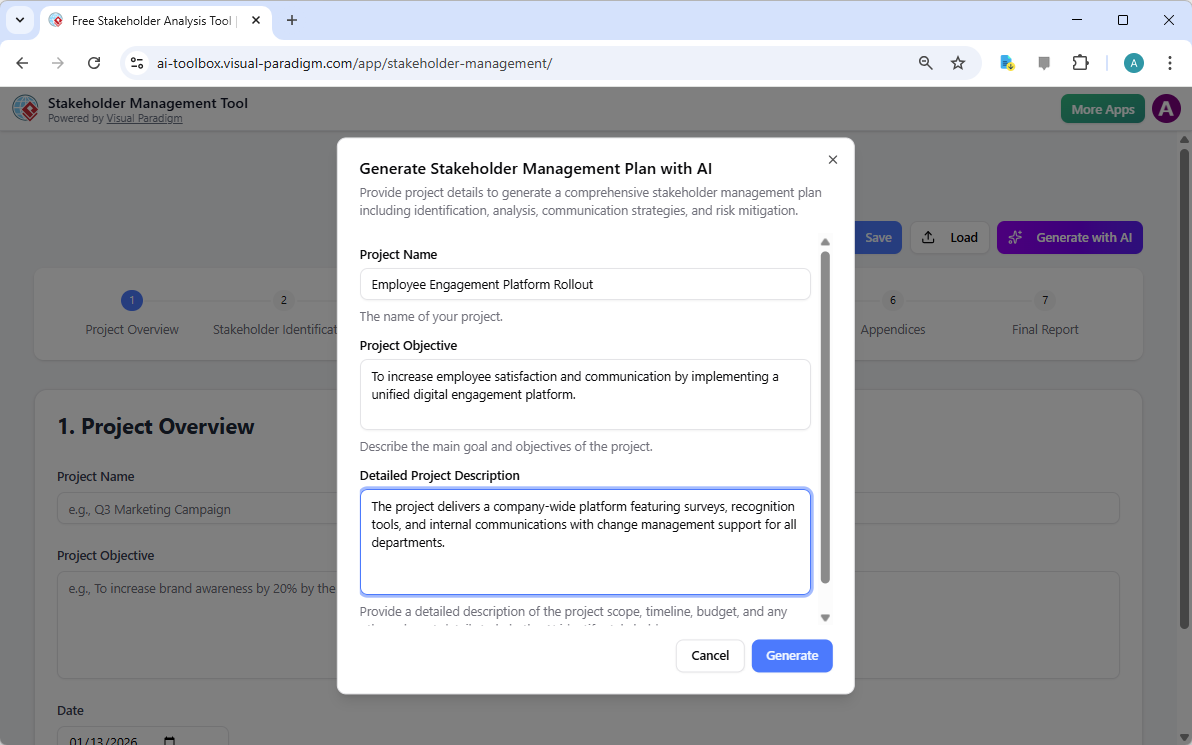
The process begins with the contextualization of the project. Within the interface, the user defines the scope, objectives, and specific nuances of the initiative. For instance, in an “Employee Engagement Platform Rollout,” the tool prompts the user to describe the platform’s features, such as surveys and recognition tools, and the necessity for change management support. This initial input serves as the foundational data for the artificial intelligence to generate a tailored management plan.
A Structured Approach to Project Governance
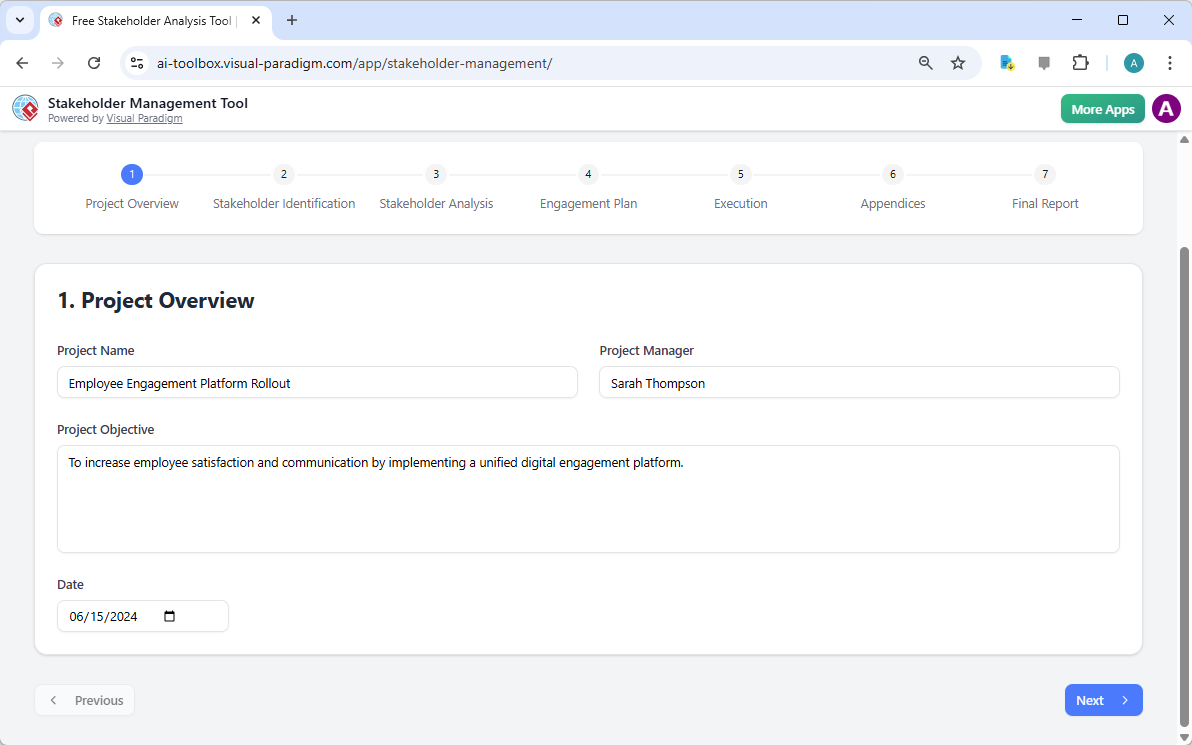
Precision in project documentation is the hallmark of a disciplined manager. The first step of the workflow, the Project Overview, ensures that all foundational data is captured before moving into complex analysis. This step records the project name, the objective, and the designated manager, providing a clear reference point for all subsequent strategic decisions. It is essential to establish these parameters early to maintain alignment throughout the project lifecycle.
Key Takeaways for Effective Stakeholder Management
-
Systematic 7-Step Workflow: Guides users from initial identification through to execution and final reporting.
-
AI-Driven Strategy Generation: Quickly produces a comprehensive draft of stakeholders, interests, and engagement levels based on project context.
-
Privacy-Centric Data Handling: All project data is saved locally as .json files, ensuring sensitive organizational information remains off the cloud.
-
Dynamic Communication Planning: Facilitates the creation of tailored messaging schedules and risk mitigation strategies.
-
Professional Reporting: Generates a consolidated summary suitable for executive review and team alignment.
Identifying and Categorizing the Human Element
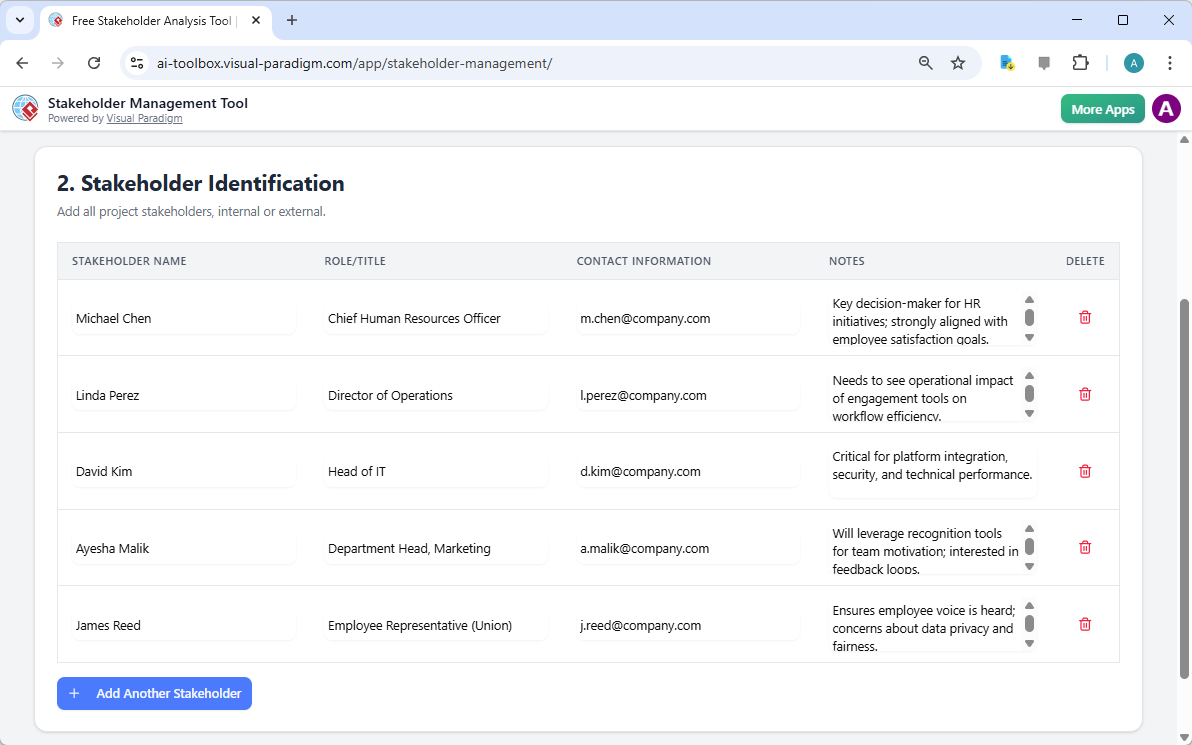
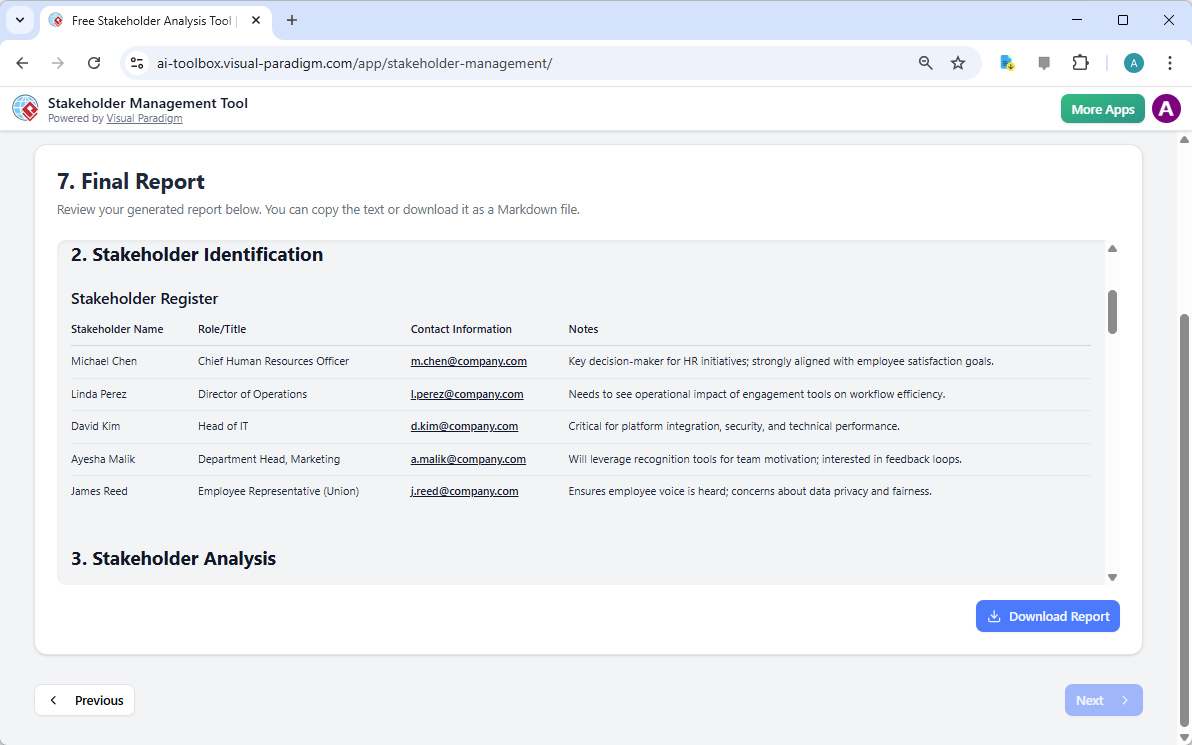
Once the project parameters are set, the next critical phase is Stakeholder Identification. This step involves listing every individual or group that may affect or be affected by the initiative. In the context of an engagement platform, this includes roles such as the Chief Human Resources Officer, the Director of Operations, and Department Heads. An easy-to-use stakeholder management app must allow for detailed profiling, including contact information and specific notes regarding each person’s unique perspective or concerns.
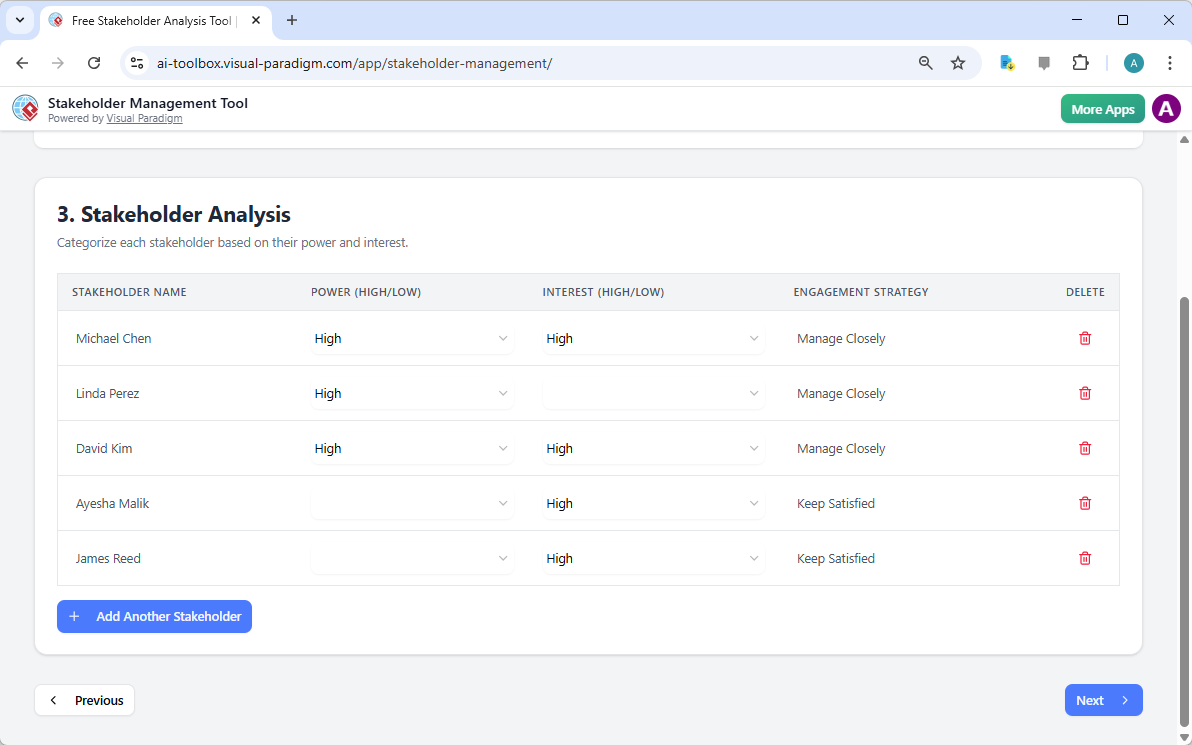
Identification alone is insufficient; one must apply a rigorous Stakeholder Analysis to prioritize engagement efforts. This is typically achieved by evaluating two primary variables: Power (Influence) and Interest. Stakeholders with high power and high interest, such as the Head of IT or the CHRO, require “close management,” whereas those with lower influence may simply need to be “kept satisfied” or “informed.” This categorization ensures that limited communication resources are allocated where they will have the most significant impact on project success.
Strategic Engagement and Risk Mitigation
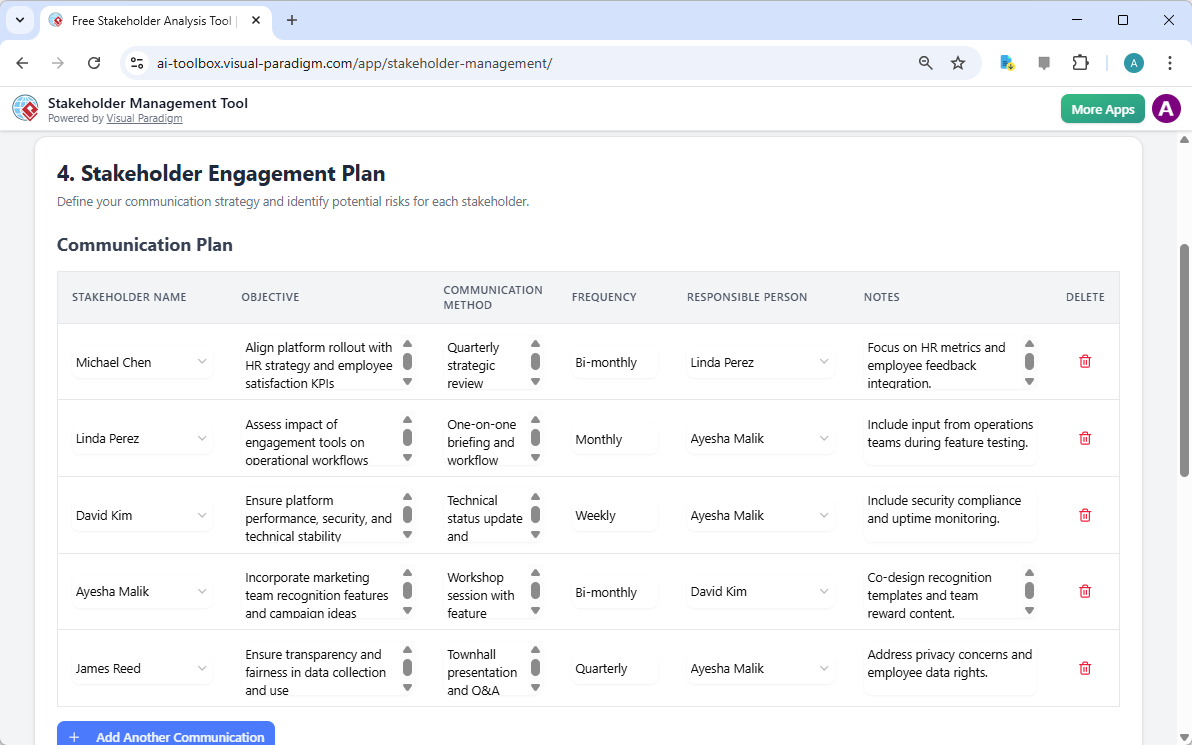
With the analysis complete, the focus shifts to the Stakeholder Engagement Plan. This is where strategic intent is converted into a tactical communication plan. Each stakeholder is assigned a specific communication objective, a preferred method (such as quarterly reviews or town halls), and a frequency. This level of detail prevents communication gaps that often lead to project delays. For example, a Technical Status Update might be scheduled weekly for the IT department to ensure platform stability, while a broader Town Hall might occur quarterly for the general employee population.
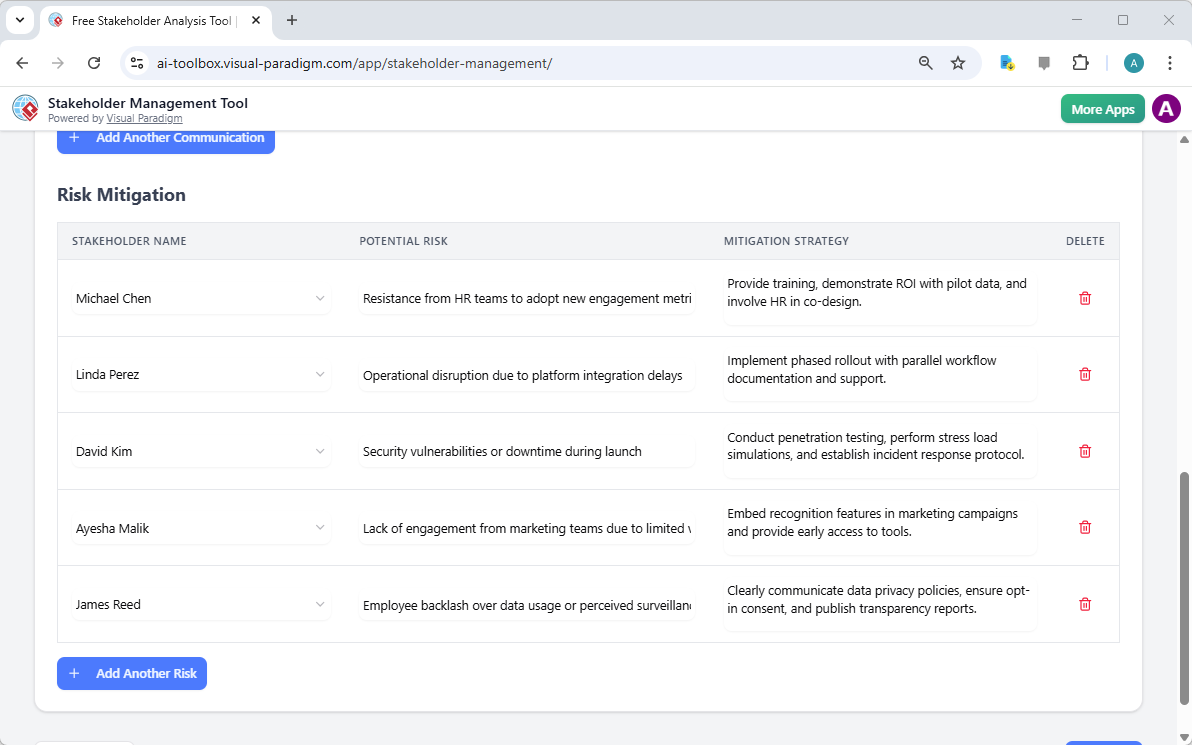
Furthermore, a proactive approach requires the identification of potential risks and the development of mitigation strategies. Resistance is a natural byproduct of change; however, it can be managed. If the AI identifies a risk such as “employee backlash over data usage,” the tool allows the manager to document a specific mitigation strategy, such as publishing transparency reports or clearly communicating data privacy policies. This forward-thinking approach is what distinguishes a professional stakeholder management software from a simple spreadsheet.
Tracking Execution and Ensuring Accountability
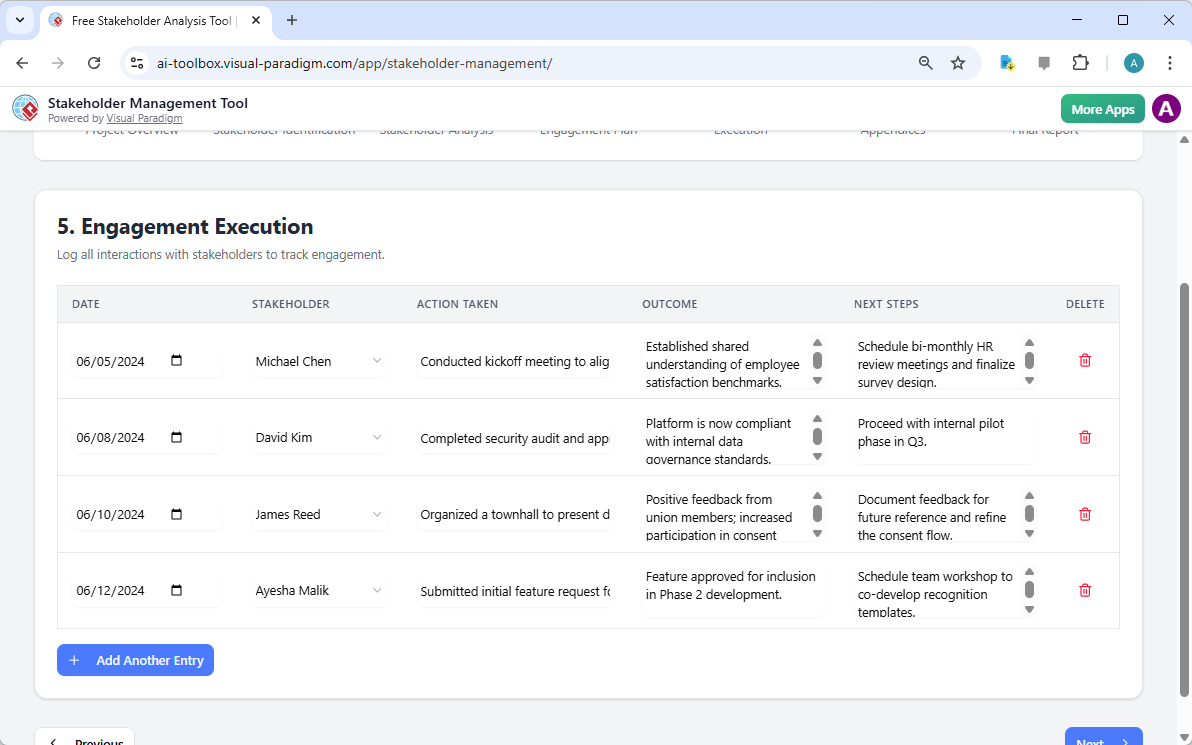
Strategy remains theoretical until it is executed. The Engagement Execution step serves as a ledger for all interactions. By logging the date, the stakeholder involved, the action taken, and the resulting outcome, project managers maintain a transparent audit trail of their engagement efforts. This historical record is invaluable for adjusting strategies mid-project if a particular stakeholder’s sentiment shifts or if unexpected obstacles arise during the rollout.
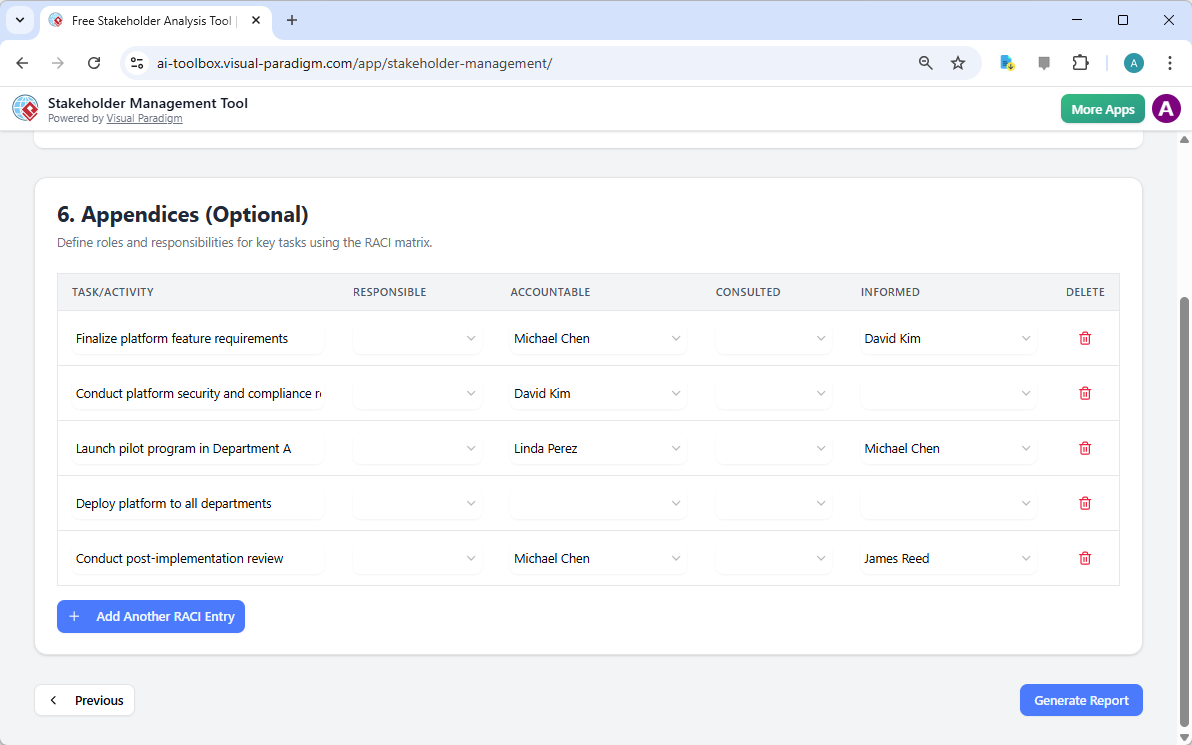
To ensure that these tasks are not merely recorded but effectively managed, the tool includes an Appendices section featuring a RACI matrix (Responsible, Accountable, Consulted, Informed). In the rollout of an engagement platform, it is vital to know exactly who is “Accountable” for finalizing platform requirements versus who merely needs to be “Informed” of the pilot program launch. Defining these roles eliminates ambiguity and prevents the “diffusion of responsibility” that often plagues large-scale corporate initiatives.
Consolidating Intelligence into a Final Report
The culmination of this 7-step process is the Final Report. This document consolidates every identification, analysis, communication schedule, and execution log into a professional, easy-to-read format. It serves as the definitive source of truth for the project’s stakeholder strategy. Because this best online stakeholder management app prioritizes data sovereignty, the final report can be printed or saved as a PDF from your browser, while the underlying data remains securely stored on your local machine.
In summary, navigating the complexities of organizational change requires more than just intuition; it requires a structured methodology supported by intelligent tools. Visual Paradigm’s AI-powered stakeholder management tool streamlines the most labor-intensive aspects of project governance, allowing leaders to focus on what truly matters: building relationships and driving results. By following a guided 7-step workflow, you ensure that no stakeholder is overlooked and every risk is addressed before it becomes a crisis.
Ready to Master Your Stakeholder Relationships?
Effective management begins with the right framework. Whether you are a project manager, a business analyst, or a change leader, the ability to rapidly generate and execute a stakeholder engagement plan is a critical competency. We invite you to experience the efficiency of an AI-driven approach firsthand.
To begin your project:
-
Access the tool via the Try Now link below.
-
Enter your project name and objective in the “Project Overview.”
-
Use the “Generate with AI” feature to produce your initial identification and analysis.
-
Refine the data and save your progress locally to maintain full privacy.
Learn more about the methodology: Visual Paradigm Stakeholder Management Guide
Start your project today: Try the AI-Powered Stakeholder Management Tool Now
Related Links
-
Stakeholder Management Tool – Visual Paradigm: The Stakeholder Management Tool is a comprehensive application designed to bring structure, clarity, and strategy to your project relationships. Move beyond …
-
Free Stakeholder Management Tool | Professional Analysis & Planning with AI: Our free planner helps you identify, analyze, and engage stakeholders in a structured way, making it easier to build alignment, address concerns early
-
What is a Stakeholder Management Tool? – Visual Paradigm Guides: It’s a strategic guide that helps you understand who your stakeholders are, what they care about, and how to communicate with them effectively …
-
Free AI Stakeholder Management Tool for Project Success – Visual …: Master stakeholder engagement with our free AI Stakeholder Management tool. A step-by-step guide to identify, analyze, and plan engagement for all project …
-
How to Perform Stakeholder Management in TOGAF? – Visual Paradigm: In TOGAF, the stakeholder management technique should be used during Phase A to identify the key players in the engagement, and also be updated throughout each …
-
Free Stakeholder Analysis Tool | Create Your Engagement Plan – Visual Paradigm: Use our free, multi-step tool to identify stakeholders, map their influence, and build a comprehensive communication strategy. Export your analysis for …
-
Stakeholder Management Excel Template – Visual Paradigm Online: Visual Paradigm’s Stakeholder Management Excel Template is a powerful tool that helps project managers easily identify and manage stakeholders.
-
Stakeholder Matrix Tool: Stakeholder Matrix, also known as stakeholder map, is a matrix that arranges the important stakeholders of a project into four quadrants, based on their level of influence and interest. Visual Paradigm offer a rich collection of professionally designed stakeholder matrix template .