Skip to content
Viz Read - AI, Software & Digital Insights

Viz Read - AI, Software & Digital Insights

  • Home
  • Gallery
What Is an Object Diagram? A Step-by-Step Visual Guide for Newcomers
Posted inUnified Modeling Language

What Is an Object Diagram? A Step-by-Step Visual Guide for Newcomers

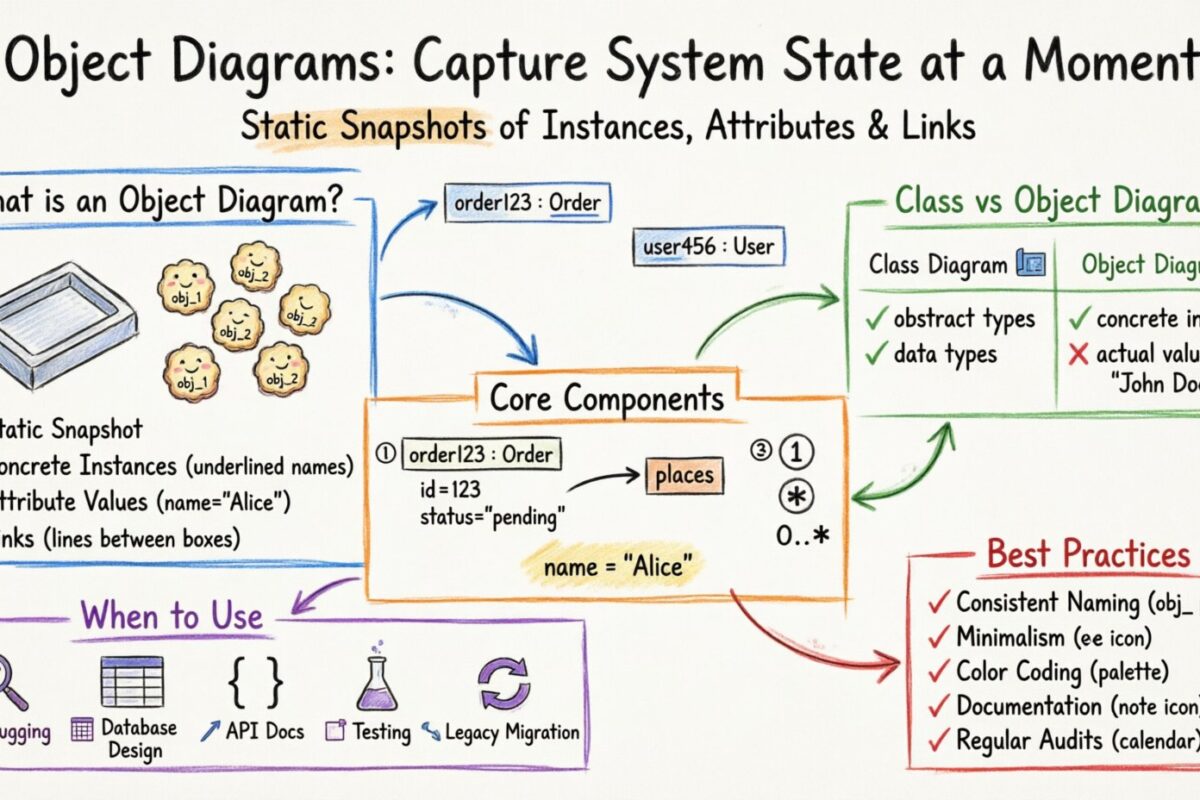
In the landscape of software architecture, clarity is everything. When developers and stakeholders discuss a system, they often rely on static blueprints to visualize how data behaves at a specific…
The Hidden Power of Object Diagrams: Why They’re More Than Just Pretty Pictures
Posted inUnified Modeling Language

The Hidden Power of Object Diagrams: Why They’re More Than Just Pretty Pictures

Software development involves constructing systems that exist in the real world, yet operate within the logical constraints of code. While class diagrams provide the blueprint for structure, object diagrams reveal…
From Concept to Diagram: How to Translate Real-World Objects into Object Diagrams
Posted inUnified Modeling Language

From Concept to Diagram: How to Translate Real-World Objects into Object Diagrams

Creating a robust software architecture begins with understanding the data and entities that populate it. While class diagrams provide the blueprint, object diagrams offer the snapshot. They depict specific instances…
Building Your First Object Diagram: A No-Jargon Quick Start Guide
Posted inUnified Modeling Language

Building Your First Object Diagram: A No-Jargon Quick Start Guide

When you design a complex system, you often start with the structure of the code or the database. You think about classes, tables, and schemas. But there is a specific…
Object Diagrams in the Future of Software Development: What’s Next for Students?
Posted inUnified Modeling Language

Object Diagrams in the Future of Software Development: What’s Next for Students?

The landscape of software engineering is shifting beneath the feet of every developer and student entering the field. While coding languages evolve rapidly, the fundamental structures that hold these applications…
Object Diagram in Action: A Comprehensive Walkthrough from Start to Finish
Posted inUnified Modeling Language

Object Diagram in Action: A Comprehensive Walkthrough from Start to Finish

An object diagram serves as a static snapshot of a system at a specific moment in time. Unlike class diagrams, which define the blueprint, object diagrams illustrate the actual instances…
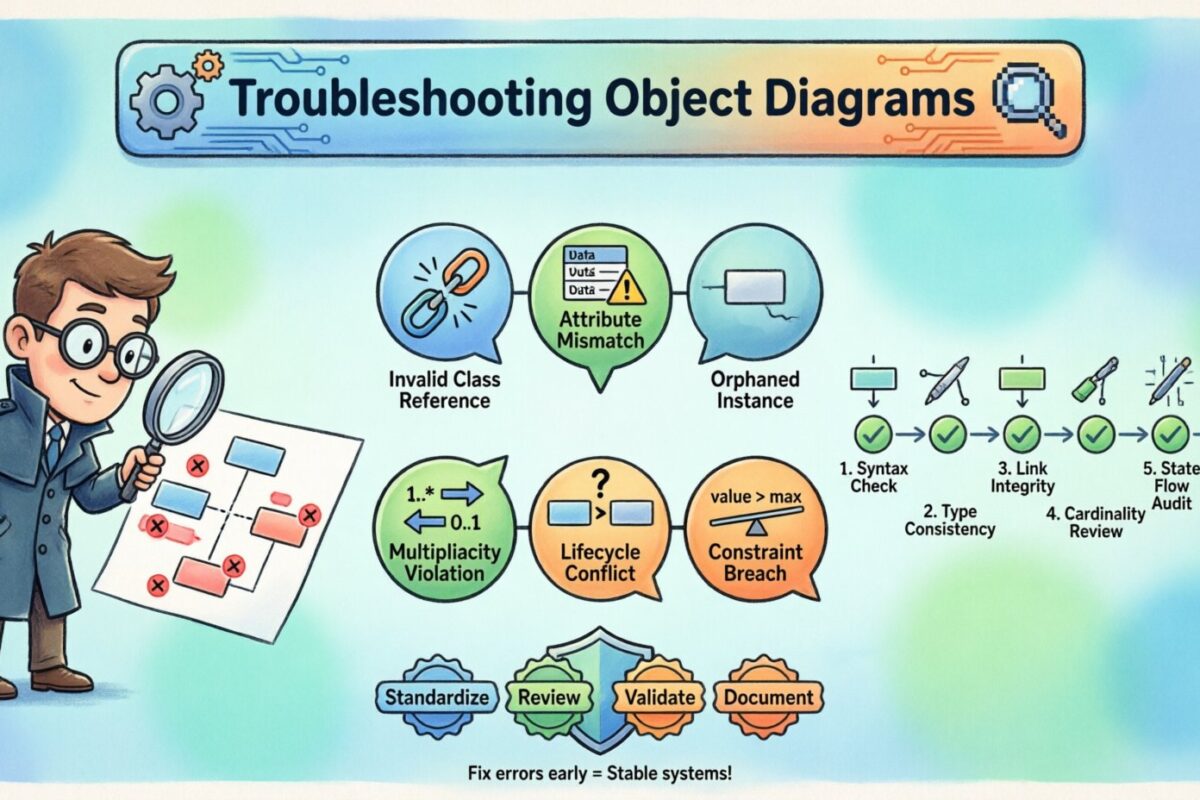
Troubleshooting Object Diagrams: Fixing Errors Before They Derail Your Project
Posted inUnified Modeling Language

Troubleshooting Object Diagrams: Fixing Errors Before They Derail Your Project

Software architecture relies heavily on precise modeling to ensure that complex systems function as intended. Among the various diagrams used in the Unified Modeling Language (UML), the Object Diagram holds…
Visualizing Object States: A Deep Dive into Object Diagrams for Dynamic Systems
Posted inUnified Modeling Language

Visualizing Object States: A Deep Dive into Object Diagrams for Dynamic Systems

Understanding the structure of a software system requires more than just knowing the classes involved. It demands a clear picture of how those classes interact at a specific moment in…
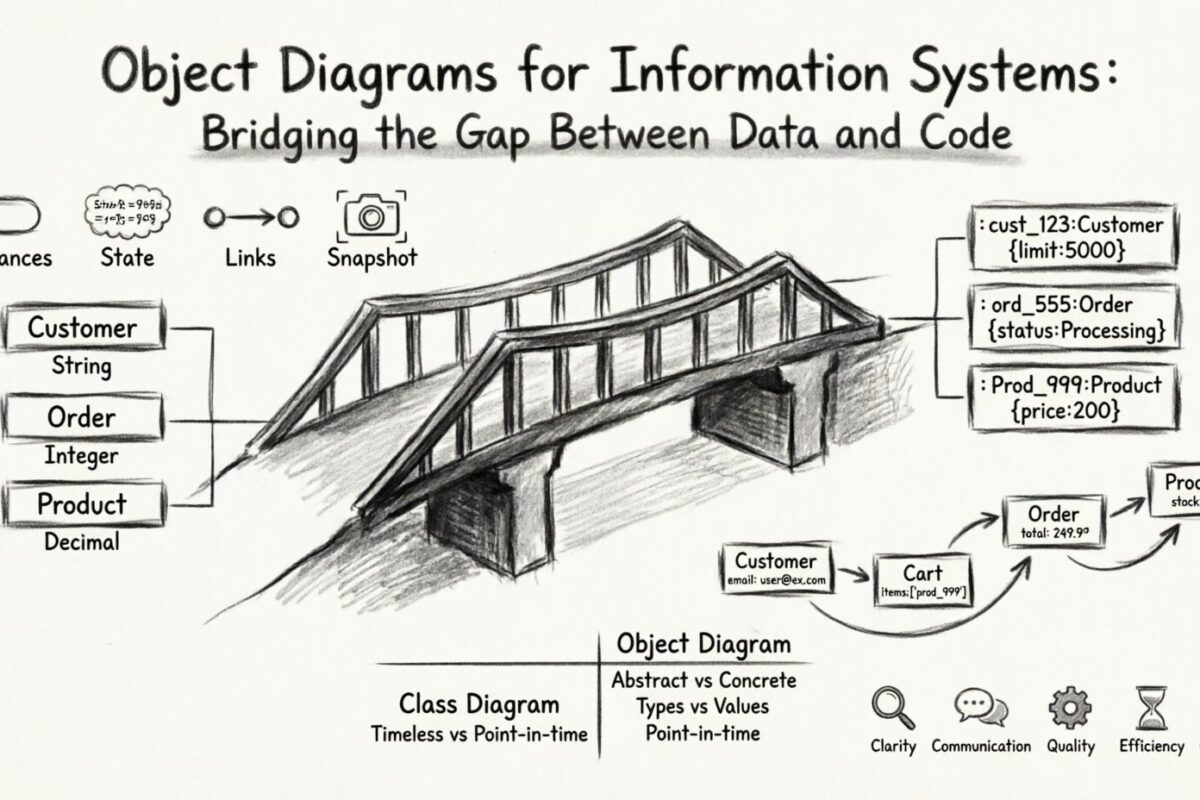
Object Diagrams for Information Systems: Bridging the Gap Between Data and Code
Posted inUnified Modeling Language

Object Diagrams for Information Systems: Bridging the Gap Between Data and Code

In the complex architecture of modern information systems, the distance between a database record and a running application instance is often bridged by abstraction. Developers and architects frequently rely on…
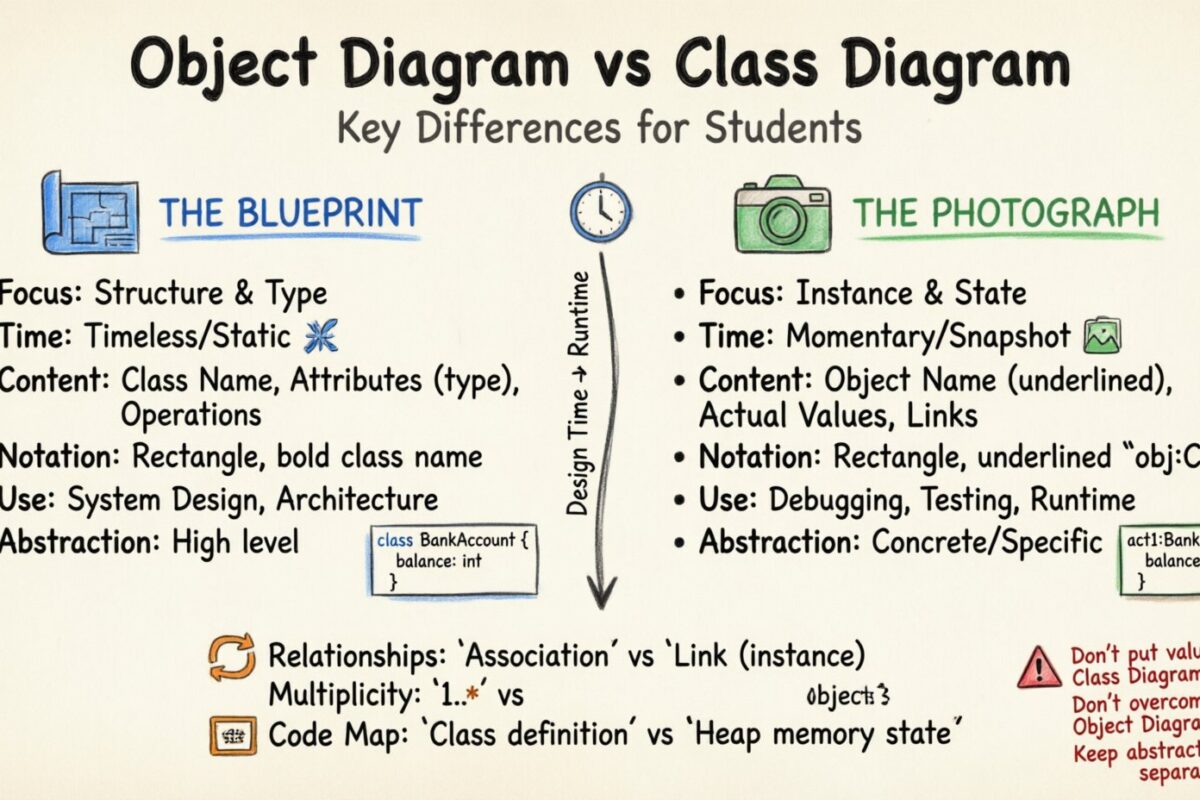
Object Diagram vs Class Diagram: Key Differences You Must Know as a Student
Posted inUnified Modeling Language

Object Diagram vs Class Diagram: Key Differences You Must Know as a Student

In the world of software engineering, modeling the architecture of a system is a fundamental skill. Whether you are designing a complex enterprise application or a simple web tool, visualizing…

Posts pagination

Previous page 1 … 4 5 6 7 8 … 27 Next page
Language
de_DEes_ESfr_FRhi_INid_IDjapl_PLpt_PTru_RUvizh_CNzh_TW
Categories
  • Agile
  • AI
  • AI Chatbot
  • AI Image Translator
  • AI Visual Modeling
  • Animation Tool
  • ArchiMate
  • BPMN
  • C4 Model
  • Cloud Architecture Diagram
  • Content & Visual
  • Database Design
  • ERD
  • Flipbook Tool
  • Flowchart
  • OpenDocs
  • Project Management
  • Scrum
  • Software Development
  • Strategic Analysis
  • TOGAF
  • Uncategorized
  • Unified Modeling Language
  • VPasCode

Recent Posts

  • Flowcharts Explained: A Complete Guide to Symbols, Types, and Modern Tooling with Visual Paradigm, VPasCode, and AI
  • Visualizing Logic: The Ultimate Guide to Modern Flowcharts with AI and Code
  • BPMN: Process Orchestration vs. Choreography: Coordinating Work Within and Between Organizations
  • BPMN Guide with Visual Paradigm
  • VPasCode: The Only Enterprise-Grade BPMN “Diagram-as-Code” Solution
You May Have Missed
Flowcharts Explained: A Complete Guide to Symbols, Types, and Modern Tooling with Visual Paradigm, VPasCode, and AI
Posted inAI Flowchart

Flowcharts Explained: A Complete Guide to Symbols, Types, and Modern Tooling with Visual Paradigm, VPasCode, and AI

Posted by
Visualizing Logic: The Ultimate Guide to Modern Flowcharts with AI and Code
Posted inUncategorized

Visualizing Logic: The Ultimate Guide to Modern Flowcharts with AI and Code

Posted by
BPMN: Process Orchestration vs. Choreography: Coordinating Work Within and Between Organizations
Posted inAI BPMN

BPMN: Process Orchestration vs. Choreography: Coordinating Work Within and Between Organizations

Posted by
BPMN Guide with Visual Paradigm
Posted inAI AI Chatbot BPMN

BPMN Guide with Visual Paradigm

Posted by
Copyright 2026 — Viz Read - AI, Software & Digital Insights. All rights reserved.
Scroll to Top