Skip to content
Viz Read - AI, Software & Digital Insights

Viz Read - AI, Software & Digital Insights

  • Home
  • Gallery
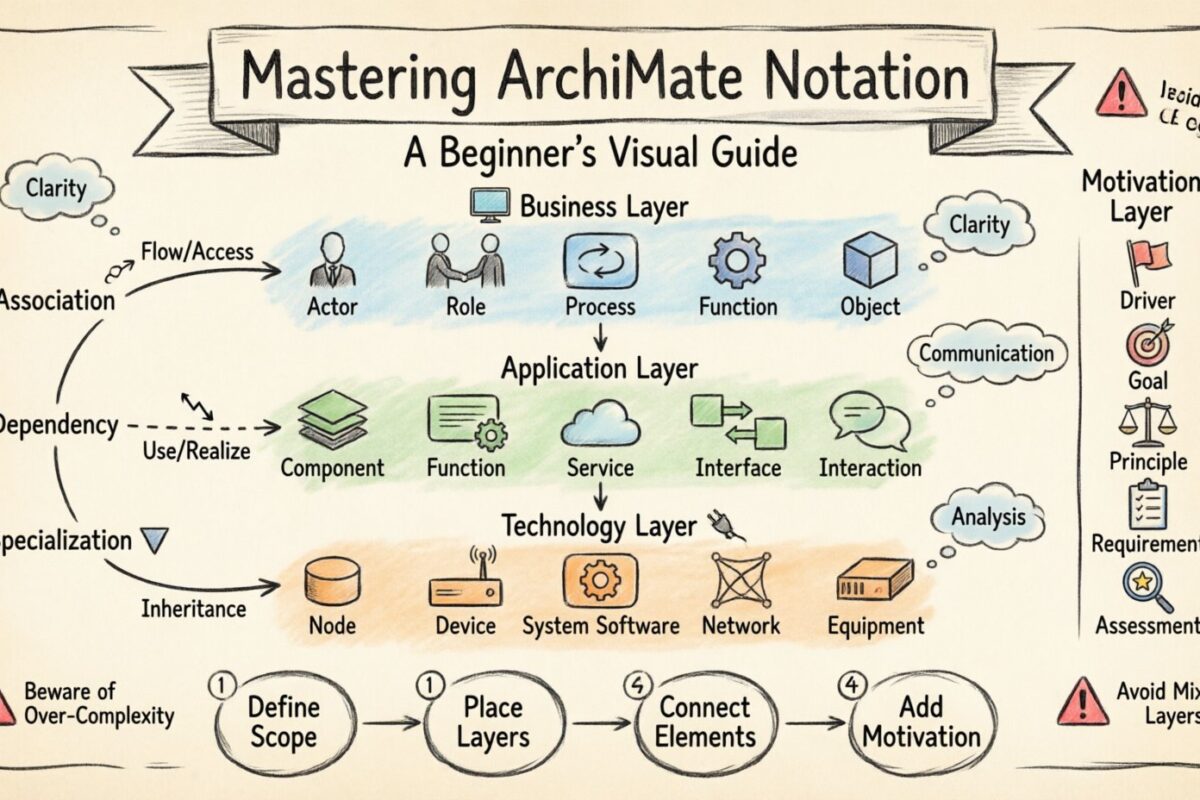
Mastering ArchiMate Notation: A Step-by-Step Tutorial for Beginners
Posted inArchiMate

Mastering ArchiMate Notation: A Step-by-Step Tutorial for Beginners

Enterprise architecture relies heavily on clear communication. Without a standard language, stakeholders struggle to understand complex system interactions. ArchiMate serves as this standard language. It provides a framework for modeling…
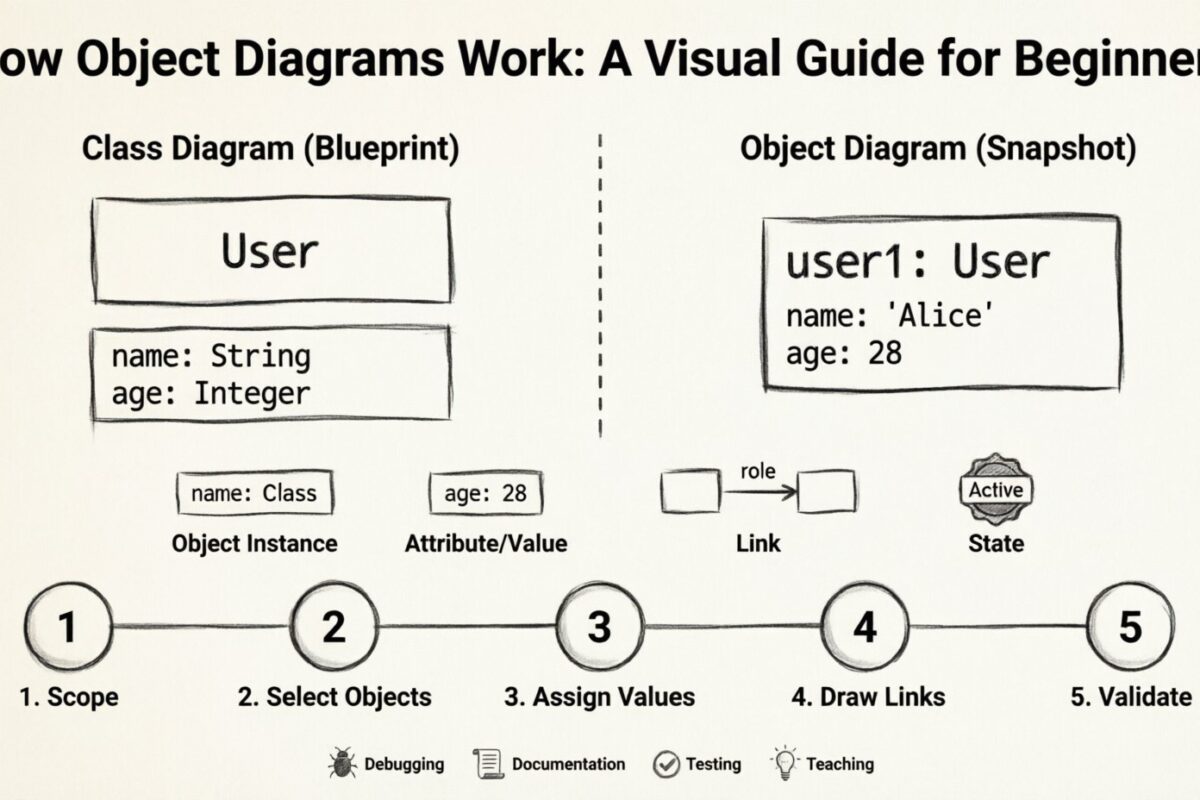
How Object Diagrams Work: A Visual Breakdown for Software Engineering Beginners
Posted inUnified Modeling Language

How Object Diagrams Work: A Visual Breakdown for Software Engineering Beginners

When navigating the complex landscape of software architecture, visual representations serve as the bridge between abstract logic and concrete implementation. Among the various tools available, the object diagram stands out…
How to Read an Object Diagram Like a Pro: A Beginner’s Guide to Visual Literacy
Posted inUnified Modeling Language

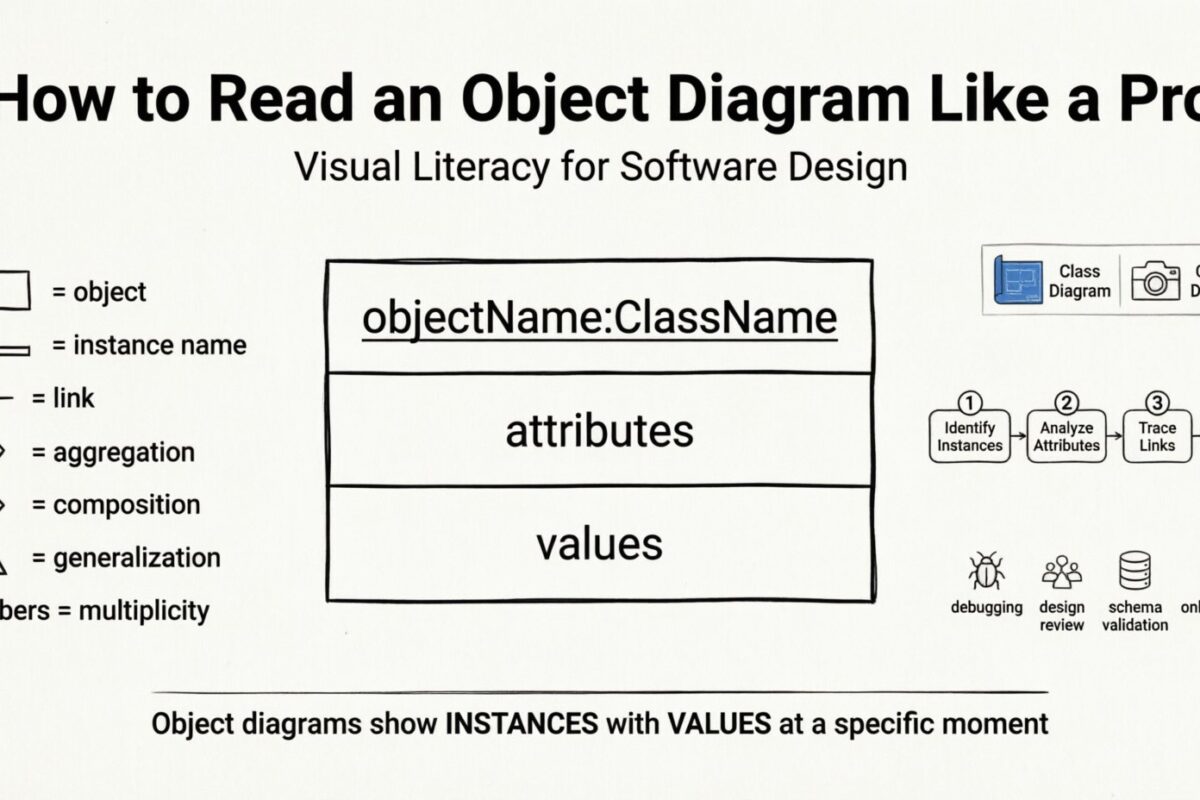
How to Read an Object Diagram Like a Pro: A Beginner’s Guide to Visual Literacy

👋 Introduction to Visual Literacy in Software Design In the complex landscape of software architecture, understanding the static structure of a system is crucial. While text-based documentation provides details, visual…
Common Mistakes in Object Diagrams That Every Student Should Avoid
Posted inUnified Modeling Language

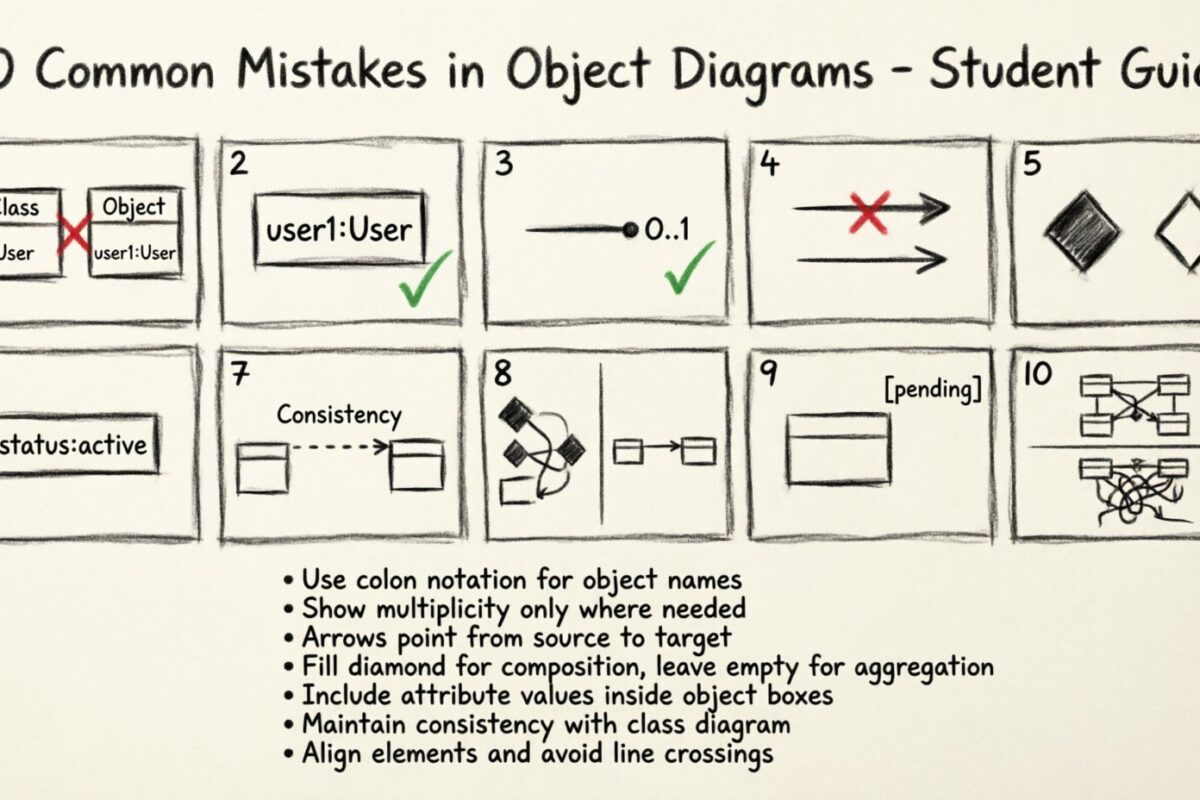
Common Mistakes in Object Diagrams That Every Student Should Avoid

Object diagrams are a critical component of Unified Modeling Language (UML) documentation. They provide a static snapshot of a system at a specific point in time. Unlike class diagrams, which…
Object Diagrams That Actually Work: A Guide to Accuracy and Clarity
Posted inUnified Modeling Language

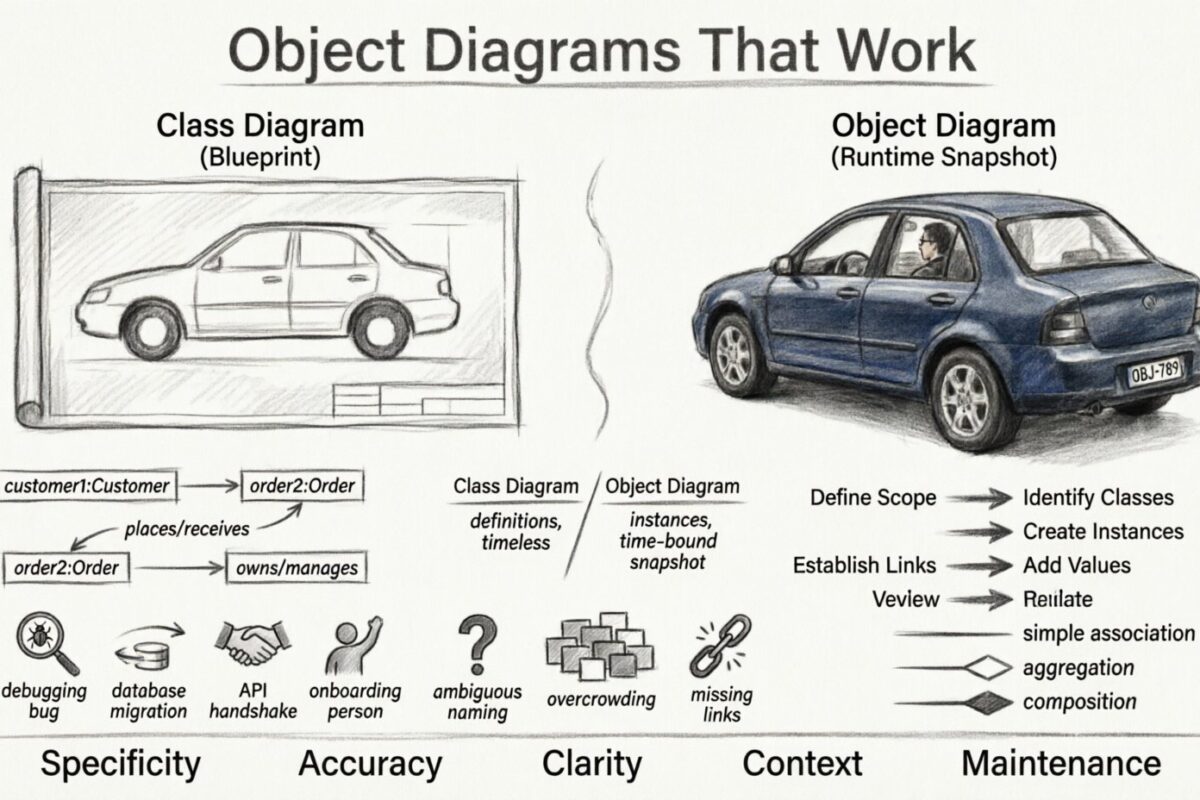
Object Diagrams That Actually Work: A Guide to Accuracy and Clarity

In software architecture, visualizing data is as critical as writing the code itself. While class diagrams provide the blueprint, they often fail to show what happens when the system is…
Object Diagram Q&A: Answers to the Top 10 Questions New Students Ask
Posted inUnified Modeling Language

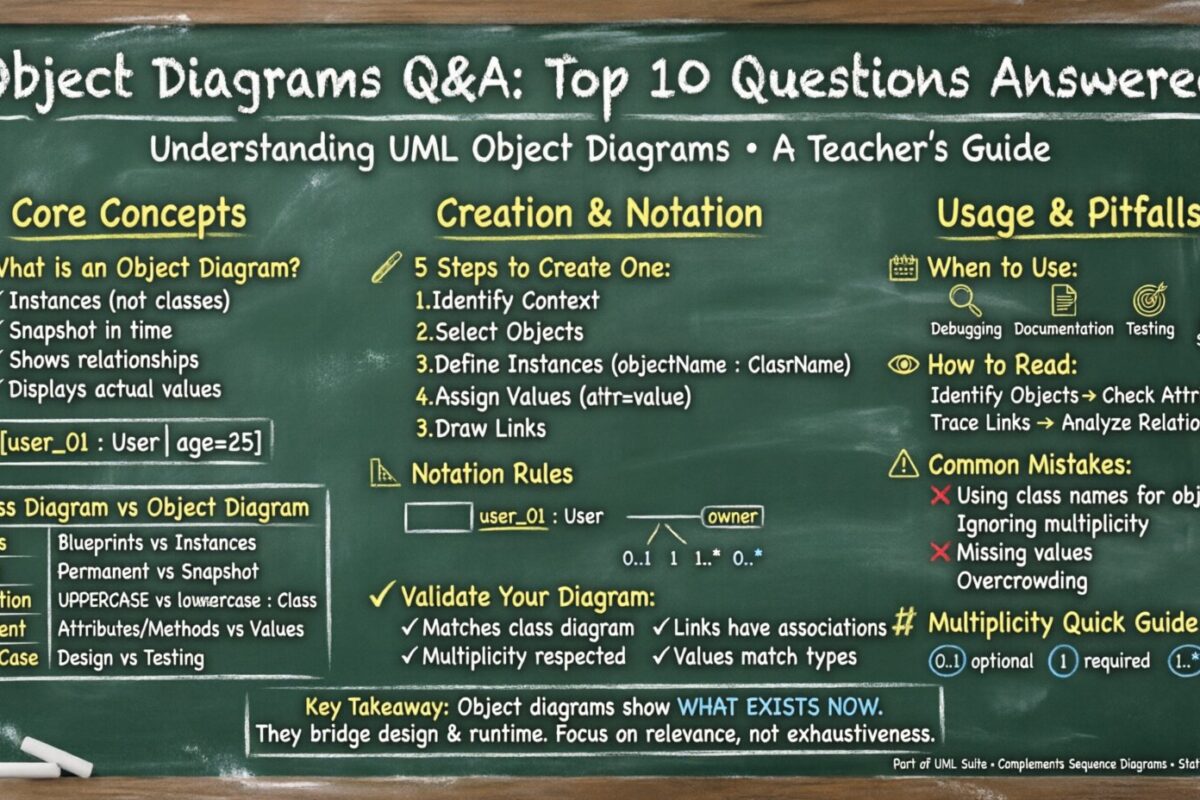
Object Diagram Q&A: Answers to the Top 10 Questions New Students Ask

Understanding the static structure of a software system is fundamental to effective design. While class diagrams provide the blueprint, object diagrams offer a snapshot of the system in action at…
Understanding Object Instantiation: A Critical Component of Object Diagrams
Posted inUnified Modeling Language

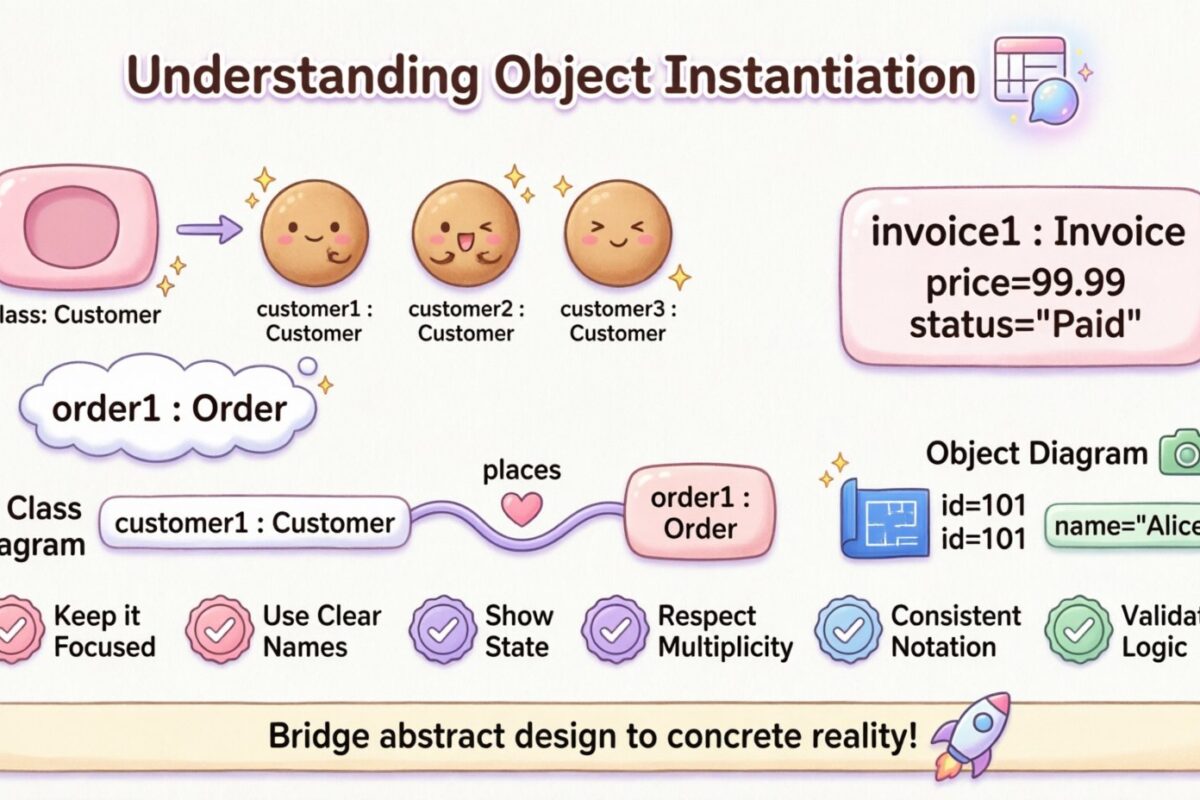
Understanding Object Instantiation: A Critical Component of Object Diagrams

In the landscape of software architecture and system modeling, few concepts bridge the gap between abstract design and concrete reality as effectively as object instantiation. While class diagrams define the…
Object Diagrams vs. Sequence Diagrams: When to Use Each in Your Design Work
Posted inUnified Modeling Language

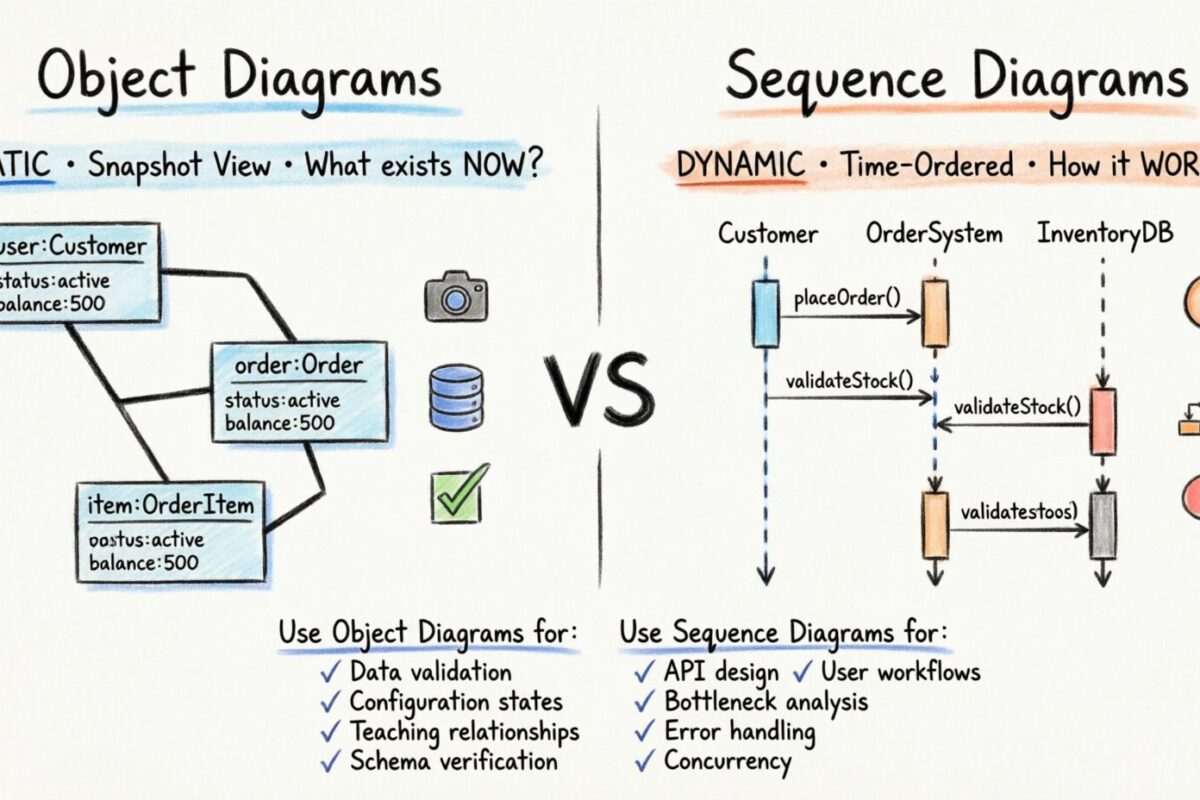
Object Diagrams vs. Sequence Diagrams: When to Use Each in Your Design Work

Designing complex software systems requires a shared language that bridges the gap between abstract concepts and concrete implementation. Unified Modeling Language (UML) serves as that standard notation, offering various diagram…
Object Diagram Myth-Buster: Separating Fact from Fiction for Beginners
Posted inUnified Modeling Language

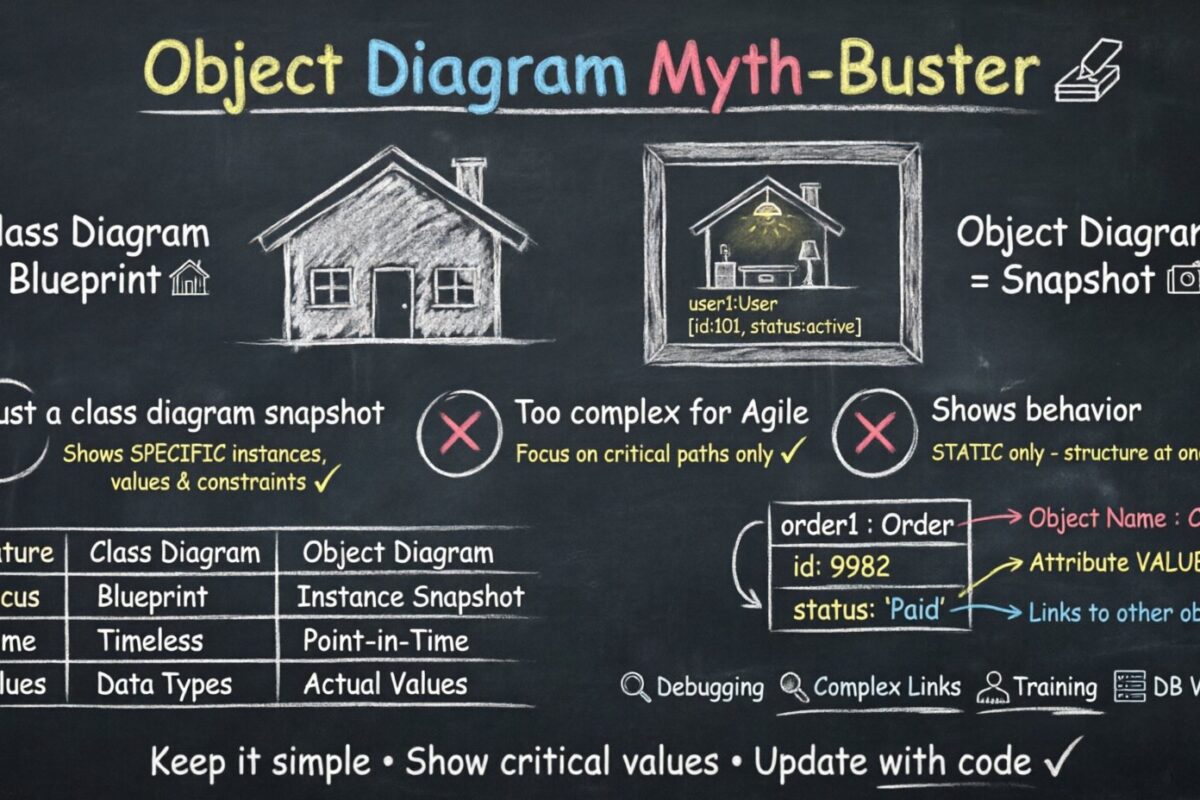
Object Diagram Myth-Buster: Separating Fact from Fiction for Beginners

Understanding the structure of complex systems requires more than just understanding how things behave. It requires knowing how things exist at a specific moment. In the world of software architecture…
Object Diagrams in the Wild: Examples from Real Student Projects and Assignments
Posted inUnified Modeling Language

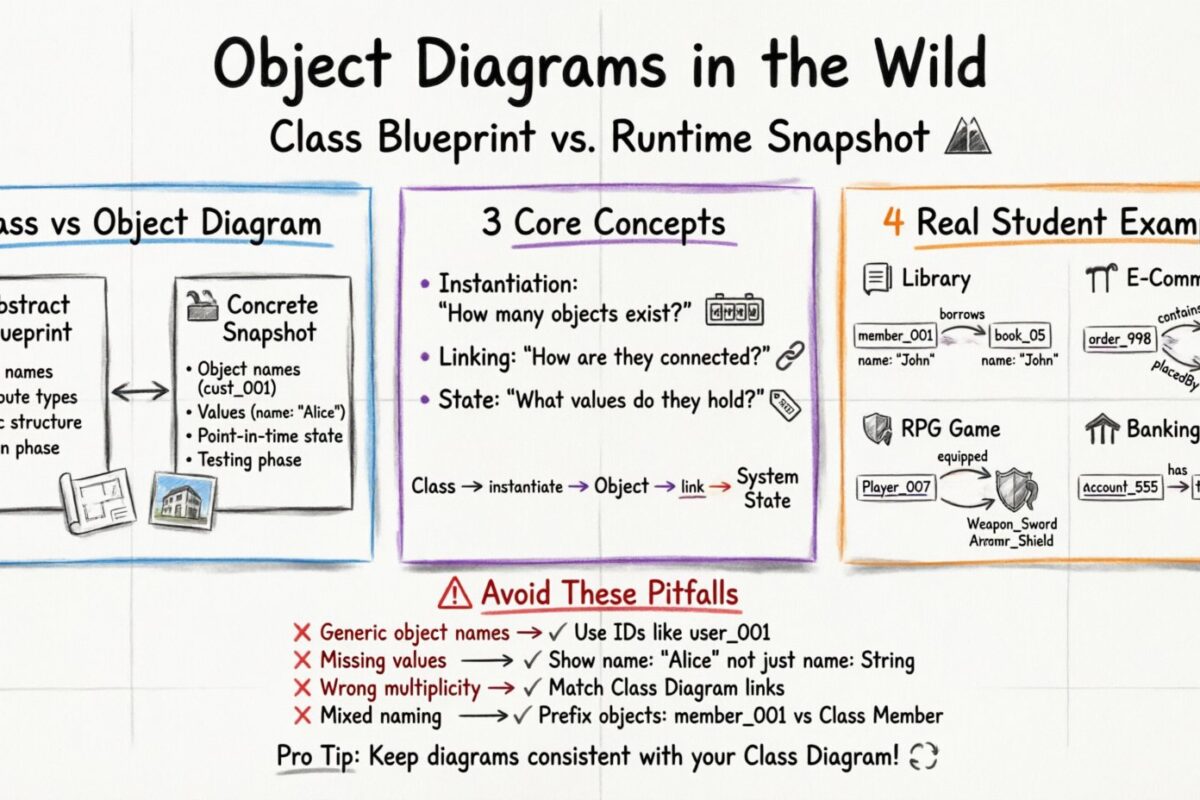
Object Diagrams in the Wild: Examples from Real Student Projects and Assignments

When students begin their journey into software architecture, they often encounter the Unified Modeling Language (UML) suite of diagrams. While Class Diagrams are frequently introduced first, Object Diagrams provide a…

Posts pagination

Previous page 1 … 3 4 5 6 7 … 27 Next page
Language
de_DEes_ESfr_FRhi_INid_IDjapl_PLpt_PTru_RUvizh_CNzh_TW
Categories
  • Agile
  • AI
  • AI Chatbot
  • AI Image Translator
  • AI Visual Modeling
  • Animation Tool
  • ArchiMate
  • BPMN
  • C4 Model
  • Cloud Architecture Diagram
  • Content & Visual
  • Database Design
  • ERD
  • Flipbook Tool
  • Flowchart
  • OpenDocs
  • Project Management
  • Scrum
  • Software Development
  • Strategic Analysis
  • TOGAF
  • Uncategorized
  • Unified Modeling Language
  • VPasCode

Recent Posts

  • Flowcharts Explained: A Complete Guide to Symbols, Types, and Modern Tooling with Visual Paradigm, VPasCode, and AI
  • Visualizing Logic: The Ultimate Guide to Modern Flowcharts with AI and Code
  • BPMN: Process Orchestration vs. Choreography: Coordinating Work Within and Between Organizations
  • BPMN Guide with Visual Paradigm
  • VPasCode: The Only Enterprise-Grade BPMN “Diagram-as-Code” Solution
You May Have Missed
Flowcharts Explained: A Complete Guide to Symbols, Types, and Modern Tooling with Visual Paradigm, VPasCode, and AI
Posted inAI Flowchart

Flowcharts Explained: A Complete Guide to Symbols, Types, and Modern Tooling with Visual Paradigm, VPasCode, and AI

Posted by
Visualizing Logic: The Ultimate Guide to Modern Flowcharts with AI and Code
Posted inUncategorized

Visualizing Logic: The Ultimate Guide to Modern Flowcharts with AI and Code

Posted by
BPMN: Process Orchestration vs. Choreography: Coordinating Work Within and Between Organizations
Posted inAI BPMN

BPMN: Process Orchestration vs. Choreography: Coordinating Work Within and Between Organizations

Posted by
BPMN Guide with Visual Paradigm
Posted inAI AI Chatbot BPMN

BPMN Guide with Visual Paradigm

Posted by
Copyright 2026 — Viz Read - AI, Software & Digital Insights. All rights reserved.
Scroll to Top